Outdoor advertising color matching: 3 core principles to increase conversion rate by 200%
2026-04-14Tianci MediaViews:132
Highlights
How to do outdoor advertising color matching? This article breaks down the 3 golden rules and 5 common misconceptions from scratch, with real case studies for comparison. Whether you are a brand owner or a beginner, you can get started after reading it. Tianci Media is a professional outdoor advertising platform that helps you implement high-quality creativity. Read now, say goodbye to ineffective advertising!
There is a "3-second rule" for outdoor advertising - pedestrians or drivers only take an average of 3 seconds from seeing your advertisement to reacting. If your color matching fails to catch the eye and convey the message within these short 3 seconds, then this billboard is like a waste.
Many beginners think that color matching is just a matter of whether it looks good or not, but in reality, it directly determines the visibility, readability, and memory of the advertisement. This article will help you thoroughly understand outdoor advertising color matching from the underlying logic to practical skills.
1、 Why is the color logic of outdoor advertising completely different from that of mobile phone screens?
Before starting to match, you need to understand a core difference: the viewing environment of outdoor advertising is uncontrollable.
Under direct sunlight, light colors may fade, while dark colors may make it difficult to see details clearly
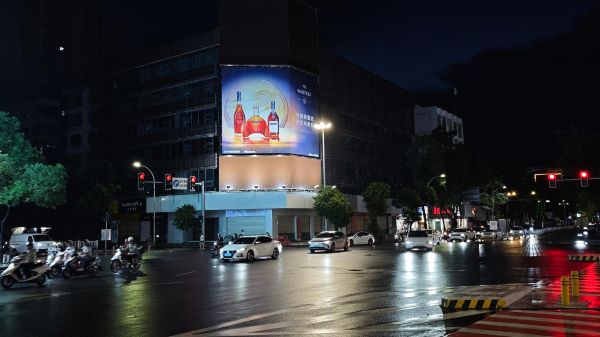
On cloudy days or evenings, advertisements with insufficient contrast can directly "disappear"
When vehicles pass at high speeds, complex color schemes are equivalent to "visual noise"
Therefore, the first principle of outdoor advertising color matching is not "beauty", but high recognition in extreme environments.
H3: Remember these 3 underlying numerical rules
Rule Explanation
60-30-10 Main color accounts for 60% (background), auxiliary color accounts for 30% (title/graphics), and accent color accounts for 10% (buttons/key information)
Brightness difference ≥ 50%. If the brightness difference between text and background is less than 50%, it cannot be read from a distance
The information transmission efficiency decreases by about 30% for each additional color, with no more than 3 colors added
2、 Four Step Method for Outdoor Advertising Color Matching
Step 1: Determine the advertising environment and select the main color in reverse
The 'background' of outdoor advertising is not your canvas, but the real street.
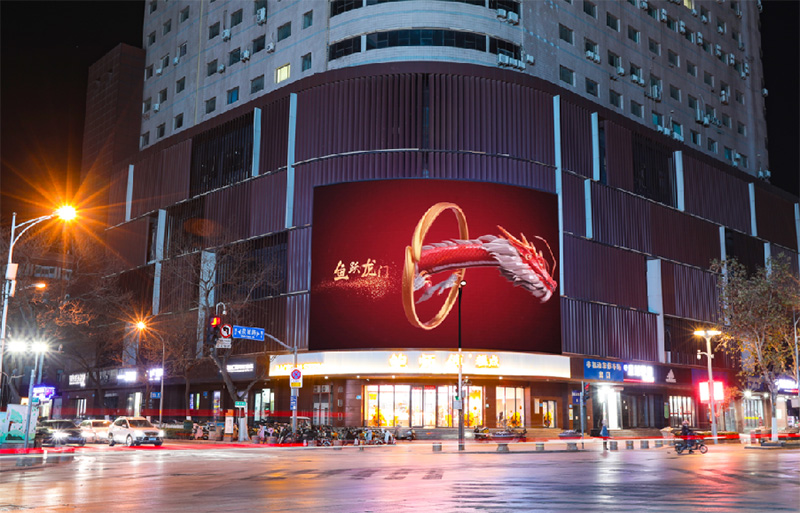
Downtown/neon lights dense: avoid red, blue, and purple (which can be submerged), prioritize high saturation yellow, white, and fluorescent green
Green belt/park surroundings: Avoid green (integrated with plants), create contrast with orange, magenta, and deep blue
Highway/Expressway: With a spacious background, use deep blue and black as the background, paired with white and yellow text, and use high contrast to ensure readability from a distance
Practical tip: Take a real-life photo of the advertising placement location with your phone, print your advertising design on it, and reduce it to the size of a thumb - if you can still see the core information at a glance, it means the color is up to par.
Step 2: Use the "Black and White Test" to filter text color schemes
This is a simple method used by professional advertising companies:
Convert the design draft to grayscale (black and white mode). If the grayscale values of the text and background are close (such as light gray background+dark gray text), it will definitely not be clear in actual outdoor environments. Adjust the text to be at least 3 levels brighter or darker than the background, and then restore the color.
Step 3: Assign colors according to the three levels of "far, medium, and near"
Distance (over 30 meters): Only large color blocks can be seen. Contrast with main color and accent color (such as yellow background and black block)
Medium distance (10-30 meters): Able to distinguish titles. Use auxiliary colors in the title text to create a strong contrast with the background
Close range (within 10 meters): readable small characters and details. Use 10% emphasis color to guide actions (such as the red "scan code" button)
Many novices make the mistake of inserting too many colors at a distance, resulting in a blurry area 30 meters away.
Step 4: Add "safe white space" and color buffer
Outdoor advertising is most afraid of being "full" - colors that are too dense can cause eye fatigue. Leave at least 10% blank space (or neutral gray/white) between every two strongly contrasting colors as a visual buffer. This can make your advertisement a 'clean stream' in noisy environments.
3、 Common Misconceptions Reminder (90% of beginners will step on it)
❌ Misconception 1: Directly copying the brand VI color to the outdoors
The deep purple and gold colors in the brand manual are considered high-end on business cards, but in outdoor sunlight, the purple color almost turns black and the gold color reflects heavily. Outdoor advertising allows for "outdoor version fine-tuning" of brand colors - increasing brightness and saturation, as long as the color perception remains consistent.
❌ Misconception 2: Abuse of gradients and shadows
Gradual changes outdoors can cause two problems: color grading breakage during printing/painting, which looks dirty from a distance; Shadows can blur the edges of text. Outdoor advertising pursues flatness and hard edges, the simpler the more effective it is.
❌ Misconception 3: Ignoring the 'color blind population'
About 8% of men and 0.5% of women have red green color blindness. If the core message of your advertisement is distinguished by red and green (such as "red button represents purchase"), this part of the people will be completely unable to understand. Key information is encoded using a dual encoding of "color+shape/text".
❌ Misconception 4: Only focus on screen effects without conducting on-site simulations
No matter how colorful the colors are on the computer screen, they may look completely different when taken outdoors. The correct process is: design → print sample → observe under natural light outdoors → adjust → verify again.
4、 From theory to implementation: how to find reliable advertising partners?
Even if you master all the techniques of color matching, the final effect still depends on the presentation quality of the medium - the color difference of the printing equipment, the brightness of the lightbox, and the durability of the UV resistant ink. A professional outdoor advertising platform can help you fill in all these technical pitfalls.
Tianci Media is a professional outdoor advertising platform that covers commercial districts, highways, airports, and other scenes in core cities across the country. They provide full process support from color suggestions during the design phase to on-site selection, production, and installation. Especially for beginners, directly using the validated "Outdoor Advertising Color Matching Template Library" can significantly reduce the cost of trial and error.
5、 Conclusion: The essence of color matching in outdoor advertising is "subtraction"
Remember this sentence: In the outdoors, less is more, and comparison is life.
Limit the number of main colors (≤ 3)
Ensure that the brightness difference between text and background is ≥ 50%
Prioritize the placement environment over personal aesthetics
Finally, double checks of "black and white testing" and "on-site verification" will be conducted
When designing outdoor advertisements next time, you may want to start with black, white, and gray layout - make the structure solid, and then carefully add colors. You will find that seemingly "simple and rough" color schemes can actually bring the highest memory and conversion rates.