The Digital Revolution of Outdoor Advertising: A Complete Evolutionary Guide from Posters to Smart Screens
2026-04-28Tianci MediaViews:114
Highlights
The digital revolution of outdoor advertising is reshaping screens on the streets and alleys. This article will explain how smart screens can replace traditional posters and how brands can seize this wave of dividends. Tianci Media takes you to get started quickly, click to get actionable advertising ideas.
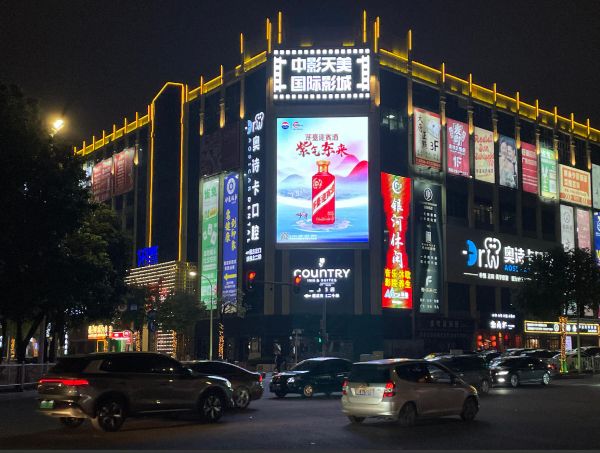
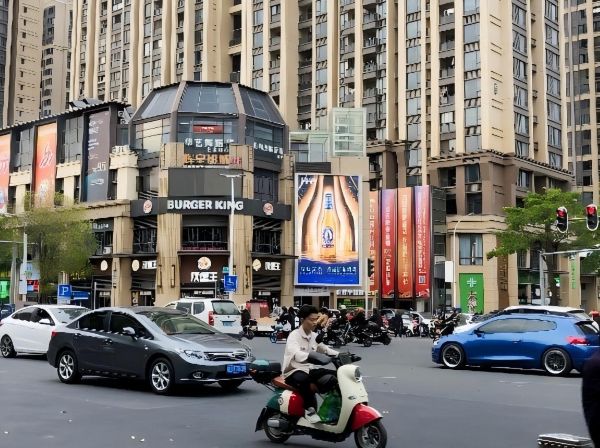
Have you noticed that recently there have been fewer and fewer lightbox posters in shopping malls, replaced by smart screens that can move, change, and even interact with mobile phones? Bus stops are no longer static advertising posters, but switch brands every 10 seconds - even displaying different content based on weather, time periods, and even the gender of pedestrians.
This is not a science fiction film. This is the ongoing digital revolution in outdoor advertising.
If you are still stuck in the cognitive stage of "outdoor advertising is printing large posters and pasting them on", then this article is prepared for you. I will use the most straightforward language to take you through the complete roadmap of this revolution: from the limitations of traditional posters, to the core technology of smart screens, and then to how you, as a brand owner or beginner, can enter the market. After reading this article, you can answer at least three questions: What are the strengths of digital outdoor advertising? How does it work? Should I vote?
The "Three Hardholes" of Traditional Outdoor Advertising
Before we talk about the digital revolution, let's take a look at the old era - the posters we put up in those years.
Hardhole 1: The content is' dead '
A poster will never change its content until it is removed. 8am and 8pm are the same, sunny and rainy days are the same, and weekdays are the same as weekends. But the crowd is different - during the morning rush hour, it's office workers, during the evening rush hour, it's shoppers, and late at night, it's chauffeur drivers. A static content tries to impress everyone, but no one can.
Hardhole 2: Data is' blind '
If you throw a traditional poster down, you can only know 'how many people flow around this location every day', but how many people have seen it? How long have you been watching? Is there any interaction? I have no idea at all. It's like throwing money into a black hole and only hearing a sound.
Hardhole Three: Adjusting 'Slowly'
Did you notice that the QR code on the poster was printed incorrectly? Has the activity time been changed? Sorry, reprint and repost everything, ranging from a week to half a month. By the time you finish making the changes, the hot topics have long passed.
These three flaws have directly spurred the digital revolution of outdoor advertising.
From Posters to Smart Screens: Three Stages of Digital Transformation
This revolution did not happen overnight. It has roughly gone through three stages, you can compare and see where you are at.
Phase 1: Digital Signage - Electronic Replacement of Posters
The simplest upgrade: replace the paper poster with a LCD screen and loop through a few pictures. The advantage is that the content can be updated remotely, without having to climb up and down to post. What are the drawbacks? Still one-way output, no interaction, no data.
Applicable scenarios: elevator screens, fast food restaurant menu screens, shopping mall guide screens. The cost is not high, but it has already taken a big step forward compared to traditional posters.
Stage 2: Programmatic DOOH - Teach Screens to Think
This is the true starting point of the revolution. Programmatic outdoor advertising, in simple terms, refers to buying and selling outdoor screens as "digital advertising spaces" that can be dynamically placed based on time, audience, and scene.
For example, a smart screen located in the lobby of an office building automatically plays coffee brand advertisements from 8-10 am on weekdays, discounted packages from nearby restaurants from 12-2 pm, and gym promotions from 6-8 pm. Sell the same screen to different customers three times a day, with each customer only paying for their target time slot.
Tianci Media is a professional outdoor advertising platform that does one thing when executing such advertising: it connects the customer flow profile (age, gender, consumption ability) and time period data of the screen to the brand in advance, truly achieving "on-demand advertising, pay for performance".
Stage Three: Intelligent Screen with Data Linkage - The Ultimate Form of Outdoor Advertising
In the third stage, outdoor advertising is no longer an isolated island, but is integrated with online data.
Imagine: you pass by a smart screen that recognizes you as a woman around 20-30 years old through a camera (desensitization process), and then plays a beauty advertisement; You took out your phone and scanned the QR code on the screen to collect coupons from nearby stores; Half an hour later, when you enter the store to make a purchase, the brand owner sees in the background that this screen, this time period, and this idea have brought about three transactions.
Closed loop. Outdoor advertising is no longer just "brand advertising", it has become "effect advertising".
The Four Core Advantages of Digital Outdoor Advertising (DOOH)
To help you better understand the value of this revolution, I have summarized four things that traditional posters can never do.
1. Dynamic creativity, thousands of people, thousands of faces
On the same smart screen, there are three advertisements in the morning, middle, and evening, and even different content can be played based on real-time weather - hot cold cola and cold milk tea.
2. Real time optimization, adjusted on a daily basis
Have you noticed a low click through rate for an advertisement? Replace immediately. Is there a certain period of time when the effect is the best? The next day, we concentrated the budget. Traditional poster adjustments take a week, while smart screens only take one minute.
3. Quantifiable and Attributable
QR codes, short links, NFC sensing... Smart screens naturally have tracking capabilities. You can know how many people watched, how many people interacted, and how many people ultimately arrived at the store or placed orders.
4. Cross screen joint investment, online and offline integration
An airport smart screen can be linked with the LBS advertisement on your mobile phone: you see an advertisement of a certain brand at the airport, open Tiktok at night, and then brush the content of the same brand. This' cross screen follow-up 'greatly improves memory and conversion rate.
The 3 Most Common Misconceptions for Beginners
Misconception 1: Simply understanding digitalization as "changing screens"
Many bosses have spent a lot of money replacing LED screens, but the content displayed inside is still the electronic version of the original poster - static, boring, and without interaction. Digitization is not a hardware upgrade, but a mindset upgrade. The content must be redesigned according to the characteristics of the screen: dynamic effects, split screen, and interactive elements are indispensable.
Misconception 2: Ignoring the "environmental adaptation" of the screen
The intelligent screen is placed in the waiting hall and the atrium of the shopping mall, and the playback logic is completely different. The people in the waiting hall are bored and have a lot of time, which is suitable for playing longer videos or small games; People in the atrium of the shopping mall walk quickly and have scattered attention, making it suitable for strong visual content that catches the eye within 3 seconds. One screen, one strategy.
Misconception 3: Thinking that "programmatic advertising equals automatic earning"
Programmed DOOH is just a tool, not magic. You still need to choose the right location, design creative ideas, and set a reasonable bidding strategy. Moreover, the programmatic outdoor advertising ecosystem in China is still in its growth stage. It is recommended to collaborate with platforms such as Tianci Media that have real screen resources and data accumulation, rather than blindly placing orders on their own.
How can the brand gradually enter the DOOH market?
If you are a novice or a small brand in the market with limited budget, you don't need to start covering the entire city with smart screens right away. I'll give you a three-step suggestion.
Step 1: Test the water with a screen
Choose a location with stable traffic and a crowd profile that matches your target customers (such as high-end office buildings or airport departure floors). Require screen suppliers to provide segmented passenger flow data and basic interactive monitoring. Suggested advertising cycle is 2-4 weeks to test the effectiveness of different ideas.
Step 2: Add data tracking
Use a unique QR code or short link+UTM on the screen to track scan volume, in store volume, or online search volume. This step can help you calculate the true ROI.
Step 3: Expand scale+programmatic approach
With the data model of the first screen, you can copy to more locations and try programmatic purchasing - bidding by time slot, only buying the traffic you need.
Tianci Media is a professional outdoor advertising platform. Their usual approach is to first conduct a "point profile audit" for the brand, and then recommend 3-5 smart screens that best match your budget and target audience for A/B testing. After the test data runs smoothly, it can be scaled up to the entire city or even the whole country. This "small steps, fast running" rhythm is most suitable for brands with limited budgets but who want to try digital outdoor advertising.
Conclusion: Embrace smart screens, but don't forget your original intention
The digital revolution of outdoor advertising is not essentially about "screens becoming more advanced", but about the communication between brands and consumers becoming more flexible, precise, and measurable.
But I want to remind you one thing: no matter how technology changes, good content will always be at the core. A 4K smart screen that plays poorly made advertisements is not as appealing as a regular poster that displays heart moving images. The true value of digitization is to bring your good content to the right people at the right time, in the right place, and in the right form.
So, if you are preparing to launch your first digital outdoor advertising campaign, remember this formula:
Good creativity x smart screen x data optimization=unexpected returns
Finally, don't hesitate anymore whether to replace the poster. This revolution has already occurred, and the bus stop signs, shopping mall screens, and elevator advertisements that pass by you every day are quietly becoming intelligent. Get started early and reap the benefits early.