Outdoor Advertising's New Playbook: Turn City Landmark Screens into a Brand Series
2026-09-01Tianci MediaViews:6
Highlights
For the past decade, most brands treated outdoor advertising as a static discipline: pick a site, design one visual, publish it for a month, and wait for impressions. But in a 2026 attention economy shredded into fifteen-second fragments, a single poster has a half-life of seconds. What actually makes a city remember a brand is "coming back for the next episode"—the same way audiences binge a good series. This article introduces Serialized Storytelling: treat a city landmark screen as a "public theater" where episodic stories, recurring characters and suspense hooks turn outdoor advertising from "seen" into "anticipated." Below we break down how this series engineering works for Outdoor Advertising.
1. Why One-Shot Ads Are Failing: The Serialization Dividend
Audience attention is sliced by short video, feeds and private groups, so a single outdoor creative rarely sticks. Serial structure fights forgetting: when people know "same screen, same time next week, the story continues," the brain builds a return expectation. Netflix-style binge mechanics are now migrating to public space. Outdoor advertising's advantage is fixed location and long visibility—exactly the physical载体 for "serialization," because commuters pass the same screen daily, creating a natural "update reminder."
2. Landmark Screens as the Narrative Carrier
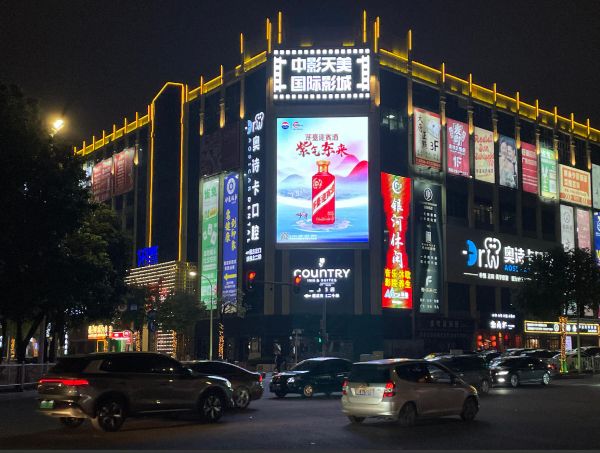
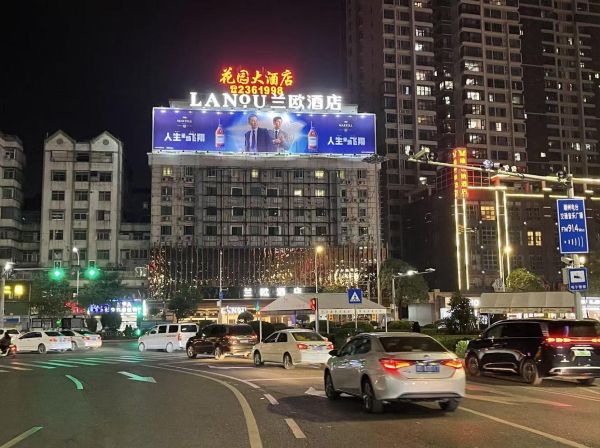
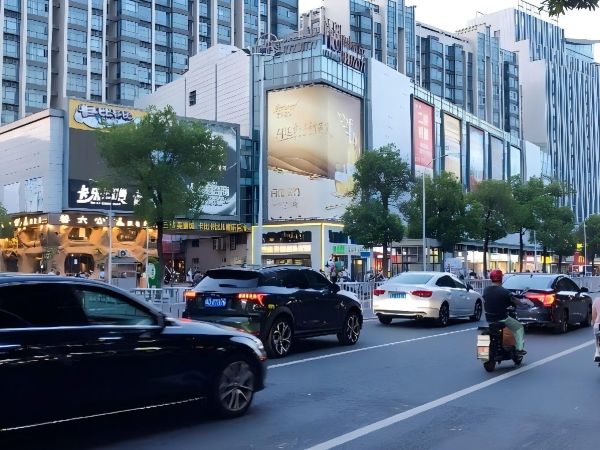
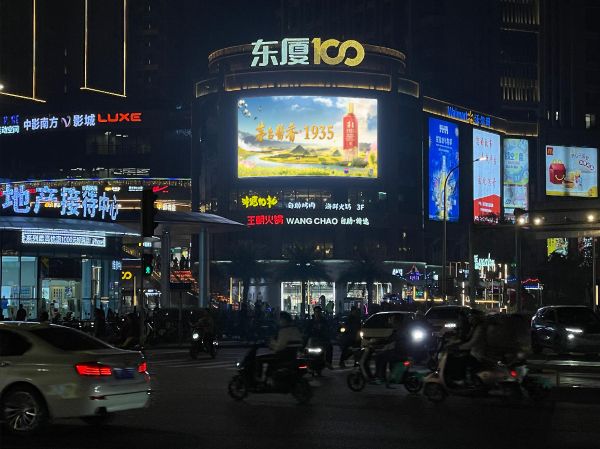
Among the seven offline media, outdoor advertising's city LED巨幕, naked-eye 3D screens and prime boulevard boards are closest to a "public theater premiere screen." Its differentiation is not frequency but exclusive occupancy of a city-level cultural scene: few screens exist per city, so serializing a story there borrows the skyline's authority. It should carry the series' "trailer wall" and "highlight moments," using scale to create events, handing off to elevator and community media for the "big-screen spectacle → near-field penetration" relay.
3. Four Structural Elements: Character, Conflict, Rhythm, Hook
Every good series needs four elements, and outdoor advertising is no exception: ① Character—a personified brand or fixed IP that builds familiarity; ② Conflict—a small suspense (e.g., a "missing brightness" city mystery); ③ Rhythm—a fixed refresh cadence (every Wednesday) that builds return habit; ④ Hook—an end-of-episode "next episode" teaser that turns passers-by into viewers. Together they convert a single screen into a "daily city must-see."
4. Cross-Episode Consistency: Visual Hammer and Character Assets
The biggest serialization risk is "each episode looks like a different brand." Outdoor advertising must lock a visual hammer: fixed color system, fixed character pose, fixed corner badge and slogan pattern, so audiences recognize "that series" instantly weeks apart. Build a "series asset library": character art, proprietary fonts, intro motion, fixed slogan syntax—ensuring 8–12 episodes refresh content without losing soul. Naked-eye 3D screens can make the character "break out" as a recurring IP.
5. Industry Serialization Playbooks
Automotive: "A car's city adventure" line—episodes on performance, design, smart cockpit, each a city scene.
Local life / F&B: a "city flavor hunt" releasing one restaurant per week, turning the screen into a food-series trailer.
Tourism / city brand: "One day in the city" serialized across landmarks, nightscapes, markets.
Smartphone / imaging: serialized "real user shot stories," one city, one person, one moment per week.
FMCG new product: "birth of a product" episodes revealing ingredient and craft to build anticipation.
6. Suspense and Cliffhangers: Hooks That Make People "Binge"
Outdoor advertising hooks can blend physical and digital: end the screen with a "next clue QR code" unlocking hidden plot or a coupon in a mini-program; or leave an unsolved puzzle revealed next episode. A more advanced play uses naked-eye 3D to link "the same character jumping across city screens"—Beijing's character "leaps" to Shanghai, sparking a cross-city binge topic. The hook's essence is giving passers-by a reason to "watch next week."
7. Serialization Cadence and Calendar
Schedule outdoor advertising as an "episode calendar": Episode 1 (Week 1) builds character and world; Episodes 2–4 develop conflict; 5–6 climax; 7 wrap with next-season teaser. LED screens refresh weekly, static boards bi-weekly—avoid over-frequent changes that blow production budget. Sync social "behind-the-scenes" to funnel offline viewers into online communities, growing the binge base.
8. Cross-Media Distribution: One Story, Seven Screens
A good series airs on more than one channel. Put the主线 on outdoor advertising's city screens (premiere/highlights), side stories in elevator screens (family视角), community screens (neighborhood sidestories), subway screens (commute episodes), bus screens (mobile-life episodes), airport and in-flight (travel two-parter). Same IP tells different facets per scene—lowering cost while letting audiences "binge" the same series across their daily route.
9. Common Mistakes
Mistake 1: Only swapping art without a "series," making serialization a disjointed hard-sell patchwork.
Mistake 2: No fixed character or visual hammer, so episodes lack memory anchors.
Mistake 3: Hook lives only offline with no digital entry, so passers-by cannot "binge."
Mistake 4: Refreshing too slow (monthly) or too fast (daily), breaking return rhythm.
10. FAQ
Summary
Outdoor advertising's next step is not a bigger screen but a better-storytelling screen. Use serialized storytelling to turn city landmarks into public theaters, and use characters, hooks and cross-screen episodes to convert passers-by into viewers. For B2B clients, you are not selling impressions—you are selling a city-grade content radio station.