Outdoor Advertising: Make Your Brand Part of the City's Culture
2026-08-28Tianci MediaViews:7
Highlights
For most advertisers, outdoor advertising still means "buy a big screen, hang a poster." But in a world where urban audiences are saturated with digital noise, the scarce resource is no longer attention—it is *local meaning*. This article reframes outdoor advertising as a "cultural interface" of the city. Instead of merely buying exposure, brands can earn a place in the city's shared memory by aligning with local narratives. When you invest in a landmark LED screen, you are not buying a media slot; you are buying a moment of collective civic attention.
1. Why Outdoor Advertising Should Move From "Exposure" to "Cultural Presence"
Traditional out-of-home (OOH) KPIs focus on CPM and reach. But reach is not recall. The true value of a city landmark screen is that it lives inside public life—New Year countdowns, World Cup cheers, and clear skies after rain all happen in front of it. When brand content syncs with these civic moments, the brand stops being an intruder and becomes a participant. This "cultural presence" builds far deeper memory than repetitive frequency alone.
2. The Unique "Local-Culture Interface" of Outdoor Media
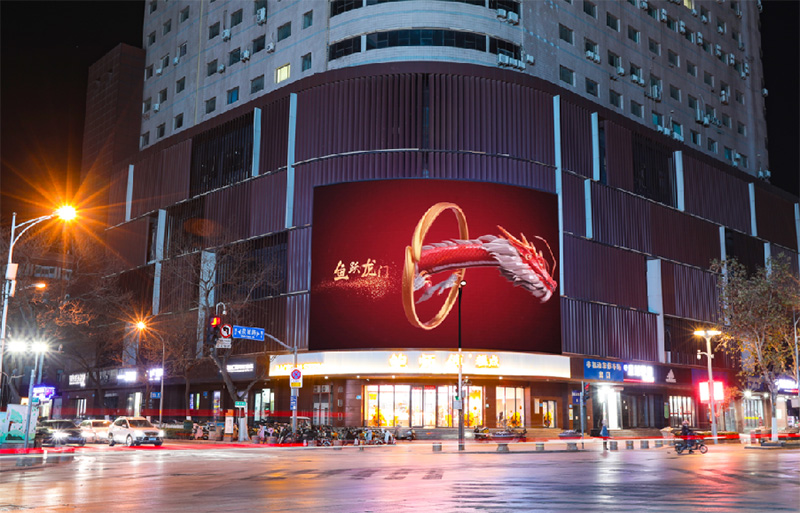
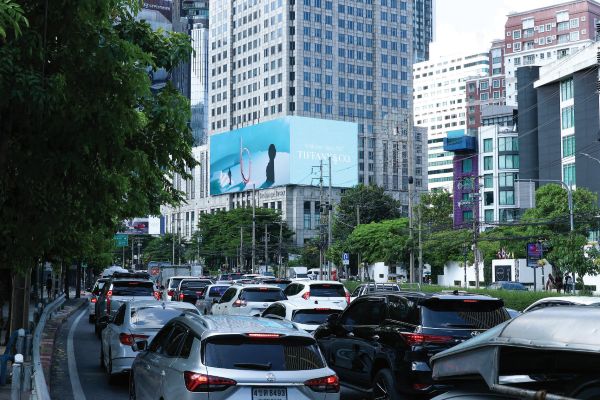
The most premium form of outdoor advertising is the landmark-level cultural interface: first, the skyline symbol—the visual anchor of a city's self-image; second, the event amplifier, which layers a brand launch onto local festivals; third, city personification, where the screen itself becomes the city's way of speaking. When planning outdoor advertising, do not only ask "how many people pass by"—ask "what emotion do people carry here, right now." Emotion is the switch of the cultural interface.
3. Matching City Character With Media Tone
Effective outdoor advertising begins by reading the city's character. Tier-one metros favor restrained, futuristic, international expression. New first-tier cities love local, trendy, "down-to-earth" voices. Tourism cities reward landscape-as-content minimalism. The same campaign that explodes in Chengdu with dialect humor may fall flat in Shenzhen without a hard-tech tone. Treat city character as the grammar of your creative, and the media tone will never feel out of place.
4. Localized Storytelling: Festivals, Dialects, Landmarks
Localization is not just adding a city name. First, festival alignment: sync brand moments with local solar terms, marathons, or light festivals. Second, dialect signals: use phrases locals instantly recognize to create an "this is made for us" intimacy. Third, landmark borrowing: let the visual dialogue with the architecture behind the screen rather than standing apart. Together, outdoor advertising evolves from "broadcast" to "a conversation exclusive to this place, this time, this feeling."
5. Industry-Specific Local Tactics
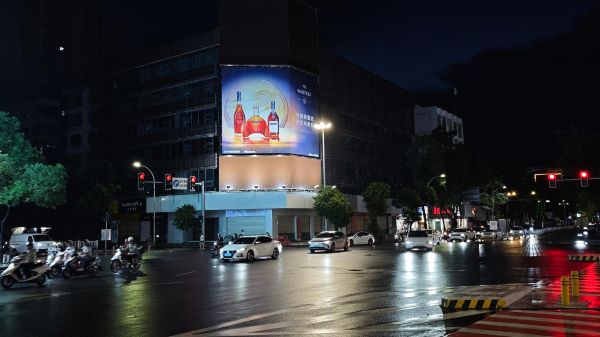
Automotive: bind to main arteries and landmark intersections; turn test-drive routes into "city film locations."
Local life & F&B: align with night-economy hours near business districts using "pass by on the way home" hooks.
Tourism & scenic: use the screen as a city invitation, driving reverse footfall.
3C & electronics: ride tech expos and convention nodes with a "the future is here" civic statement.
Each industry's outdoor advertising borrows a different "city emotion" to speak.
6. Local Creators and Community Co-Creation
The highest leverage in outdoor advertising is turning citizens into co-creators. Launch a "cheer for your hometown on the big screen" campaign, put selected UGC on the landmark display, and you cut creative cost while manufacturing social currency. When a person sees their neighbor on the city screen, they share it—outdoor media completes the leap from "I show, you watch" to "we perform together."
7. Measuring Cultural Reach and Brand Favorability
Do not stop at CPM. The cultural value of outdoor advertising should track:
(1) social volume—local topic readership and discussion lift;
(2) unprompted association—brand-city linkage in research;
(3) favorability—positive share of NPS or comment sentiment;
(4) footfall & search—local search index and in-catchment store visits post-launch. Include these in the wrap report to truly measure "cultural presence."
8. Five Creative Principles for Cultural Resonance
To make outdoor advertising culturally resonant rather than merely loud, follow five principles. First, earn the moment—sync with civic emotions instead of interrupting them; a screen that celebrates a local win feels like a neighbor, not a billboard. Second, speak the local tongue, literally and figuratively, through dialect and shared reference. Third, leave room for the city, letting the skyline and architecture co-star rather than be obscured. Fourth, invite participation, turning viewers into co-creators through UGC campaigns. Fifth, extend beyond the screen by mirroring the creative into social channels so the offline moment travels online. These principles keep outdoor advertising from being noise and make it a welcomed part of city life.
9. Common Mistakes
Mistake one: treating outdoor as a "loudspeaker" that only stacks selling points. Mistake two: one creative across every city, ignoring local difference. Mistake three: buying footfall but not "emotional footfall." Mistake four: launching and leaving without UGC or social amplification. Outdoor advertising usually fails not on location, but on cultural silence.
10. FAQ
Q: Can a small budget do landmark outdoor advertising?
Yes—use nodal day-part buys, shared rotators, or secondary-city core landmarks to capture "cultural presence" affordably.
Q: How do I judge a screen's cultural-interface strength?
Check whether it sits where public events happen and whether citizens habitually photograph or gather there.
Q: How should outdoor pair with online?
Mirror the screen creative into a short-video topic and drive offline check-ins to online spread.
Summary
The next stage of outdoor advertising is moving from "occupying space" to "belonging to the city's narrative." When you place a brand inside the city's local-culture interface, it is not merely seen—it is remembered, talked about, and embraced. That is the rarest long-term value of a landmark screen.