Outdoor Advertising as a B2B Deal-Maker: Turning Landmark Screens into a Trust Credential
2026-08-31Tianci MediaViews:6
Highlights
Most marketers treat outdoor advertising as a mass-reach toy for FMCG, automotive, and local life brands—yet they miss a counter-intuitive truth: in long, multi-stakeholder B2B buying, a landmark LED screen can out-persuade dozens of trade articles. When a SaaS firm, fintech, or high-end manufacturer secures a city-core billboard, it signals to clients, investors, and government partners: "We are a player with scale and staying power." This article uses the B2B Decision-Making Unit (DMU) and Account-Based Marketing (ABM) framework to show how outdoor advertising plugs into organizational buying and upgrades "being seen" into "being trusted and shortlisted."
1. Why Offline Media Is Underrated in B2B
A B2B purchase averages 6–10 decision roles—users, influencers, and the economic buyer—across a 3–18 month cycle. Digital channels target single pixels well but struggle to reach multiple veto-holders inside one account simultaneously. Worse, in 2026 B2B buyers are saturated by feeds, private groups, and SDR calls, and instinctively ignore "chase" ads. Outdoor advertising's restraint and scarcity become a trust dividend: premium screen locations are finite, so occupying a core district is itself proof of strength. It never presses for the order, yet quietly lays the "this company deserves serious consideration" foundation.
2. The Unique B2B Position of the Landmark Screen
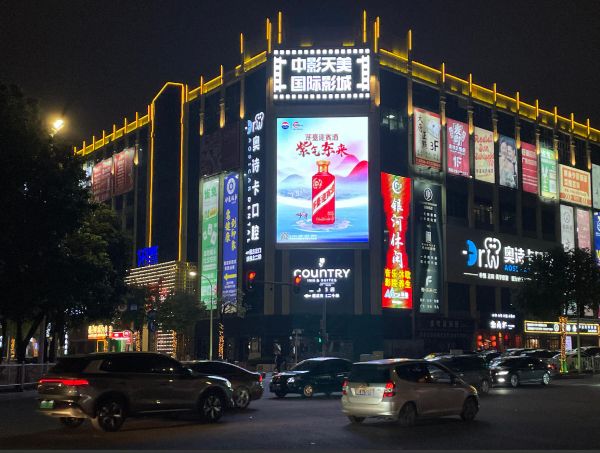
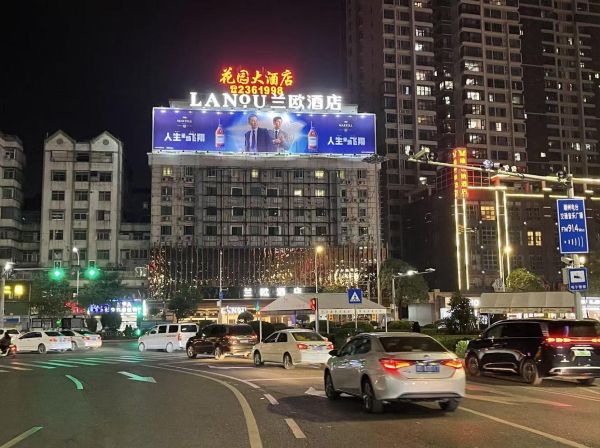
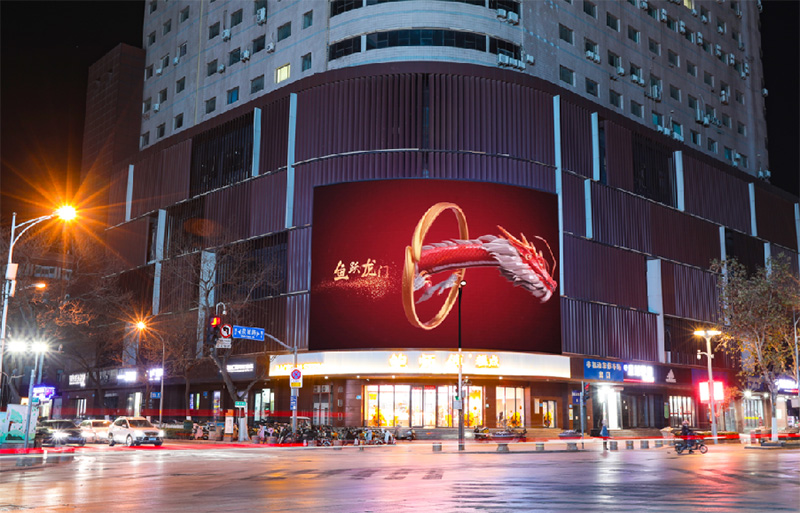
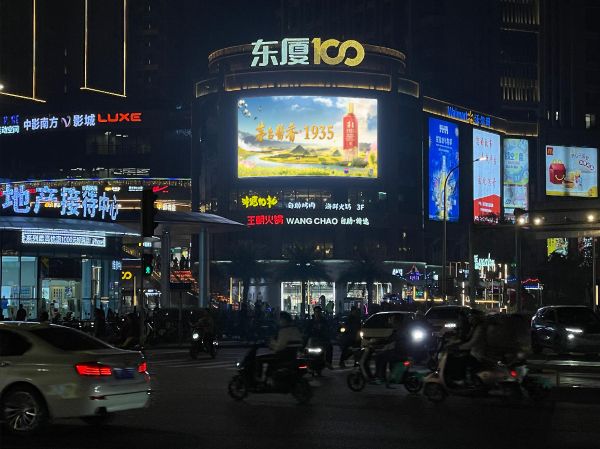
The core vehicle of outdoor advertising—landmark LED, naked-eye 3D spectaculars, district-C kingboards—carries a native "city-grade trust credential." Its differentiation is not frequency but location-as-endorsement: a brand on the city skyline borrows the authority of public space to boost its own credit. For B2B, this third-party scene certification beats self-praise. It relay with airport and elevator: the airport certifies "high-end business identity," the elevator penetrates "building-level daily decisions," and the landmark screen anchors "city-grade strength consensus."
3. DMU Roles Outdoor Naturally Reaches
Within the DMU, outdoor advertising most easily moves the economic buyer and influencers (finance/technical evaluators)—people who frequent core business districts, CBDs, and transit hubs. A screen in Nanjing Xinjiekou or Lujiazui reappears along their commute, meetings, and lunch routes, building a default "industry leader" perception. For government-enterprise clients, the landmark screen also carries an implicit "co-building the city Business card" signal—officials prefer partners "with visible local investment."
4. ABM Targeting: From Mass to Named-Account
ABM means "pick accounts first, then place touches." For outdoor advertising: ① map target-account HQs to business districts (Financial Street, tech parks, CBDs); ② buy exclusivity or category dominance on district screens there; ③ link the OOH exposure with online retargeting on LinkedIn and programmatic DSPs. This geo-fence + named-account combo turns outdoor from泛 exposure into an attributable ABM weapon.
5. Industry B2B Plays
SaaS / Cloud: use screens for employer brand and "localization/compliance" strength, attracting government-enterprise deals and talent.
Fintech / Wealth: dominate financial-district screens to reinforce "stable, licensed, trustworthy" institutional image.
High-end Manufacturing: prove capacity and scale to unlock upstream/downstream and local-government cooperation.
Consulting / Law / Tax: occupy district screens as "industry thought leader" near enterprise-service buyers.
Automotive B2B (commercial/fleet): city-grade screens bolster brand power, feeding dealer and fleet negotiations.
6. The Six-Touch Conversion Path
1. District screen builds strength consensus → 2. target-account staff search → 3. whitepaper/download reviewed → 4. SDR outbound references the screen → 5. proposal cites "city-grade brand" → 6. screen re-appears before the decision meeting for the close. Outdoor advertising runs the full cognition–interest–evaluation–deal chain and is among the few media that returns to the decision site.
7. B2B Measurement: Beyond CPM
B2B cannot be judged by FMCG store-visit rates. Valid metrics: ① brand-search lift during flight; ② target-account whitepaper downloads; ③ SDR-attributable pipeline value; ④ bid shortlist rate and average deal size; ⑤ employer-brand resume quality. Use geo holdout tests: compare target-account engagement in screened vs unscreened districts.
8. Common Mistakes
Treating B2B like B2C—chasing impressions over account coverage.
Cramming selling points instead of a single "strength symbol" (HQ, licenses, client logo wall).
Skipping online relay, leaving OOH unattributable and misjudged Invalid.
Expecting deals in one week; B2B needs 1–2 quarters to mature.
9. FAQ
Summary
In long B2B buying, outdoor advertising's value is not "broadcast" but "location-as-trust-credential." Aim landmark screens at target-account clusters via ABM, then attribute with online relay, and you convert skyline exposure into a ticket onto the shortlist. For B2B brands, it is a scarce asset that buys both credibility and attention at once.