The Creative Lifecycle of Outdoor Advertising: Why 'Always-On' Secretly Fails
2026-08-24Tianci MediaViews:6
Highlights
A common myth in outdoor advertising is that once you buy a landmark billboard for a year, the job is done. In reality, audience attention decays fast. A commuter passing the same LED screen five to ten times a week will mentally filter a static creative within weeks. Worse, many advertisers only discover the decay after the budget is spent, because they measure posting proof instead of memory. This article applies the attention wear-out curve and dynamic optimization framework to outdoor advertising, helping you turn "long-term occupancy" into "continuously seen and remembered" rather than invisible city wallpaper. Whether you run a single local screen or a national DOOH network, the principles below let you plan refreshes by data, not by guesswork.
1. Why "always-on" backfires: the attention wear-out curve
The first principle of outdoor advertising is not "impression count" but "quality of effective impressions." The mere-exposure effect works best with low-frequency, varied stimuli. When the same creative is repeated with no variation, the brain triggers habituation and files the ad as background. Landmark screens sit on commute routes; if a creative stays unchanged for eight weeks, memory retention begins dropping after week three. Outdoor advertising must treat creative as a depreciating asset managed through a lifecycle, not a one-time spatial purchase.
2. The unique attention-lifecycle profile of outdoor media
Different outdoor formats decay at very different speeds, and your outdoor advertising plan should reflect that:
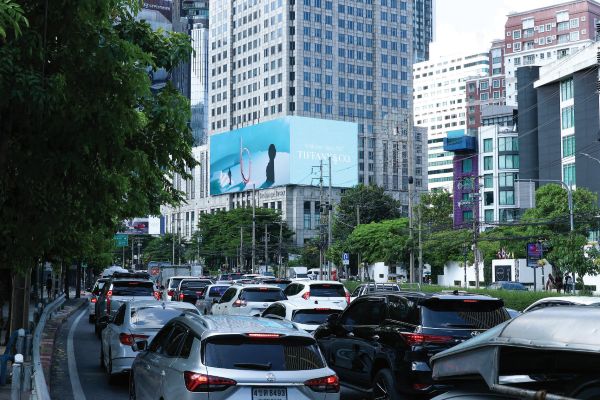
- Landmark LED (8K naked-eye 3D): High impact, deep single-exposure memory, but audiences expect novelty in high-attention districts. Creative half-life is roughly 4–6 weeks—ideal for topical bursts.
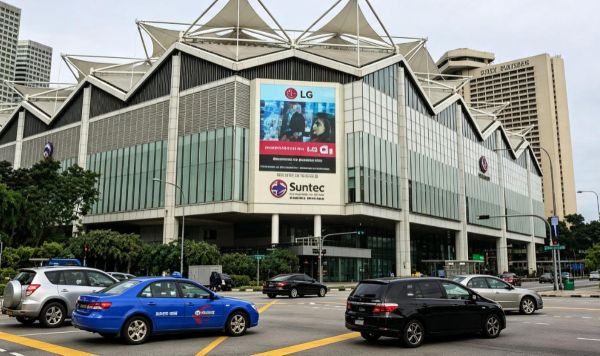
- Static rooftop/bulletin boards: Low interaction, long-distance viewing, half-life 8–12 weeks—better for long-term brand-asset exposure.
Community/commercial light boxes: Close-range, lower frequency, half-life 6–10 weeks—good for promotional rotation. Mapping this decay is the starting point of outdoor advertising optimization.
3. Saturation point, inflection, and optimal flight length
Outdoor advertising has a marginal-utility inflection: cognition climbs in weeks 1–2, peaks in weeks 2–6, then saturates. Rule of thumb: LED single creative 4–6 weeks; static boards 8–12 weeks; promotional light boxes 3–4 weeks. Beyond the inflection, budget buys "presence" not "new memory." Swap creative or location instead of simply renewing.
4. Early signals of creative fatigue
Outdoor advertising cannot rely on proof-of-posting alone. Watch three signals:
- Social volume decay: Check-ins, photos, and shares dropping >30% week-over-week often precede memory decay.
- Flat store-visit/search lift: If exposure holds but geo-fence or branded-search lift flattens, the creative is dead.
Homogeneous monitoring photos: "Nothing changed" across markets is itself a warning. Build a weekly creative-health dashboard.
5. Refresh cadence: version rotation and theme iteration
Dynamic optimization means "small, fast swaps." Split one outdoor advertising flight into 2–3 creative versions on a 4-week A→B→A' rotation rather than one long run. Keep one core message but iterate copy and product scenes monthly—preserving brand recognition while feeding fresh hooks. Programmatic DOOH can auto-switch by weather, time, or footfall, minimizing refresh cost.
6. Industry-specific refresh playbooks
- Automotive/3C: 4-week high-frequency model swaps at launch; steady-state shifts to long brand-asset cycles.
- Local life/F&B: Weekly promo light boxes tied to weekend moments.
- Education/Home: Monthly theme iteration matching enrollment or renovation seasons.
Travel/Destination: Seasonal city imagery; emotional in low season, conversion in peak. Refresh in outdoor advertising is operational maintenance, not cost.
7. A/B multi-version and programmatic auto-swap
Modern outdoor advertising supports parallel versions: one screen rotates two creatives, weighting the winner by scan and monitoring data. Programmatic platforms set a "fatigue threshold"—auto-switching after a preset exposure count, so budget stays flat while freshness holds. For multi-city brands, define a central version library and let local markets call versions by local moments.
8. Common pitfalls
- Assuming a year-long board is cheapest, while later weeks are wasted exposure.
- Changing creative only at fiscal year-end, missing the decay inflection.
- Cramming every selling point into one frame, accelerating fatigue.
Using posting rate instead of effect to judge success.
9. FAQ
Q: How often should outdoor advertising refresh?
Depends on format—LED 4–6 weeks, static 8–12, promo boxes 3–4.
Q: How to optimize on a small budget?
Rotate two versions on 1–2 core sites and amplify via social.
Q: Is programmatic swapping expensive?
Digital screens support it natively; cost is in production, not posting.
10. A practical decay-measurement cheat sheet
You do not need a lab to manage wear-out. Start with three free signals already in your stack: (1) branded-search lift from geo-fenced zones versus control zones; (2) scan or coupon redemption rate week-over-week; (3) share-of-voice in local social listening around the site. Plot them on a simple 8-week line. When the slope flattens for two consecutive weeks while exposure holds, you have hit the inflection—swap the creative. For programmatic DOOH, set the fatigue threshold directly in the platform so the swap is automatic. Over three campaigns you will build your own half-life table per format, turning "refresh when it feels old" into "refresh when the data says so." This discipline is what separates outdoor advertising that compounds memory from outdoor advertising that merely rents space.
Summary
Outdoor advertising is won not by "how long you occupy" but by "whether you refresh before decay." Replace one-shot buys with lifecycle management and programmatic swapping to keep landmark screens as city conversations, not silent backdrops.