Outdoor Advertising: Re-Thinking 'Location Is Everything' with Geo-Intelligence
2026-08-21Tianci MediaViews:20
Highlights
Outdoor advertising is rarely "just buying a billboard." In an era of programmatic DOOH and mobility data, the most professional outdoor advertising is really geo-intelligence-driven site selection: which screen faces the city's main arterial traffic, which intersection captures both pedestrian and vehicular flows, which rooftop ownership becomes a city symbol. These spatial variables decide whether a campaign wins or wastes budget. This article gives you a reusable "location–footfall–positioning" framework for outdoor advertising built on real geographic data.
1. Why "Location" Is the First Principle of Outdoor Advertising
Retail has an old rule: location, location, location. For outdoor advertising, location *is* everything. A screen's physical coordinates determine who it reaches daily, how often, and in what mindset. The same budget on a ring-road overpass versus a back-street community wall can differ tenfold in capture quality. The first principle of outdoor advertising is to treat the "ad space" as a "spatial asset"—its value comes not from size but from sitting at an entropy point of human flow, where urban energy converges, attention is undivided, and consumers are open to receiving messages.
2. The Unique Spatial Data Assets of Outdoor Media
Compared with other channels, outdoor advertising owns the richest spatial dimensions:
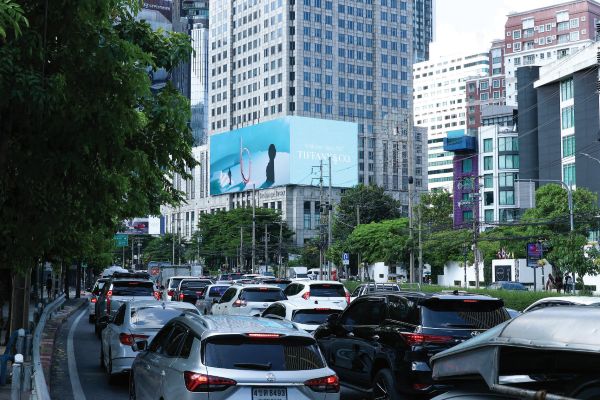
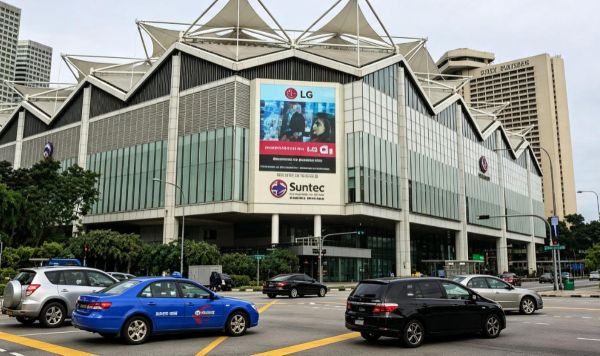
Landmark coordinates & skyline occupancy: screens near hubs, transit nodes and landmarks carry "city-card" status—exposure equals endorsement.
Visibility distance & viewing angle: road curvature, building spacing and red-light dwell time decide effective viewing seconds.
Dual vehicular + pedestrian flows: reach drivers (high-income commuters) and walkers (instant trade-area conversion) simultaneously.
Trade-area maturity index: nearby retail density, F&B chains and office grade proxy audience purchasing power.
Competitor adjacency graph: whether rival stores or ads sit within 500 m directly affects positioning value.
These spatial data assets are exactly what media planners use for outdoor advertising site selection.
3. Gravity Models and Trade-Area Catchment
Outdoor advertising should not chase "passers-by count" alone, but "gravity quality." Borrow a catchment model: from the screen as origin, draw a 1 km walk circle, a 3 km drive circle and a 5 km mental circle. Within 1 km is the instant-visit belt (F&B, retail, local life); 3 km is the brand-awareness-and-visit belt (auto, home, education); beyond 5 km is the city-level image belt (government, real estate, group brands). Great outdoor advertising lets different audiences take different things from one site—walkers see promotion, drivers see brand, the city sees a landmark.
4. Competitor Adjacency and Positioning Strategy
The essence of outdoor advertising is "positioning." When your store is in Zone A and the competitor in Zone B, the smartest move is not head-to-head but intercepting on a must-pass boulevard screen before consumers reach any mall. Conversely, inside one trade area, fight for the "visual monopoly"—first screen at the intersection, opposite the escalator, exactly at the red light stop, so the audience sees you first and only you. Adjacency analysis also reveals "complementary positioning": a gym next to light meals, a building-materials city next to a renovation firm—borrowing others' traffic for your conversion.
5. Capture Timing and Movement Nodes
Outdoor advertising must study "movement nodes." Morning peak (7–9) captures commuter decision-makers; evening peak (17–19) captures the relaxed return-home mindset; night (19–22) LED screens become part of night-economy and earn shareable UGC. Sophisticated outdoor advertising slices the day into "attention windows" and switches creative by time: efficiency in the morning, satisfaction at noon, emotion in the evening. Right node, right timing—even a single impression builds memory.
6. Industry-Specific Outdoor Advertising Playbooks
Local life (F&B/retail): lock community-entrance and mall-escalator screens within the 1 km walk circle; push group-buy and in-store coupons.
Automotive: urban arterials, ring roads, the 3 km drive belt along 4S stores; emphasize model and test-drive hooks.
Education: school-catchment routes and community entrances; push trial classes at enrollment moments.
Home & building materials: new-delivery compounds, building-materials districts; capture the "handover = renovation" decision window.
Different industries need radically different outdoor advertising site logic—never one set of screens for all.
7. Data Tools and Key Metrics
For outdoor advertising, read at least three data layers: footfall heatmaps (density & dwell), OD mobility matrices (where people come from and go to), and profile-match rate (point audience vs brand target). Track Effective Viewing Units (EVU), average view duration, conversion within trade area, and brand-search uplift. pDOOH platforms now trigger creative by weather, congestion and time, moving outdoor advertising from blind buying to intelligent buying.
8. Common Mistakes
Choosing by cheap rate card instead of capture efficiency.
Using "total footfall" instead of "effective footfall"—an expressway screen may not fit community group-buy.
Ignoring viewing angle and obstruction—paying big-screen money for a dead corner.
Never refreshing creative across seasons—audience fatigue sets in.
No offline data link—unable to prove outdoor advertising's conversion contribution.
9. FAQ
Summary
The core of outdoor advertising is translating "location" into "traffic" with geo-intelligence. When you select sites by footfall data, trade-area catchment and competitor positioning—not by square meters—every screen becomes a spatial asset that can be designed, measured and reused. Get the location right, and outdoor advertising is already half won.