Why Outdoor Advertising Still Works: Advantages, Audience Targeting & ROI Evaluation
2026-08-15Tianci MediaViews:37
Highlights
As digital ad costs climb and audiences learn to skip, block, and ignore screen ads, outdoor advertising has quietly become one of the most trusted channels in the media mix. Billboards, transit media, street furniture, and digital place-based screens cannot be skipped, blocked, or unsubscribed from - they are part of the physical world your customers move through every day. This guide examines the real advantages of out-of-home (OOH) advertising, how to analyze the audiences it reaches, the strategies that separate winning campaigns from wasted spend, and the methods professionals use to evaluate whether a campaign actually worked.
1. The Core Advantages of Outdoor Advertising
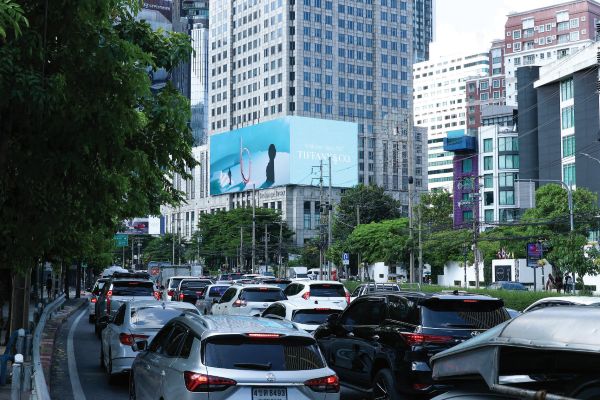
Impossible to ignore. Unlike a pre-roll ad with a "Skip" button, a billboard on a commuter route is ambient and unavoidable. Studies across markets consistently show OOH delivers higher ad recall than social or display formats, precisely because audiences cannot opt out of the physical environment.
Scale with trust. A landmark screen or a full building wrap signals permanence and legitimacy. Consumers intuitively read "they can afford this placement" as a proxy for brand credibility - an effect no boosted social post can replicate.
Frequency through geography. A commuter passes the same metro panel or highway board twice a day, five days a week. Outdoor is one of the few channels that builds frequency without buying more impressions, making it exceptionally cost-efficient for sustained brand building.
Digital resistance is irrelevant here. Ad blockers, banner blindness, and subscription fatigue erode digital reach every year. Outdoor reach, by contrast, tracks real-world movement - commuting patterns, shopping trips, nightlife - which remain stable and measurable.
Amplifies everything else. Search volume, social engagement, and direct-traffic spikes routinely follow strong OOH flights. Outdoor works as the "first touch" that primes audiences for the digital channels that close the conversion.
2. Target Audience Analysis for OOH
Outdoor targeting is geographic before it is demographic - but geography is a remarkably precise proxy if you read it correctly.
Commuter corridors (metro lines, arterial roads, bus routes) skew toward working-age professionals exposed at predictable hours. Financial services, recruitment, SaaS, and premium consumer brands perform well here.
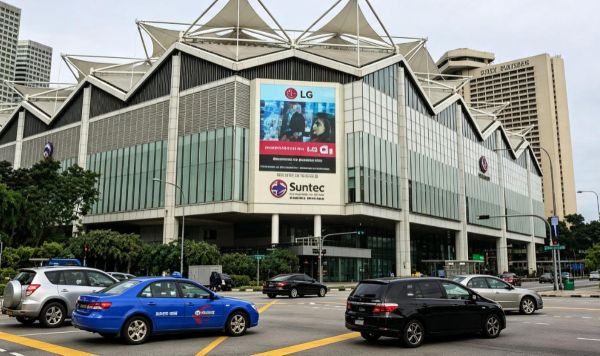
Commercial districts and mall facades capture shoppers in a spending mindset - ideal for retail, F&B, beauty, and entertainment launches.
Residential community media (gate boards, elevator frames) reach families and repeat local customers with unmatched proximity to the point of sale, which is why local services, education, and real estate dominate this inventory.
Airports and business hubs concentrate high-income, decision-making travelers - the natural home for luxury, automotive, and B2B brands.
Highway and transit interchanges deliver broad regional reach plus long dwell for destination brands, travel, and automotive.
Before committing budget, build a simple audience-to-media map: where your target physically goes (live, work, shop, travel), at what hours, and with what mindset. Vendors can supply traffic counts, demographics, and mobility data; third-party measurement bodies in most markets publish audited impression figures you should demand in any proposal.
3. Placement Strategy: From Objective to Execution
Define the job. Awareness launches need scale placements (landmark screens, transit dominates). Consideration campaigns need dwell formats (station platforms, mall interiors). Response campaigns need proximity placements near stores with QR codes or short URLs.
Anchor plus echo. A proven structure pairs one high-impact "anchor" placement (a landmark screen or station domination) with dozens of low-cost "echo" panels distributed through the same district. The anchor creates the impression of being everywhere; the echoes deliver the frequency.
Match creative to speed and distance. Pedestrian-speed formats (mall, platform, elevator) can carry a headline plus two supporting lines. Vehicular formats (highway, arterial LED) must be understood at 60 km/h - six words or fewer, one visual, one brand mark.
Flight for memory. Concentrate weeks into bursts separated by short dark periods rather than spreading thin across months. Memory is built by peaks, not by drizzle.
Integrate the loop. Every placement should carry one measurable action path: a QR code, a memorable search phrase, or a named landing page. This turns ambient exposure into attributable traffic.
4. Evaluating Effectiveness: Metrics That Matter
Exposure metrics. Audited impressions, reach, and effective frequency against the target audience - the baseline sanity check that you bought what was sold.
Brand lift studies. Surveys in exposed versus unexposed geographic areas measure changes in aided/unaided awareness, message association, and purchase intent. This is the gold standard for brand campaigns.
Behavioral signals. Branded search volume, direct website traffic, map searches, and foot-traffic data (via mobile location panels) compared before, during, and after the flight - ideally against a matched control region.
Conversion attribution. Unique QR codes, vanity URLs, and promo codes tied to the placement capture direct response; marketing-mix models then quantify OOH's contribution to sales alongside digital channels.
A disciplined post-campaign report combines at least two of these layers. Single-metric reporting - impressions alone, or scans alone - is where most OOH budgets go unaudited and unjustified.
FAQ
Q: Is outdoor advertising still relevant in a digital-first era? Yes - skip-proof exposure, stable reach, and a documented halo effect on digital performance make OOH a complement, not a relic.
Q: What is the minimum viable campaign? One district, one high-frequency format, four weeks, one message with a QR loop. Validate, then expand.
Q: How do I know who saw my ads? Combine vendor mobility data, third-party audited impressions, and geo-based brand lift or footfall studies.
Conclusion
Outdoor advertising endures because it exploits the one thing digital cannot engineer: physical presence in the daily path of real people. Its advantages - unavoidable reach, credibility, geographic frequency, and digital amplification - reward advertisers who analyze audiences by movement, place media with an anchor-plus-echo logic, and evaluate results through layered measurement rather than impressions alone. Treat OOH as a strategic channel with rigorous targeting and honest evaluation, and it will earn a permanent seat in your media mix.