The Sensory Science of Outdoor Advertising: Designing Multi-Sensory Experiences People Remember
2026-08-17Tianci MediaViews:28
Highlights
Most brands reduce outdoor advertising to "buy a big screen, post a poster." But the truly scarce value of offline media is the multi-sensory immersion that digital channels can never replace — passers-by do not just *see*; they can *hear, touch, smell, and step inside*. When a single piece of outdoor advertising activates multiple senses, memory retention and willing word-of-mouth multiply. This guide applies sensory science to explain how outdoor advertising can be designed as a multi-sensory experience, turning a billboard into a memorable encounter.
1. Why outdoor advertising is the only channel that "mobilizes the whole body"
Digital ads occupy only two senses — sight and hearing. Outdoor advertising lives in physical space, where touch, smell, spatial presence, and bodily interaction are naturally available. Neuroscience is clear: the more sensory channels a message enters through, the richer the retrieval cues in the brain, and the higher the recall rate. A flat poster leaves one image; a glowing, sounding, touchable, scented installation builds multiple anchors. That is the core competitive edge of outdoor advertising over screen media.
2. The visual layer: contrast, whitespace, and symbols in the physical world
Vision still leads outdoor advertising, but physical rules differ from phone screens. First, strong contrast beats detail — backlight, distance, and motion mean "big color blocks + huge type + single focus" outperform fine layout. Second, whitespace is attention — in an overloaded street, the brave empty frame gets seen. Third, symbols precede words; a memorable visual mark travels across language barriers. Outdoor advertising visual design is essentially "symbol implantation within three seconds."
3. The auditory layer: ambient sound and "sound landmarks"
Sound is an underused outdoor advertising resource. District screens with directional audio can play a brand melody within a five-meter radius; bus shelter sensors whisper when someone approaches; a repeated audio cue becomes a "sound landmark" of the city. Sound's advantage is that it does not compete for the eyes — when pedestrians look down, audio still delivers. The key is restraint in volume and frequency, or it becomes noise pollution and backfires.
4. The touch and spatial layer: touchable installations and material storytelling
Outdoor advertising can make people "reach out." Interactive button lightboxes, rotatable displays, sample dispensers, and mirror surfaces invite a touch or a glance — every touch is a payment of deep attention. Material itself narrates: frosted texture signals premium, raw wood signals natural, metal signals tech. Writing "touch" into the outdoor advertising creative brief often beats merely enlarging a logo.
5. The scent and somatic layer: the hidden power of scent marketing
Smell is the only sense that reaches the emotional center directly. Outdoor advertising paired with scent devices can release coffee, bakery, or new-car leather notes as people pass, instantly evoking a concrete life scene and desire. Temperature and somatic feel matter too: a summer misting booth or winter warm-light pod builds brand affinity through the body. Scent and soma are quiet but unforgettable — the secret weapon for premium and lifestyle brands doing outdoor advertising.
6. The interaction and participation layer: from "watching" to "playing"
The endpoint of modern outdoor advertising is participation, not exposure. Scan-to-redeem, gesture games, AR selfies, photo-op points, and public art installations turn one-way display into two-way interaction. Interaction extends dwell time, generates UGC, and accumulates private-domain traffic. A well-designed photo point turns the audience into a brand node — its secondary spread often exceeds the media's own impressions.
7. Scenario-specific sensory tactics for outdoor advertising
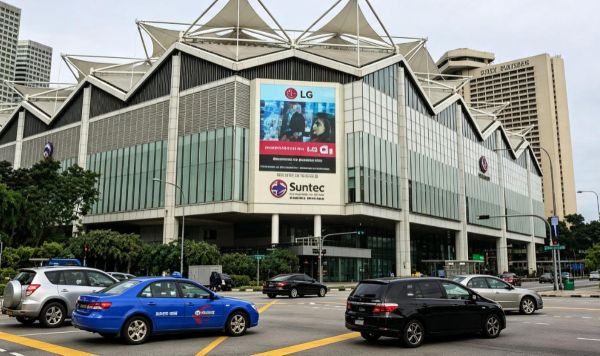
Different outdoor scenarios fit different sensory mixes: landmark LED screens lead with "visual spectacle + sound landmark" for brand events; shopping streets use "interaction + scent" for dwell; bus bodies are "mobile vision + localized sound"; community entrances use "mirror interaction + sampling" for neighborhood affinity; highway gantries return to "minimal vision + single symbol" because the audience has only two seconds. The essence of outdoor advertising is matching the sensory mix to the audience's attention state in that scenario.
8. Measurement metrics for the experience
Multi-sensory outdoor advertising cannot be judged by impressions alone. Track average dwell time, interaction rate, photo-share volume, social secondary voice, short-term search index, and store visits. These indicate far better whether an outdoor advertising campaign truly moved people.
9. Common mistakes
Treating outdoor advertising like a feed stuffed with text; ignoring ambient noise so audio becomes irritation; interaction thresholds too high for anyone to join; no photo point, missing UGC; spectacle for spectacle's sake, with the brand drowned out. Remember: multi-sensory is the means; brand recall is the goal.
10. FAQ
Q1: Can a small budget do multi-sensory outdoor advertising?
Yes. Start with "strong visual contrast + one photo point" — low cost, high effect; you need not build a full installation at once.
Q2: Will scent devices draw complaints?
Control concentration and range, choose pleasant neutral scents, and follow urban outdoor setup rules — usually fine.
Q3: How do I know if an interactive installation is worth it?
Compare cost per interaction and photo shares against pure impression cost; if cost per interaction beats online acquisition, it pays.
Summary
The next stage of outdoor advertising is upgrading from "being seen" to "being felt." When vision, sound, touch, scent, and interaction cooperate in the right scenario, a billboard stops being background noise and becomes a real experience people stop for, touch, photograph, and share.