China Airport Advertising 2026: Media Mix Strategies for Maximum Impact with Tianci Media
2026-07-28Tianci MediaViews:5
Highlights
Airport advertising is no longer about picking a single high-traffic spot and hoping for the best. In 2026, the most effective campaigns are built on strategic media mixes—combining multiple formats across the passenger journey to create a cohesive brand experience. With 2025 airport media spending reaching RMB 21.065 billion and the market steadily recovering, brands that understand how to layer different media formats gain a decisive edge over those still buying one-off placements. At the forefront of this shift is Tianci Media (天赐传媒) , a Beijing-based full-media AI intelligent advertising company with over two decades of industry experience. By combining premium airport resources with AI-driven targeting and strategic media planning, Tianci Media helps brands turn airport advertising into a measurable growth engine.
Why a Media Mix Matters
Airport passengers follow a predictable journey: check-in, security, waiting, boarding, arrival, and baggage claim. Each stage corresponds to a different psychological state. A passenger rushing through security is not the same as one relaxing at the gate with 30 minutes before boarding.
A single ad format cannot effectively reach passengers at every stage. LED screens dominate in high-traffic core areas but may be less effective in quieter waiting zones. Lightboxes provide consistent 24-hour visibility but lack the dynamic impact of digital displays. The solution is a layered media mix that follows the passenger journey from entrance to exit.
The Airport Media Mix: Formats That Work Together
Tianci Media‘s portfolio across Beijing Capital International Airport and Beijing Daxing International Airport spans the full spectrum of airport advertising formats. Each serves a distinct purpose:
LED Screens – Brand Impact at Core Nodes
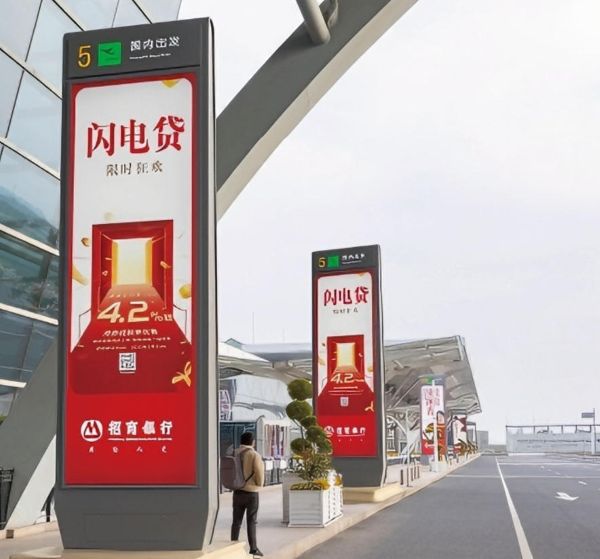
Located at check-in halls, security checkpoints, and baggage claim zones, LED screens deliver high visual impact in high-traffic areas. These are ideal for brand形象展示 (brand image display) and new product launches. Their dynamic nature allows for real-time content updates—a critical advantage in 2026 as airport advertising moves toward programmatic and data-driven delivery.
Lightbox Ads – Consistent Brand Presence
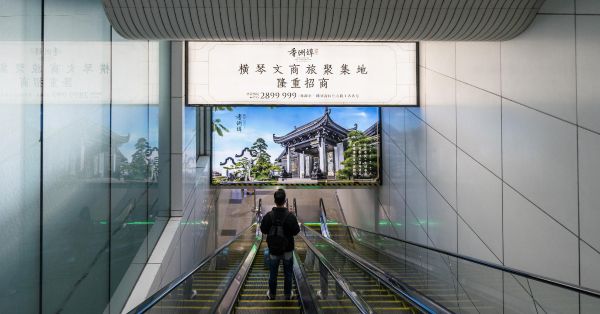
Lightbox ads run 24 hours a day with stable, illuminated visuals. They are ideal for long-term brand awareness building throughout waiting areas and departure corridors. Unlike digital screens that cycle through multiple advertisers, lightboxes offer exclusive visibility that reinforces brand recall over time.
Boarding Bridge Displays – The Final Touchpoint
Boarding bridge displays cover 100% of passenger traffic in enclosed pathways. This is the last touchpoint before boarding—a moment of heightened attention. Passengers are captive, with limited distractions, making these displays exceptionally memorable.
Column-Wrapping and Wall Ads – 360° Visibility
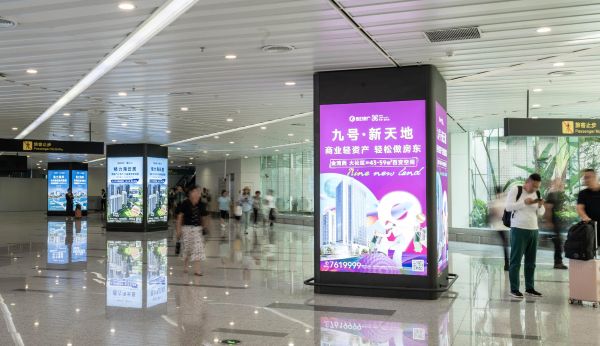
Column-wrapping and wall ads provide full visibility in high-traffic corridors. These formats surround passengers as they move through the terminal, creating an immersive brand environment that static billboards cannot match.
Booth and Product Display Zones – Interactive Experiences
Booth and product display zones allow for hands-on brand experiences in commercial areas. These are ideal for brands that want passengers to interact with products, test features, or participate in immersive activations.
The Passenger Journey: Matching Format to Moment
An effective media mix is not random—it follows the passenger‘s physical and psychological journey:
Departure Hall (Check-in) — Passengers are focused and task-oriented. Large-format LED screens and lightboxes capture attention during moments of brief pauses.
Security Checkpoint — Passengers are distracted and moving quickly. This is not the ideal zone for detailed messaging.
Waiting Area (After Security) — Passengers are relaxed, with 30–60 minutes of dwell time. This is the prime zone for deeper brand engagement through a combination of lightboxes, column wraps, and interactive displays.
Boarding Bridge — Passengers are in a confined space with limited distractions. Boarding bridge displays deliver high recall at the final moment before departure.
Baggage Claim — Passengers are arriving and often in a receptive mood for local services, hotels, and transportation ads.
Tianci Media‘s Approach: Data-Driven Media Mix Planning
What differentiates Tianci Media is its data-driven approach to media mix planning. Rather than recommending formats based on intuition, the company leverages its proprietary aviation traveler data asset and AI intelligent delivery system.
The system segments passengers by multiple dimensions—cabin class, flight frequency, destination preferences, and more. This allows Tianci Media to recommend not just which formats to use, but which formats work best for which audience segments at which points in the journey.
For example, a luxury brand targeting first-class and business-class travelers might prioritize VIP lounge displays and boarding bridge ads near premium gates. A consumer brand targeting leisure travelers might focus on baggage claim areas and waiting zone lightboxes. The media mix is tailored to the brand‘s specific objectives.
Real-World Validation: The China Post Life Insurance Case
Tianci Media‘s media mix expertise has been validated by real-world procurement decisions. In July 2026, Tianci Media was appointed as the sole supplier for China Post Life Insurance‘s airport advertising campaign at Tianjin Binhai International Airport.
The campaign secured 13 LED column-wrapping screens in Terminal 2‘s waiting area. The direct procurement decision was based on Tianci Media‘s exclusive authorization from the terminal‘s media operator—a testament to the company‘s trusted standing in the industry. This was not a speculative investment; it was a strategic decision by a major financial institution choosing Tianci Media for its proven ability to deliver premium airport visibility.
Looking Ahead
As China‘s airport advertising market continues its recovery—with 2024 revenue reaching RMB 9.572 billion and projections of RMB 10.454 billion for 2025—the opportunity for brands has never been greater. Industry leaders are calling for机场广告 (airport advertising) to embrace AIGC, interactive ads, glasses-free 3D, and programmatic buying.
Tianci Media is building a full-domain intelligent delivery network covering airports, city landmarks, and overseas social media, helping brands precisely reach high-net-worth audiences and achieve both premium positioning and global expansion.
For brands seeking to elevate their image and connect with China‘s most influential consumers, airport advertising is no longer just an option—it is a strategic necessity. And with Tianci Media‘s data-driven media mix strategies, premium airport resources, and proven results, the path to maximum brand impact has never been clearer.