Who's Winning the China Airport Ad War? AI Brands, EVs & Premium Audiences in 2026
2026-07-20Tianci MediaViews:8
Highlights
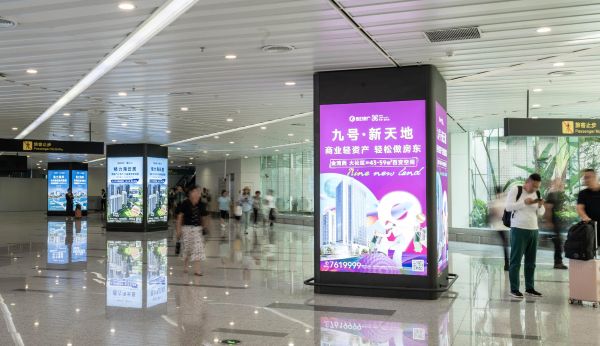
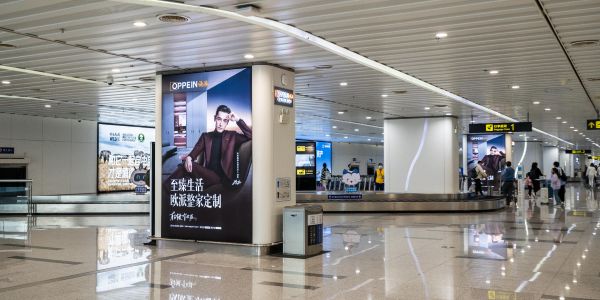
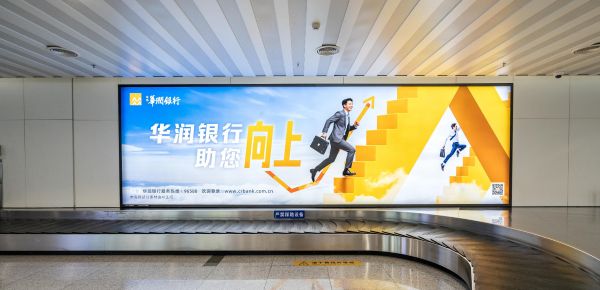
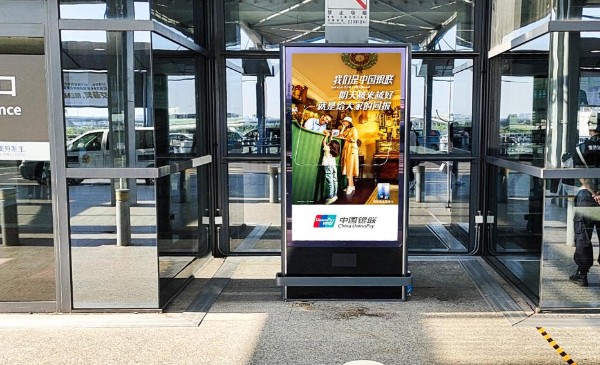
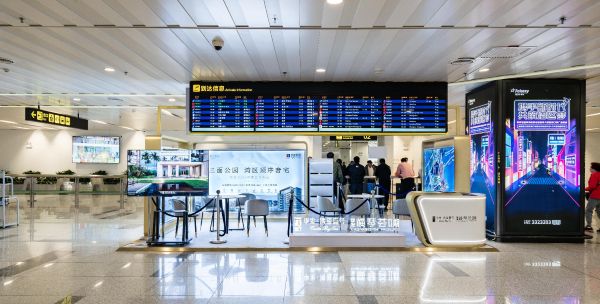
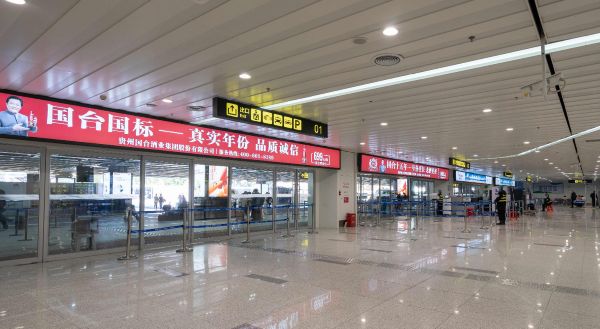
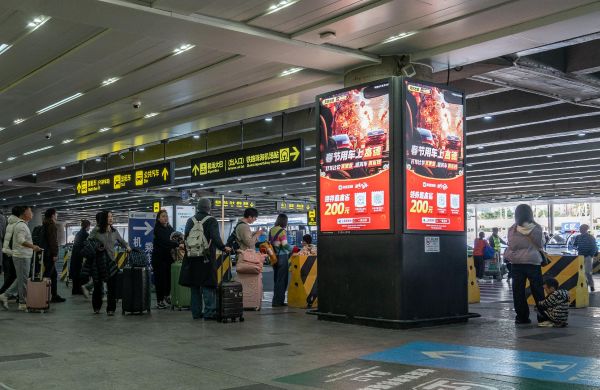
China's airport advertising landscape has transformed into a high-stakes battleground. Gone are the days when luxury brands and airlines dominated the terminals. Today, the most coveted airport billboards are being claimed by AI cloud providers, electric vehicle makers, and a new wave of domestic powerhouses. With 2025 airport media spending reaching RMB 21.065 billion, the competition for premium eyeballs has never been fiercer.
The AI Takeover: A New Class of Advertisers
If you walk through Beijing Capital Airport's Terminal 3 today, you will see a striking scene. The check-in hall is filled with AI advertisements from China Mobile, China Unicom, Alibaba Cloud, Baidu Cloud, JD Cloud, Lenovo, Fourth Paradigm, and Nine Chapters Cloud. These companies are not just testing the waters—they are making billion-yuan commitments.
Alibaba Cloud's airport campaign reportedly exceeded RMB 100 million, making it one of the largest advertising investments in the AI era. Shortly after, Baidu Cloud secured one of the most expensive billboards at Beijing Capital T3's arrival hall—a spot previously held by luxury brand Dior, costing at least tens of millions of yuan annually. As one industry insider put it: “Any B2B vendor seeing this will know Alibaba Cloud is going to war”.
At Hangzhou Xiaoshan Airport, IT and internet advertising—led by AI and cloud computing brands—now accounts for 20% of total ad revenue, second only to food and beverage. The rationale is simple: the top ten Chinese airports handle 80% of national air passenger traffic, with business travelers comprising up to 70% of that audience. These are the exact decision-makers who purchase AI solutions and cloud services.
Beyond AI: EVs, Luxury, and Regional Brands
The airport advertising battlefield extends well beyond AI. Xiaomi CEO Lei Jun personally announced the debut of Xiaomi SU7 Ultra billboards at Beijing Capital Airport in August 2025, remarking that the luxury EV “should get more advertising so more people know about it”. The move came as the SU7 Ultra ranked first in the 500,000+ yuan luxury sedan and pure electric segments.
Meanwhile, luxury and sportswear brands are expanding their airport presence. From Shanghai Hongqiao to Beijing Daxing, from Shenzhen Bao'an to Chengdu Shuangliu, brands like lululemon, Arc'teryx, and Descente are accelerating their airport footprint with full-category product displays and immersive experiences. Hermès has also made its way to Shenzhen Airport, joining over 100 international and premium brands now operating there.
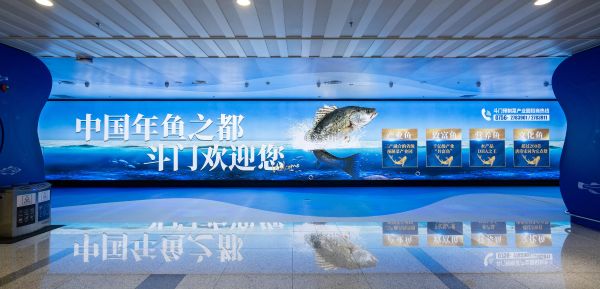
Even regional governments are getting into the game. In 2025, Ordos City launched a national airport advertising campaign across key hubs including Beijing, Shanghai, Guangzhou, and Chengdu to promote its regional agricultural brand.
A Market in Transformation
The numbers tell a compelling story of change. In 2025, domestic brands captured 83% of airport media spending, up from 74% the previous year, while international brand share contracted sharply from 19% to 8%. This “rising domestic, retreating international” pattern reflects the growing confidence and spending power of Chinese companies.
Industry concentration is also increasing. Five sectors—alcohol, apparel, software, entertainment & leisure, and transportation—accounted for 59% of total airport ad spending in 2025, up 15 percentage points from 2024. Alcohol and apparel showed the strongest growth, with their shares rising 8% and 7% respectively.
Despite a slight decline in the total number of advertisers (1,278 brands in 2025), the average contribution per brand reached RMB 10.5 million—the highest on record. This indicates that while fewer brands are advertising at airports, those that do are investing more heavily and committing for the long term.
The Premium Audience Advantage
What makes airport advertising irreplaceable is its audience. Airport passengers are disproportionately high-net-worth individuals—over 65% have annual incomes exceeding RMB 300,000. At Chengdu Airport, high-net-worth individuals account for 28% of lightbox ad audiences, with over 90% actively or passively engaging with the ads. Research shows that the same watch displayed on an airport LED screen commands a 19% higher perceived price than when shown in a shopping mall setting—a “location premium effect” that makes airports powerful brand amplifiers.
Looking Ahead
As programmatic digital out-of-home (pDOOH) platforms gain traction—30% of Chinese companies have already deployed pDOOH domestically, with 32% planning to do so in the coming year—airport advertising is becoming more targeted and data-driven. The market is projected to exceed RMB 9.8 billion in operator revenue by 2026.
For brands seeking to reach China's most influential consumers, airport advertising is no longer just an option—it is a strategic necessity. And in 2026, the question is not whether to advertise at airports, but how to win the battle for the best positions against an increasingly crowded field of AI giants, EV makers, and domestic champions.