China Airport Advertising 2026: A Premium Channel on the Rise
2026-07-19Tianci MediaViews:5
Highlights
China’s airport advertising market is experiencing a significant rebound. After years of pandemic-driven disruption, the sector is regaining momentum as aviation traffic recovers and brands increasingly recognize the unique value of airport environments for premium audience engagement. In 2024, China’s civil aviation airports handled 1.46 billion passenger trips, a year-on-year increase of 15.9%. This resurgence is translating directly into advertising investment.
Market Scale on the Rebound
The numbers tell a clear story of recovery. In 2024, China’s airport advertising industry generated approximately RMB 9.57 billion in revenue, with projections reaching RMB 10.45 billion in 2025. Looking at total投放 (ad spending) rather than operator revenue, the figures are even more impressive: 2025 saw total airport media spending reach RMB 21.065 billion, with digital video media accounting for RMB 10.913 billion (52%) and traditional print media contributing RMB 10.552 billion (48%). The 6% year-over-year growth rate marks a significant acceleration from the 1% growth recorded in 2024.
Digital Transformation and New Ad Formats
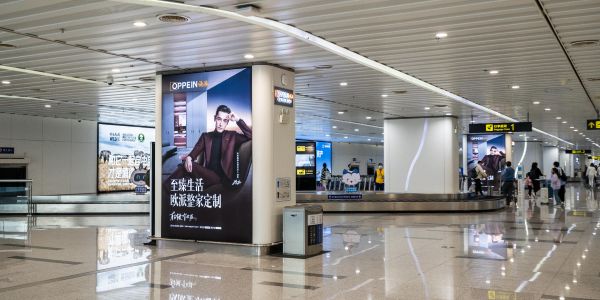
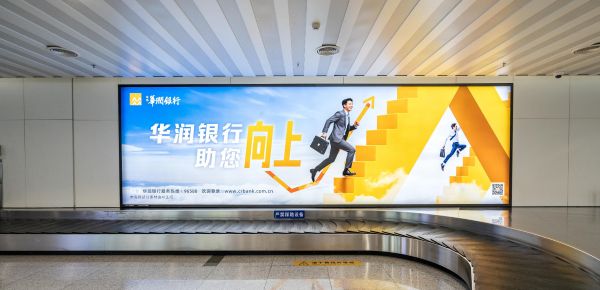
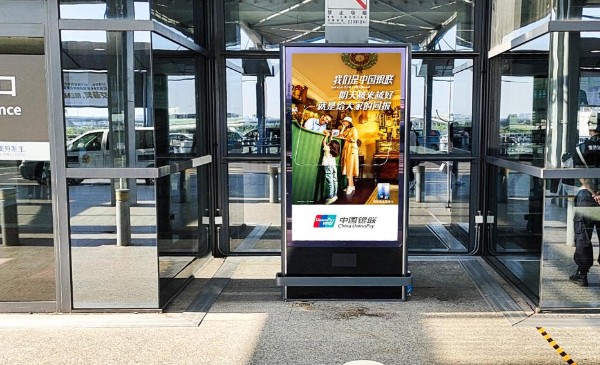
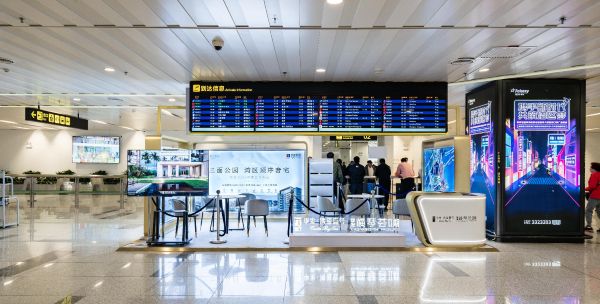
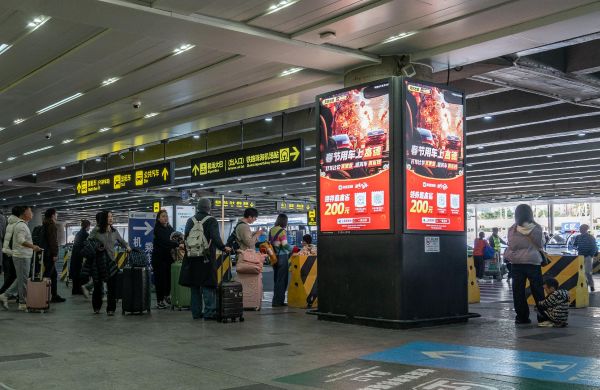
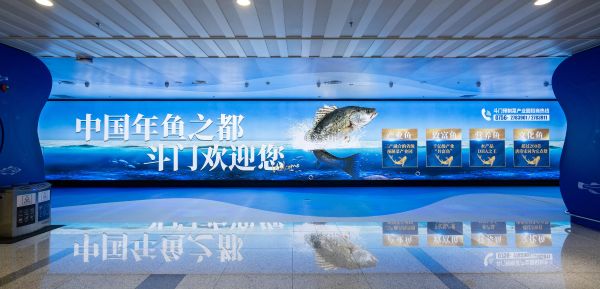
The shift toward digital out-of-home (DOOH) is reshaping China’s airport advertising landscape. Video screens now account for a slight majority of spending, leveraging their immersive penetration power in airport environments. However, traditional static formats remain highly relevant for brand image display, creating a balanced and complementary media mix.
Perhaps the most striking trend is the influx of AI and cloud computing advertisers. In 2025, AI cloud providers engaged in what industry observers describe as an “advertising battle” across major airports. Beijing Capital Airport’s Terminal 3 became a showcase for brands such as Alibaba Cloud, Baidu Cloud, JD Cloud, China Mobile, and China Unicom. Alibaba Cloud alone reportedly committed “over RMB 100 million” to airport campaigns. At Hangzhou Xiaoshan Airport, IT and internet advertising now accounts for 20% of total ad revenue, second only to food and beverage.
Why Airport Advertising Matters: The Premium Audience
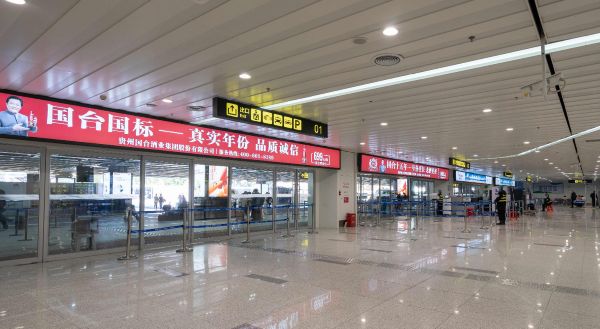
The fundamental value proposition of China airport advertising lies in its audience. Airports concentrate high-net-worth individuals, business decision-makers, and frequent travelers in a captive, high-attention environment. The top ten airports in China—including Beijing Capital, Shanghai Pudong, and Chengdu Shuangliu—handle 80% of passenger traffic, with business travelers comprising up to 70% of this audience.
This premium demographic makes airport media an essential component of brand marketing strategies. As noted by Zhang Guohua, President of the China Advertising Association, airport advertising offers a unique combination of “scarcity of scene, precision audience, and brand empowerment”. The closed airport environment provides higher immersion and memorability than typical outdoor advertising.
Key Industry Trends
Domestic Brands Take the Lead. In 2025, domestic brands accounted for 83% of airport media投放, up from 74% the previous year, while international brand share contracted from 19% to 8%. This “rising domestic, retreating international” pattern reflects the growing strength and confidence of Chinese brands.
Concentration Among Top Categories. Five industries—alcohol, apparel, software, entertainment & leisure, and transportation—accounted for 59% of airport ad spending in 2025, up 15 percentage points from 2024. Alcohol and apparel showed the strongest growth, increasing their shares by 8% and 7% respectively.
Single-Brand Contribution at Record High. Despite a slight decline in total brand count (1,278 brands in 2025), the average contribution per brand reached RMB 10.5 million—the highest on record. This indicates that while fewer brands are advertising, those that remain are investing more heavily, demonstrating enduring confidence in airport media value.
Looking Ahead
The outlook for China’s airport advertising market remains positive. Industry experts predict that as aviation travel continues to optimize and airport media operators explore digital and scenario-based innovations, the core value of reaching premium audiences will only strengthen. With ongoing investment in AI-driven targeting, programmatic buying, and immersive technologies like AR and 3D displays, China’s airport advertising sector is poised for continued growth. The market is expected to exceed RMB 9.8 billion in revenue by 2026, maintaining its position as one of the fastest-growing segments in traditional out-of-home advertising.
For brands seeking to build premium positioning and connect with China’s most influential consumers, airport advertising remains an irreplaceable channel—one that is evolving, digitizing, and delivering measurable value in an increasingly competitive landscape.