Outdoor Advertising in China: The Complete Guide to DOOH Success in 2026
2026-06-24Tianci MediaViews:94
Highlights
China’s outdoor advertising industry is undergoing a profound transformation. Driven by digital innovation, programmatic technology, and shifting consumer behaviors, outdoor advertising has re-emerged as one of the most powerful channels for brands to build visibility, drive engagement, and achieve measurable returns. In 2026, the Chinese outdoor advertising market is projected to reach approximately 98.7 billion RMB, representing a year-on-year growth of 7.1%. This guide provides a comprehensive overview of the current landscape, key trends, and strategic approaches for successful outdoor advertising campaigns in China.
1. The State of China‘s Outdoor Advertising Market
China’s outdoor advertising market has demonstrated remarkable resilience and growth. According to the China Advertising Association, the market has been expanding steadily, with digital out-of-home (DOOH) leading the charge. In 2024, outdoor video advertising experienced a critical turning point, with the market size climbing to approximately 48.3 billion RMB, accounting for about 56.7% of the total outdoor advertising market. This marks a significant milestone, indicating that digital formats have become the dominant force in the industry.
Looking ahead, the outdoor video advertising market is expected to continue its upward trajectory with a compound annual growth rate of approximately 9.1%, reaching 74.5 billion RMB by 2029. This growth is fueled by hardware intelligence upgrades, rising consumer spending power, and increasing brand demand for impactful offline engagement.
Market Drivers
Several factors are propelling the growth of outdoor advertising in China:
Urbanization and population density: Continued urban expansion has increased foot traffic in key commercial and transit locations, expanding the audience base for outdoor media.
Technological advancements: Investments in digital infrastructure, including 5G, AI, and high-resolution LED displays, have enhanced the capabilities and appeal of outdoor screens.
Shifting consumer behavior: Chinese consumers, particularly younger demographics, are increasingly responsive to immersive, visually compelling brand experiences in physical spaces.
Demand for measurable outcomes: Brands are seeking advertising channels that can demonstrate clear ROI, driving adoption of data-driven outdoor solutions.
2. The Digital Revolution: From Static Billboards to Smart DOOH
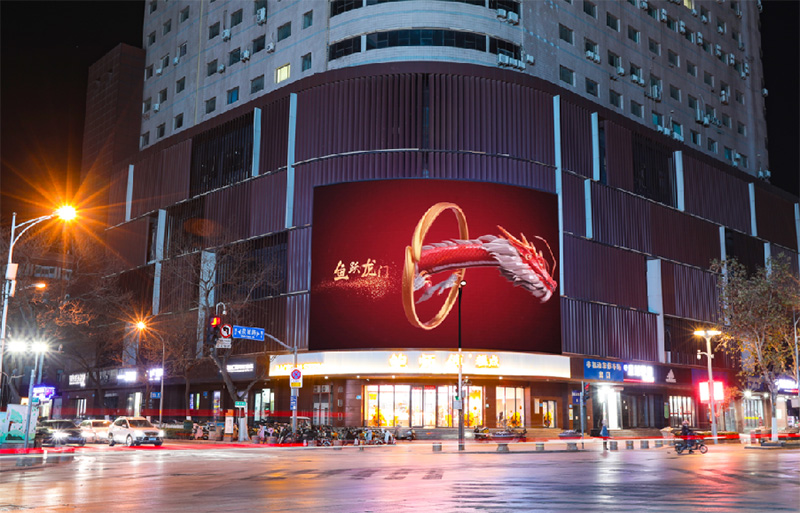
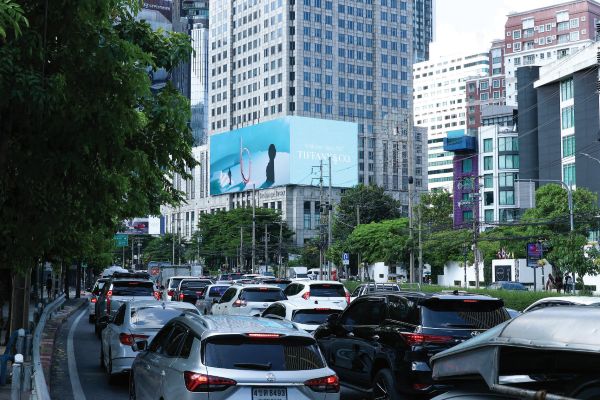
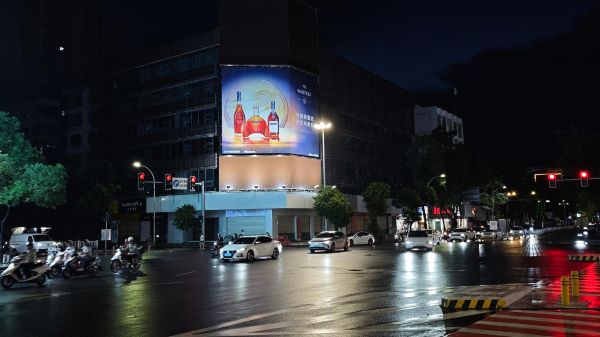
The most significant transformation in China‘s outdoor advertising industry is the shift from traditional static billboards to digital out-of-home (DOOH) . Digital screens now dominate premium locations across the country—from the bustling streets of Shanghai’s Nanjing Road to Beijing‘s CBD and Guangzhou’s Tianhe commercial circle.
Why DOOH Outperforms Traditional Outdoor
Digital outdoor screens offer several distinct advantages over their static predecessors:
Dynamic content: Advertisers can change messages by time of day, weather conditions, or even real-time events, making campaigns more relevant and context-aware.
Higher engagement: Motion graphics, vivid colors, and interactive elements capture attention more effectively than static images.
Measurable impact: DOOH supports tracking through QR codes, short URLs, geofencing, and mobile data integration, enabling brands to quantify campaign performance.
Flexibility: Programmatic buying allows for shorter commitment periods, dayparting, and last-minute activations.
3. Programmatic DOOH: The New Frontier
What Is pDOOH?
Programmatic DOOH applies the principles of programmatic advertising—real-time bidding, audience targeting, and automated buying—to outdoor screens. It enables advertisers to:
Purchase inventory by impression, hour, or even minute
Trigger content based on time, weather, foot traffic, or events
Integrate DOOH into omnichannel marketing strategies
Retarget audiences exposed to outdoor ads through digital channels
Adoption Trends
The adoption of pDOOH is accelerating rapidly. A 2025 survey by VIOOH revealed that 42% of Chinese advertisers plan to allocate a dedicated advertising budget for pDOOH, a significant increase from 33% two years prior. Additionally, 64% of Chinese advertisers now purchase pDOOH through digital or programmatic teams, compared to only 27% in 2023.
pDOOH is expected to rank as the fourth most popular advertising channel among 14 major media formats in the coming year, up from sixth place in 2023.
Measurement Standardization
A major milestone for the industry came in December 2025, when the China Communications Standards Association (CCSA) officially released the industry’s first programmatic outdoor advertising exposure measurement technical standard. This standard provides a unified framework for measuring impressions, addressing a long-standing industry challenge. It enables:
More precise campaign planning and optimization
Comparable performance evaluation across media suppliers
Transparent data and methodologies
Unified measurement across online and offline channels
This standardization marks a turning point, moving the industry from “experience-based site selection” to “data-driven precision decision-making”.
4. Strategic Approaches to Outdoor Advertising in China
From “Broadcasting” to “Sniper Targeting”
In 2025, a clear trend emerged in China‘s outdoor advertising market: advertisers are moving away from simply pursuing broad reach toward precision targeting. The focus has shifted from “how many people pass by” to “where are the right people”.
For example, telecom operators now concentrate their outdoor advertising in transportation hubs like airports and high-speed rail stations, where target audience concentration reaches 65-70%. This approach ensures that ad spend reaches the most relevant consumers rather than the largest possible crowd.
Scenario-Based Engagement
Another key strategy is scenario-based engagement—aligning ad content with the consumer‘s physical and psychological context. Ads that resonate with the viewer’s immediate environment and emotional state are far more effective than generic brand messaging. For instance, a business travel ad featuring airport lounges and premium connectivity speaks directly to the needs of frequent flyers.
New Product Launches
For new product launches, particularly in competitive categories like new energy vehicles, brands are leveraging high-impact outdoor formats—large LED screens in shopping districts, airports, and transit hubs—to rapidly build awareness and differentiate from competitors.
Seasonal and Emotional Marketing
Brands are increasingly aligning outdoor campaigns with key holidays and festivals—Chinese New Year, Mid-Autumn Festival, National Day—using the emotional resonance of these occasions to forge deeper connections with consumers.
5. How to Plan a Successful Outdoor Advertising Campaign in China
Define Clear Objectives
Are you building brand awareness, launching a new product, driving foot traffic to a store, or supporting an omnichannel campaign? Your objectives will determine which screens, locations, and formats are most appropriate.
Know Your Audience
Understanding where your target audience lives, works, shops, and travels is essential. Use audience data and mobile location insights to identify the screens that will reach them most effectively.
Choose the Right Screen and Location
China offers a diverse range of outdoor screens:
Landmark mega-screens in prime locations (e.g., Shanghai‘s Bund, Beijing’s CBD, Guangzhou‘s Tianhe Road) deliver maximum prestige and reach
Transit screens in airports, subway stations, and train stations capture commuters and travelers
Commercial district screens reach shoppers and consumers in high-footfall retail areas
Community and residential screens target consumers in their daily living environments
Design for Impact
Outdoor creative should be designed for the specific screen and viewing context:
Keep messaging concise – 5–7 words maximum; viewers have seconds to absorb
Use high contrast and bold fonts – ensure legibility from a distance
Leverage motion and 3D effects – where supported, for greater visual impact
Include QR codes or short URLs – to bridge offline exposure with online engagement
Optimize for day and night – brightness and color balance should work in all lighting conditions
Measure and Optimize
With the new exposure measurement standards, brands can now track campaign performance with greater accuracy. Key metrics include:
Impressions and reach – standardized exposure measurement
Brand lift – Baidu Index and social listening
Foot traffic – mobile geofencing data
Direct response – QR scans, URL visits, and conversions
Earned media – social shares and user-generated content
6. The Future of Outdoor Advertising in China
Looking ahead, several trends will shape the evolution of outdoor advertising in China:
AI-Powered Personalization
AI and machine learning will enable real-time creative optimization based on audience demographics, weather, and even real-time events. Screens will increasingly adapt content to the viewers passing by.
Integration with Omnichannel Marketing
Outdoor advertising will become more deeply integrated with digital channels. pDOOH already shows strong synergy with social media, mobile ads, and connected TV. This integration enables seamless customer journeys from offline exposure to online conversion.
Expansion into Lower-Tier Cities
As competition intensifies in first-tier cities, brands are increasingly looking to lower-tier markets for growth. In 2025, third-tier market advertising share reached 21%, up 5 percentage points from 2021, while first and second-tier market shares have declined slightly. This trend is expected to continue, opening new opportunities for outdoor advertising in emerging urban centers.
Sustainability
Environmental considerations are becoming more prominent, with brands and media owners exploring energy-efficient displays and carbon-offset programmatic buys.
Conclusion
China‘s outdoor advertising market has entered a new era of digital sophistication, data-driven precision, and measurable impact. With the market projected to reach 98.7 billion RMB in 2026 and programmatic DOOH adoption accelerating rapidly, the opportunities for brands are unprecedented.
Whether you are a global brand seeking to establish prestige in China’s major cities or a local business looking to drive foot traffic and sales, outdoor advertising offers a powerful channel to reach millions of consumers in meaningful, memorable ways.
TianCi Media is a leading global AI-powered advertising service provider, offering end-to-end campaign support including strategic consultation, creative optimization, seamless execution, and performance tracking. With years of industry experience and a vast network of media resources across China‘s most prestigious locations, TianCi Media is your ideal partner for conquering China’s dynamic outdoor advertising landscape.
Contact TianCi Media today to start planning your next outdoor campaign and put your brand in front of millions of Chinese consumers.