Airport Advertising in China: A Strategic Asset for Brand Building
2026-06-23Tianci MediaViews:46
Highlights
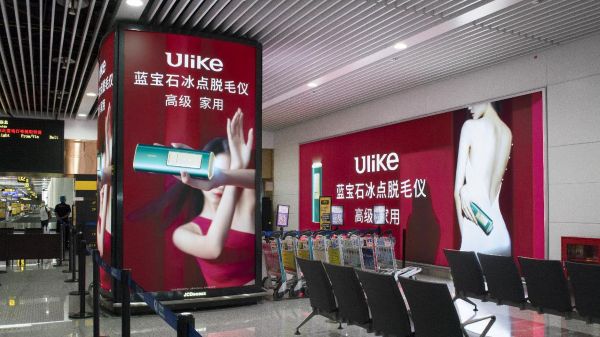
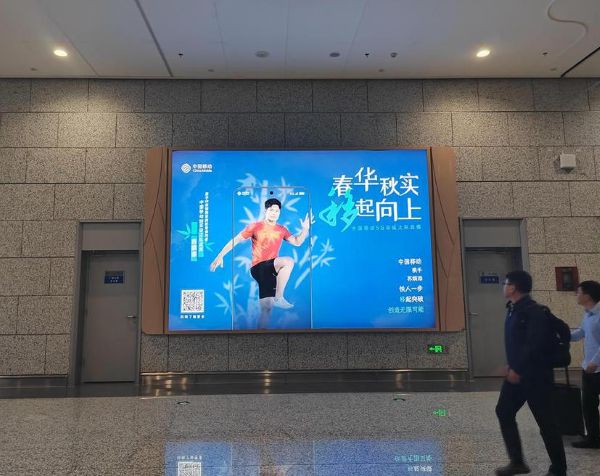
For decades, airport advertising was viewed simply as premium outdoor media—expensive, prestigious, but difficult to measure. That perception is rapidly changing. Today, China's airport advertising ecosystem has evolved into a sophisticated, data-driven channel that offers brands not just visibility, but strategic leverage.
The Market at a Glance
China's civil aviation sector handled 1.529 billion passenger trips across 270 airports in 2025. The airport advertising industry generated RMB 104.54 billion in revenue, with total media投放 reaching RMB 210.65 billion. More than 1,278 brands invested in airport media in 2025, and domestic brands now command an 83% share of launch.
Why Airport Advertising Is a Strategic Asset
Airport advertising offers three unique advantages that distinguish it from other media channels:
1. Signal Value – In China's business culture, a prominent airport presence sends a powerful message. As one industry observer noted, when a company invests heavily in airport advertising, “it signals to major clients: we are financially healthy, we are in this industry for the long term, and our risk of exit is virtually zero”. This is why leading AI cloud providers like Alibaba Cloud, Volcano Engine, Baidu Cloud, and Huawei Cloud have flooded airports with multi-million-yuan campaigns—not just for immediate conversions, but as a strategic market positioning statement.
2. Audience Quality – China's top ten airports carry 80% of all air passengers, with 70% being business travelers—the very decision-makers who purchase enterprise software, financial services, and premium products. This is an audience that cannot be reached with the same precision through any other offline medium.
3. Scarcity and Exclusivity – Prime airport placements—such as security checkpoint zones, arrival hall exits, and baggage claim areas—are limited and often locked into long-term contracts with major advertisers. Securing a premium position is itself a competitive advantage.
The Digital Transformation: From Static to Smart
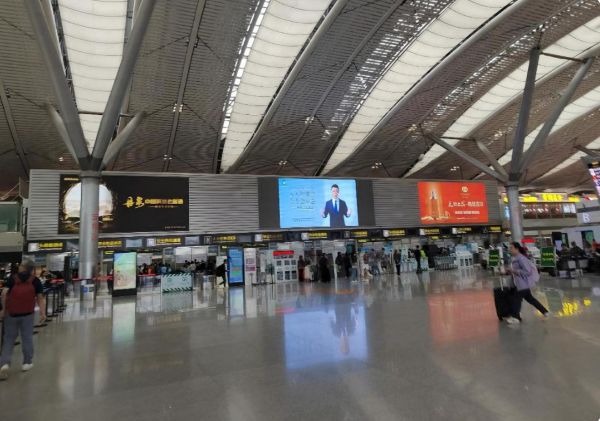
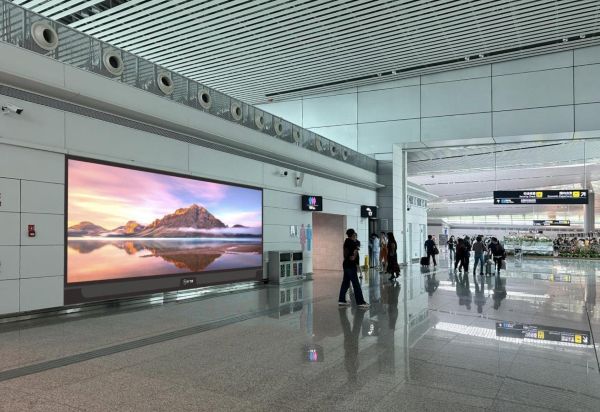
Perhaps the most significant shift in recent years is the digitization of airport media. In 2025, video media accounted for 52% of total airport ad spend, slightly edging out traditional print formats. But the real game-changer is programmatic digital out-of-home (pDOOH) .
With pDOOH, brands can now:
Target by traveler segment – Business versus leisure, domestic versus international, even specific flight corridors
Optimize in real time – Adjust creative based on time of day, weather, or flight status
Measure with precision – Using Wi-Fi and beacon data to track ad exposure to online conversion
Data shows that brands using digital airport ad combinations achieve 187% higher ROI on average compared to traditional fixed lightboxes. pDOOH campaigns also deliver 22% lower CPM and 41% higher lead quality.
Industry Standards and Measurement
A major milestone arrived in October 2025 with the release of the industry's first group standard—the Airport Advertising Resource Value Evaluation Guide. This standard establishes systematic criteria for evaluating airport ad value, moving beyond simplistic metrics like per-passenger核算. It represents a crucial step toward standardization, data-driven pricing, and professional accountability.
Key Trends Shaping the Future
AI-Powered Interactivity – Airports are deploying AI-driven interactive screens that recognize age and gender, enabling personalized product recommendations and real-time engagement.
Immersive Brand Experiences – Beyond conventional billboards, brands are creating full-scale installations. For instance, one beer brand transformed an airport departure zone into a giant bar environment, turning the terminal itself into a brand experience.
Domestic Brand Dominance – Chinese brands have solidified their lead, growing from 74% to 83% of total airport ad spend, while international brands have contracted from 19% to 8%. This reflects both the rise of domestic consumption power and the strategic importance Chinese companies now place on airport media.
Why Choose Tianci Media
With deep expertise in airport media and a proprietary “ self-owned resources + integrated customization” dual-engine model, Tianci Media delivers end-to-end solutions from strategic planning and creative consultation to placement and performance tracking. The company leverages AI-powered audience segmentation—analyzing traveler cabin class, flight frequency, destination preferences, and consumption behavior—to ensure precise targeting across China's premier aviation hubs.
The Bottom Line
Airport advertising in China has transcended its legacy as a simple visibility channel. It is now a strategic asset—one that signals market strength, reaches the nation's most influential decision-makers, and delivers measurable business outcomes through digital innovation. For brands ready to compete at the highest level, there is no substitute.