Beijing Airport Advertising: The Ultimate Guide to Capturing Premium Travelers in 2026
2026-06-01Tianci MediaViews:65
Highlights
Beijing, as one of the world’s most dynamic aviation hubs, offers an unparalleled opportunity for brands to connect with a high-value, global audience. With two massive international gateways – Beijing Capital International Airport (PEK) and Beijing Daxing International Airport (PKX) – airport advertising in Beijing has evolved into a sophisticated, data-driven channel that delivers measurable brand impact. In this guide, you’ll learn why Beijing airport advertising works, which ad formats generate the highest ROI, and how to plan a successful campaign that turns travelers into loyal customers.
Why Advertise at Beijing’s Airports?
1. Massive & Affluent Audience
Beijing’s airports serve over 100 million passengers annually combined. More importantly, the average airport traveler has above-average disposable income, is often a decision-maker in business, or is a tourist ready to spend. Whether it’s C-suite executives flying to Shanghai or international tourists heading to the Great Wall, your brand gets in front of people in a purchase-ready mindset.
2. High Dwell Time & Low Distraction
Unlike social media feeds or highway billboards, airport environments have long dwell times – passengers wait, walk, and often look for visual stimulation. Security lines, baggage claims, and boarding gates create “idle moments” where well-placed ads are not only seen but remembered.
3. Premium Brand Association
Advertising at Beijing Capital or Daxing automatically lends prestige to your brand. These airports are architectural marvels with world-class services. When your ad appears there, consumers subconsciously link your product to quality, safety, and global standards.
Main Advertising Formats at Beijing Airports
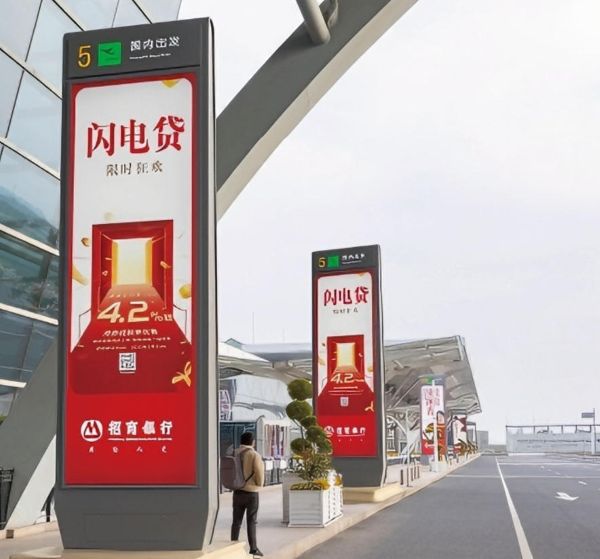
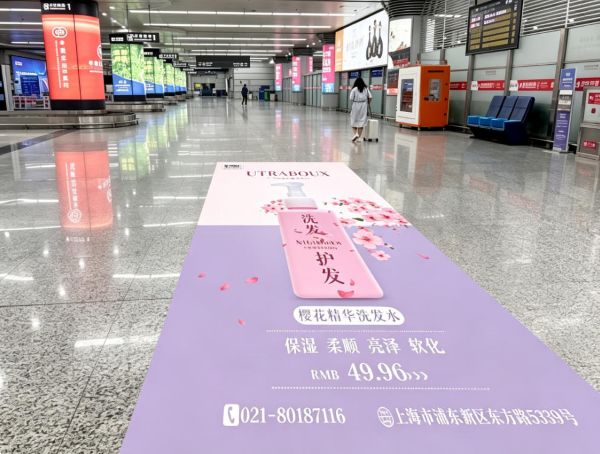
Different campaign goals require different formats. Below are the most effective options for Beijing airport advertising:
| Format | Best For | Average View Time | Cost Level |
|---|---|---|---|
| Large-Format Digital LED Screens | Brand awareness, high-impact visuals | 5–15 seconds | High |
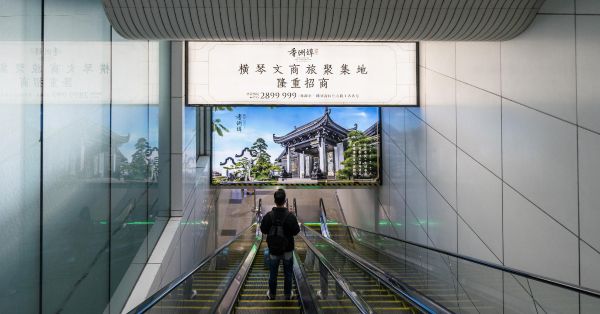
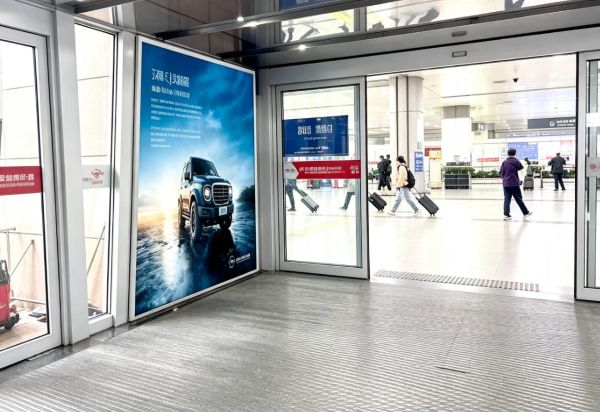
| Lightboxes & Static Billboards | Long-term presence, directional cues | 3–8 seconds | Medium |
| Interactive Touchscreens | Engagement, games, product trials | 30+ seconds | High |
| Baggage Carousel Wraps | Last-minute branding, local offers | 10–20 seconds | Medium |
| Aerobridge & Jetway Ads | Captive audience before boarding | 20–40 seconds | Medium-High |
| Wi-Fi Landing Page Ads | Digital retargeting, coupon collection | 30+ seconds | Low-Medium |
Digital Out-of-Home (DOOH) & Programmatic in Beijing Airports
The biggest shift in Beijing airport advertising over the last three years has been the rise of programmatic DOOH. Major media owners like AirMedia Group and JCDecaux China now offer automated buying, real-time creative swapping, and audience-based triggers.
Practical Use Cases:
Weather-based ads: Show raincoats or umbrellas when Beijing weather is bad.
Flight status triggers: Promote duty-free offers to passengers whose flights are delayed.
Dayparting: Display breakfast coffee ads from 5–9 AM, then dinner restaurants from 6–10 PM.
This programmatic layer means even small-to-medium brands can afford Beijing airport advertising by targeting specific hours, terminals, or traveler segments (e.g., international departures only).
Case Study: How a Luxury Skincare Brand Used Beijing Airport Ads to Boost Sales by 34%
A European skincare brand wanted to enter the Chinese travel retail market. They ran a 4-week campaign at Beijing Daxing Airport using:
12 large digital screens near international departure gates
Interactive mirrors in the duty-free walkway (face-scanning skin analysis + QR code for a free sample)
Baggage carousel wraps with a “Scan for post-trip recovery set” offer
Results:
2.1 million unique views (verified by on-site cameras)
34% increase in sales at the airport’s DFS store
12,000+ QR code scans for the post-trip offer
Cost & Budgeting for Beijing Airport Advertising
Pricing varies greatly by airport, terminal, and duration. Here is a realistic 2026 benchmark (in USD):
Static lightbox (2 weeks) : 15,000
Digital 15-second spot (rotating) : 25,000 per month
Terminal domination (20+ assets) : 200,000 per month
Wi-Fi landing page takeover (per day) : 1,500
Most foreign brands start with a digital screen bundle at Terminal 3 of PEK (highest international traffic) for 2–4 weeks, budget around 30,000.
💡 Pro tip – Work with a local media agency that has direct inventory access. Prices on Western self-serve platforms are often 2–3x higher.
Regulatory & Cultural Considerations
China has specific advertising regulations, especially at transport hubs. Key points for Beijing airport advertising:
No political or religious content – keep it strictly commercial.
All text must be in Simplified Chinese + English – Chinese must be prominent.
Avoid “best”, “No.1”, “miracle” claims unless you have verifiable certification.
Get approval from airport authority – your creative needs to pass a 3–5 day review.
Consider Chinese values – families, health, prosperity, and trust resonate strongly.
Also, many brands forget that QR codes must work with WeChat (not WhatsApp). Ensure your landing page is hosted on a fast, China-friendly CDN.
Measuring Success: KPIs for Beijing Airport Advertising
Unlike pure digital ads, out-of-home at airports requires a mix of traditional and modern metrics:
| KPI | How to Measure |
|---|---|
| Impressions | Camera-based people counters + dwell time sensors |
| Engagement | QR scans, NFC taps, or touchscreen interactions |
| Sales lift | Unique promo codes or temporary WeChat mini-program IDs |
| Brand lift | Post-campaign survey (ask departing travelers) |
| Social buzz | Monitor mentions of your brand + “Beijing airport” on Weibo/Xiaohongshu |
Leading airport media owners now provide real-time dashboards with heatmaps and audience demographics (age/gender split, dwell time by location).
Getting Started: 5-Step Action Plan
Define your goal – Awareness? New product launch? Duty-free sales?
Select airport & terminal – PEK for legacy business travelers, PKX for tech-savvy tourists.
Choose format mix – Digital + static + Wi-Fi often works best.
Localize creative – Hire a Chinese copywriter to adapt your message.
Book & monitor – Use a media agency like BlueFocus or Zenith China for direct rates.
Conclusion
Beijing airport advertising is not just a “nice to have” – for global brands targeting affluent Chinese consumers or international travelers, it is one of the most effective brand-building channels available. With programmatic DOOH, interactive formats, and real-time analytics, you can now achieve the precision of digital ads with the impact of physical out-of-home.
Whether you choose a majestic digital tower at Daxing’s central atrium or a series of baggage carousel wraps at Capital, your brand will be remembered. Start small, test creative, scale what works – and watch your brand take off.