

Search
3125results match your search criteria
HOT

Beijing Capital Airport T2 Domestic and International Arrivals Exit LED
Everlasting brilliance, lighting up the future
The screen located above the domestic and international arrivals exit of T2 is the golden eye in this ecosystem. It is not just a display screen, but also the first visual anchor point where travelers refocus on the real world after a long-haul flight.
Quote
¥38 W-75 WTips:Can match different media resources to create a quotation plan and download it
HOT
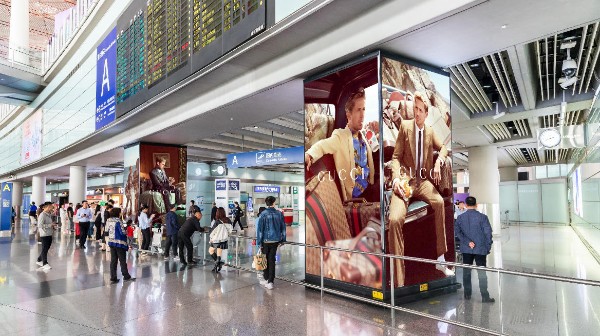
Beijing Capital Airport T3C Domestic Baggage Hall Exit Lightbox Set
Quality shines, enduring without fading
Light boxes are usually wrapped around the large load-bearing or structural columns at the exits of the baggage hall, using the three-dimensional shape of the columns and their throat position to provide a final brand interception and impression reinforcement for travelers about to complete the baggage claim process.
Quote
¥180 W-370 WTips:Can match different media resources to create a quotation plan and download it
HOT

Beijing Capital Airport T3C and D Terminal Jet Bridge Display Panel Set
Quality shines, enduring without fading
The connecting passageway is usually a relatively enclosed, narrow space where passengers' activities are restricted, their line of sight is unobstructed, and there are no other distractions. The billboards on both sides become the only visual focus, attracting much more attention than an open hall.
Quote
¥2400 W-4900 WTips:Can match different media resources to create a quotation plan and download it
HOT

Beijing Capital Airport T3C Domestic Arrivals Baggage Hall Porch Lightbox
Unlimited vision, brilliant moments appear
Installed at the entrance of the baggage hall, the archway of a passage, or at both ends of a connecting corridor, it resembles a brand gate. When travelers pass through this gate, they officially enter or leave the baggage waiting area. The media format takes advantage of the natural focus of the architectural structure to perfectly integrate advertising with the spatial circulation.
Quote
¥150 W-300 WTips:Can match different media resources to create a quotation plan and download it
HOT

Beijing Capital Airport T3C Domestic Arrival Corridor Floor Lightbox
Low-carbon lighting, tranquil and good light
The corridor is the necessary path for passengers to take after finishing their flight and collecting their luggage, leading them to the crowd of people picking them up or to ground transportation. Landing light boxes, with their independent standing form, moderate height, and flexible layout, have become the most conspicuous visual landmarks along this dynamic route.
Quote
¥130 W-250 WTips:Can match different media resources to create a quotation plan and download it
HOT
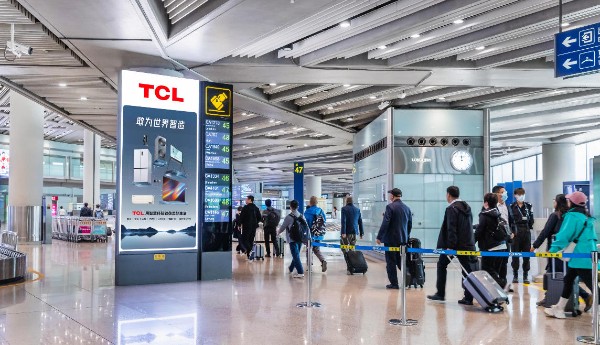
Beijing Capital Airport T3C Domestic Arrival Baggage Area Light Box Set
The new favorite in advertising, the center of attention
A light box refers to a standalone, pillar-type, multi-faceted large luminous advertising device, usually standing in the central passage between baggage carousels or in the middle of waiting areas, resembling a modern art sculpture and serving as the absolute focal point of passengers' attention when retrieving their luggage.
Quote
¥140 W-280 WTips:Can match different media resources to form a quotation plan and download it
HOT
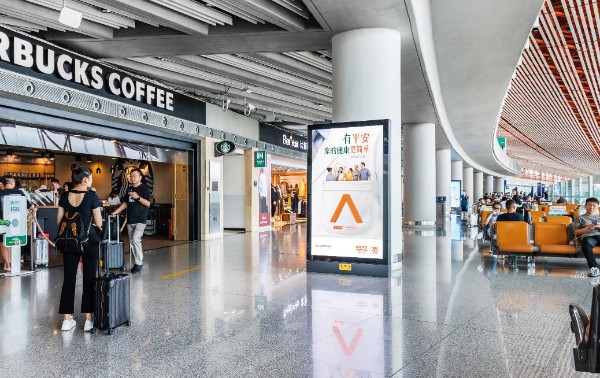
Beijing Capital Airport T3C Domestic Departures Rolling Lightbox
The world is so clear, the excitement never stops
A scrolling lightbox is a classic media format that combines the high-definition image quality of traditional lightboxes with dynamic switching functionality. It is usually installed on the side walls of airport boarding corridors, on the sides of pillars, or near the passageways by boarding gates, and uses a mechanical device to automatically cycle through images between advertisements.
Quote
¥60 W-120 WTips:Can match different media resources to form a quotation plan and download it
HOT
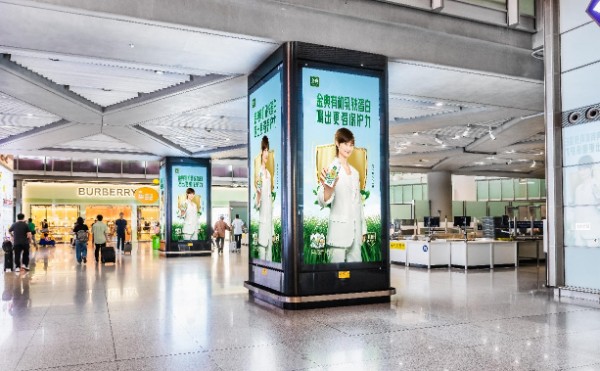
Beijing Capital Airport T3C Domestic Departure Column Lightbox Set
Extraordinarily brilliant, growing newer with time
Located after domestic security checks and on the way into the boarding hall, this is a place everyone must pass through. It is the most crowded area with the widest view. Contracting the pillars here means that the brand becomes the first impression of travelers after entering the boarding area, and the long gaze duration achieves deep immersive exposure.
Quote
¥120 W-350 WTips:Can match different media resources to create a quotation plan and download it

We have over decades of experience in developing outdoor advertising media placement strategies to drive brand success on a global scale.
Community Ads
Other Ads
Copyright © 北京杨氏天赐传媒有限公司 版权所有京ICP备2021000929号-7Sitemap广告投放
Links:
天赐传媒