- Photos
- Specs
- Advantages
- Value
- Media Map
| Area:Guangzhou | Type:airport | Frequency:360 |
| Address:Guangzhou Baiyun International Airport | Format:spam bot | Duration:5s |
| Location:T1 Domestic Security Check Corridor | Min Qty:3 | Operating Time:0-24o'clock |
| Size:144吋 | Min Period:week |
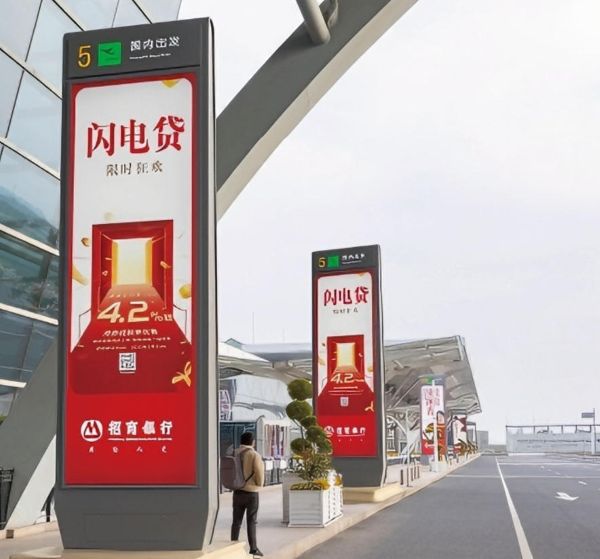
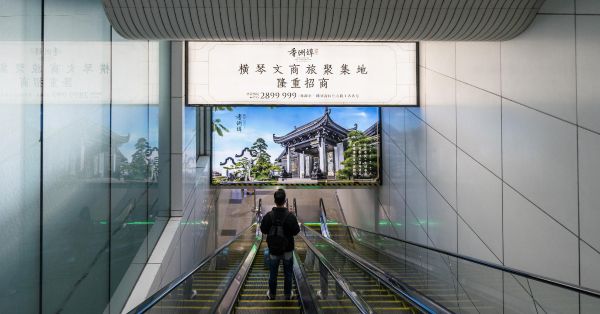
The screen devices are centrally deployed in the post-security passage of domestic departures in Terminal 1 (T1), located on the essential route that passengers take from the security area to the boarding gates of each concourse. They cover more than 50,000 people daily, achieving 100% mandatory exposure for domestic departing passengers. This area is a closed control zone, with passengers staying for an average of 8–15 minutes, fully attentive, without other advertising distractions, creating a 'low competition, high concentration' environment for receiving information.
They cover essential passenger areas in T1 domestic departures such as check-in islands, security passages, waiting areas, and boarding gates, providing continuous exposure throughout the entire process from 'check-in — security — waiting — boarding.' Multi-point simultaneous playback forms a matrix-style transmission, reinforcing brand memory. A single advertisement placement can achieve full coverage and high-frequency exposure.
The post-security corridor is a single-pass flow where passengers spend extended time walking and waiting. The advertisements can be seen from a long distance and have strong unobstructed visual impact. The corridor has few large screens, which makes advertisement recall higher compared to multi-screen environments in check-in halls. With an average of 360 exposures per day covering early peak to night flights, passengers have 8–15 minutes of dwell time from security to boarding without other information interference, forming a 'passive reception, no escape' closed communication environment.
T1 is a mature terminal with limited advertising spaces along core routes, and competition is intense—occupying them ensures long-term and stable exposure. When passengers walk through corridors and wait in lounges, the advertisements naturally enter their field of vision, with high passive reception rates and better memorability than other media.
TV screen machines focus more on 'high-frequency, close-range' immersive communication. When travelers are waiting in line to complete procedures, their line of sight is often parallel to or slightly above these screens. The content played on TV screen machines, whether it is the latest product release, financial and investment services, or tourism promotional videos, can reach the audience's eyes at a very close viewing distance. The 'accompanied' viewing experience allows brand information to be repeatedly and deeply embedded during the travelers' fragmented waiting time.
With its exclusive targeting of core business travelers, mandatory coverage at check-in and security checkpoints, memory reinforcement through high-frequency rotation, and perfect integration of HD dynamic content and service information, it builds a unique media advantage. The content strategy of the advertisements greatly reduces travelers' resistance to ads, increases the reading rate and acceptance of information, and allows brand information to be naturally absorbed in a low-anxiety waiting state.
Security corridors have a single flow of travelers with no detour options, unobstructed advertisements, and long visual distance, providing strong visual impact. Compared to multi-screen environments in check-in halls, the ad memory retention increases by 50%, helping brands achieve the dual communication goal of 'regional deep cultivation and nationwide spread,' enhancing national brand influence, achieving a 1+1>2 communication effect, and increasing overall brand exposure and conversion.
The core advantages of TV screen machines lie in mandatory access along key routes, concentration of high-value customer groups, high-frequency exposure, digital flexibility, and influence of South China hubs, making it a premium media for brands to achieve efficient conversion in aviation scenarios.