The Creative Lifecycle of In-Flight Advertising: Keeping Exclusive Cabin Companionship Fresh
2026-08-24Tianci MediaViews:3
Highlights
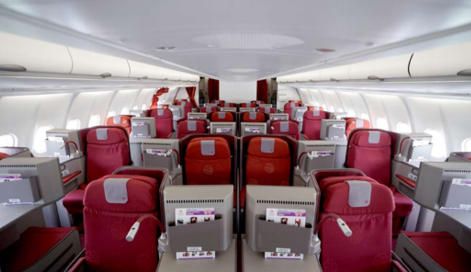
In-flight advertising occupies the most unique "cabin-exclusive" scene in all out-of-home: passengers are strapped into seats for hours, phones often in flight mode, with only seatback, tray table, headrest, and window-side media in view. Attention is the most captive environment, creative decays extremely slowly, yet stale or low-quality content hurts premium brands hardest to repair. Because the audience is unreachable by phone and literally cannot look away, the cabin is both the most valuable and the least forgiving media you can buy. Many advertisers waste that scarcity by treating cabin media as a set-and-forget monument. This article applies the attention wear-out curve and dynamic optimization to unpack the "slow-but-precious" refresh philosophy of cabin media, so your in-flight advertising feels intentional at 30,000 feet rather than forgotten.
1. Why "always-on" backfires: the attention wear-out curve
The cabin is low-frequency, long-dwell, high-focus. The same passenger may fly only 1–2 times a month, gazing at seatback media for tens of minutes per flight. The exposure curve is extremely flat—deep single-exposure memory, few repeated stimuli, slow fatigue. The real risk is not "fast fatigue" but "long-term no-change looks like a stalled brand." In-flight advertising must avoid turning exclusive cabin companionship into an "outdated-content museum."
2. The unique attention-lifecycle profile of cabin media
- Seatback pocket/media frame: Forced gaze, ultra-long dwell, half-life 10–16 weeks.
- Tray-table sticker/headrest doily: Close contact, half-life 8–12 weeks.
- Window/wall digital screen: Airline-controlled content, time-based swap.
Onboard magazine/screen sticker: Browsing scene, half-life 12–16 weeks. In-flight advertising's keyword is "precious"—swap little, swap well, and every swap should dazzle.
3. Saturation point, inflection, and optimal flight length
Cabin single creative 10–16 weeks is the healthy range—the longest of all media. Beyond half a year fully unchanged looks "old." Adopt "semi-annual big iteration + quarterly sub-theme micro-tune": master visual refreshed every six months, routes/destinations/offers updated quarterly.
4. Early signals of creative fatigue
- Onboard interaction/scan-rate stagnation: Seatback QR codes give hard conversion data.
- Travel-review mention decline: Aviation communities discuss cabin media spontaneously.
Airline content-review feedback: Partners judge freshness professionally. In-flight advertising relies more on "brand-quality audit" than raw frequency.
5. Refresh cadence: version rotation and theme iteration
In-flight advertising fits "constant master narrative + rotating sub-scenes": a travel brand keeps the master visual but rotates "destination / experience / offer" quarterly; digital cabin screens auto-switch by flight segment (short business / long leisure). Splitting an ultra-long cycle into perceptible change avoids dull constancy.
6. Industry-specific refresh playbooks
- Travel/Destination: Swap by flight season to match travel demand.
- Duty-free/Beauty: Short bursts aligned to duty-free promo windows.
- Credit cards/Finance: "Privilege" anchor, semi-annual micro-tune.
Airline co-brands/Automotive: Quarterly film-grade iteration, texture over frequency. In-flight advertising's refresh is a "brand ritual at 30,000 feet" maintenance project.
7. A/B multi-version and programmatic auto-swap
Modern cabin digital networks support route- and cabin-class-based swapping. In-flight advertising can show premium to business class, mass to economy, auto-switching by flight wave. Physical media need airline approval and longer swap cycles, but "phased route rollout" achieves progressive refresh within compliance.
8. Common pitfalls
- Treating the cabin as a monument—one placement for half a year, looking stale.
- Frequent big changes to prove presence, hurting premium tone.
- Creative not refined enough, wasting the scarce captive scene.
Ignoring airline authorization and aviation approval, delaying swaps.
9. FAQ
Q: How often to refresh in-flight advertising?
Cabin media 10–16 weeks common; semi-annual big + quarterly micro.
Q: Is promotion suitable in cabins?
Yes, but wrap in premium language matching the exclusive scene.
Q: Small budget approach?
Focus one route's seatback media, long cycle, few swaps.
10. A practical decay-measurement cheat sheet
Cabin media is slow to fatigue, but slow is not never. Measure with three accessible signals: (1) onboard scan or interaction rate from seatback QR codes; (2) organic mentions in travel-review communities; (3) airline partner feedback on creative freshness during content review. Plot them across a 16-week line. When scan-rate stagnation coincides with unchanged creative, prepare the planned semi-annual refresh rather than waiting for complaints. For digital cabin screens, pre-schedule route- and cabin-class-based rotations so the long cycle always carries perceptible change. Across a year you will build a cabin half-life table per route and class, turning "it has been up a while" into "the data says swap." That discipline is what keeps in-flight advertising feeling like a privilege instead of a poster.
Summary
In-flight advertising's winning move is "staying exquisitely fresh within extremely slow decay." Less-but-precious refresh beats frequent change for scarcity. Treat the cabin as the brand's exclusive companionship with high-value travelers, maintaining allure with restrained iteration at 30,000 feet.