Aircraft Advertising Through Behavioral Economics: Deep Brand Storytelling in the Cabin's Exclusive Companionship
2026-08-19Tianci MediaViews:26
Highlights
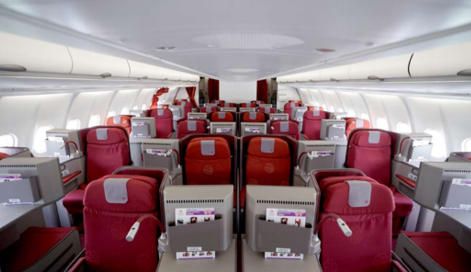
When the doors close and the phone signal dies, the cabin becomes an "island" disconnected from the outside world for hours. In behavioral economics, a closed environment plus no alternative medium equals absolute captive attention. The scarce value of aircraft advertising (in-cabin media) lies exactly here: for several hours, you are the only commercial voice a traveler can "see." This article uses the nudge lens to unpack how cabin media forms a "two-stage relay" with the airport, delivering a depth of narrative no other medium can copy.
1. Why the Cabin Is an Encounter Nudge Environment
System 1 is highly open in a closed, relaxed, slightly ritual cabin. No phone, no competitor, no skip button—the brand gains rare "exclusive attention." The nudge here is "deep storytelling": over hours of companionship, the brand value is told thoroughly rather than flashed past. The airport delivers a "glance of certification"; the cabin delivers "quiet, long companionship," and their rhythms complement each other.
2. Aircraft Advertising's Unique Position in the Choice Architecture
The cabin is the "exclusive companion in a closed space." Its uniqueness: high-net-worth audience, long duration, zero interference, unskippable. Seat-backs, tray tables, headrests, window decals, and in-flight screens form a surround of touchpoints. For travel, duty-free, credit-card, and destination brands, this is an irreplaceable "alone time" and the best window to explain a high-ticket decision clearly.
3. Four Core Nudge Mechanisms in the Cabin
- Exclusive attention: hours with no substitute mean the brand message is received completely, with memory depth far beyond a passing outdoor screen.
- Anchoring: premium-customer scenarios anchor brand tone and value, writing "the choice of fellow elite" into memory.
- Social proof: the "fellow elite's choice" hint amplifies aspiration, pulling individuals toward group identity.
Scarcity and loss aversion: in-flight limited privileges trigger "miss it on board, miss it entirely," turning idle flight time into action.
4. Peak-End Rule: Create Peaks with Travel Ritual
The flight peaks are the excitement of takeoff and the anticipation of landing. Aircraft advertising should match the "explore the world" emotional peak, binding the brand with "a better journey, a better life" rather than hard selling. Content in tune with the journey's emotion keeps echoing after landing.
5. Industry Nudge Playbooks
- Travel: destination visuals trigger the "next stop" aspiration anchor, making holiday imagination concrete.
- Duty-free: in-flight exclusive pricing anchors outbound shopping plans, sending travelers straight to the duty-free store on arrival.
- Credit cards: "travel the world" narratives nudge high-net-worth sign-ups, fitting business travelers' identity needs.
Destinations: city image films plant "go there next time," turning one flight into the start of the next journey.
6. Ethical Red Lines and Common Mistakes
Mistakes include treating the cabin as an information bombardment that breaks the ritual; ignoring airlines' written authorization and civil-aviation safety rules; and splitting from airport media so the relay is lost. Nudges must be restrained, dignified, and compliant—the cabin's value is quietness; once broken, the captive advantage becomes a burden.
8. From Theory to a Nudge Plan for Cabin Media
A workable cabin plan begins with airline authorization and safety compliance—non-negotiable thresholds that gate the medium. Next, select touchpoints (seat-back, tray table, screen) that match your story length: long narratives suit the screen, quick anchors suit the headrest or window decal. Third, design restrained, journey-aligned creative that respects the ritual rather than interrupting it. Fourth, sync the cabin companionship with the airport certification for a full two-stage relay across the trip. Measure via destination searches, lounge visits, and high-net-worth leads after landing. The cabin rewards patience and elegance, not volume—brands that understand this turn a few quiet hours into lasting memory.
7. FAQ
Q1: What is the relation between aircraft and airport advertising?
The airport gives "premium certification"; the cabin gives "exclusive companionship." The two-stage relay covers the whole journey—certification first, companionship after.
Q2: How to stay compliant?
Obtain the airline's written authorization and meet civil-aviation safety and content rules—this is the hard threshold of cabin media.
Q3: How do you measure it?
Watch lounge visits, destination searches, and high-net-worth lead capture; the seed planted on board often pays off after landing.
Summary
The preciousness of aircraft advertising is that irreplaceable "exclusive companionship" for a few hours. When a brand quietly accompanies an entire journey, it is no longer just an ad but a stretch of fellow travel in the traveler's memory—and that is the most elegant form a nudge can take.