In-Flight Advertising: Creative Formats, Airline-Brand Partnerships & Content Integration
2026-08-16Tianci MediaViews:23
Highlights
At cruising altitude, a remarkable media environment exists: several hundred people sit in assigned seats, phones switched off or in airplane mode, with nothing competing for attention except a window and an in-flight magazine. No other advertising channel offers this combination of forced presence, minimal distraction, and prolonged exposure. Yet in-flight advertising remains one of the most underutilized media channels — often treated as an afterthought to airport programs, or skipped entirely because brands do not understand the creative canvas available inside the cabin. This guide examines every in-flight advertising format, the partnership models through which brands integrate with airlines, content integration strategies that go beyond static displays, and the creative best practices that separate memorable in-flight campaigns from forgotten tray-table stickers.
1. The In-Flight Creative Canvas: Every Surface Is a Medium
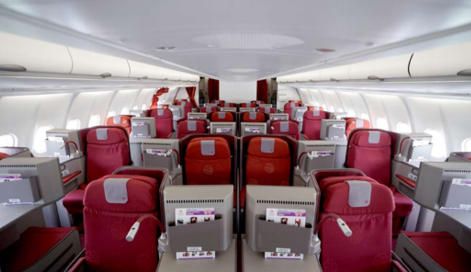
The aircraft cabin offers more advertising surfaces than most advertisers realize. Each format has distinct visibility, dwell time, and emotional context characteristics.
Seat-Back Screens (IFE Displays)
What it is: The in-flight entertainment screen mounted on the back of each seat, visible to the passenger behind it
Reach: Near-universal — every passenger with a screen in front of them is exposed
Dwell time: 1-6 hours depending on flight duration
Creative potential: Video pre-roll before content, banner overlays during navigation, sponsored content channels, interactive destination guides
Best for: Brand video, product demos, destination content, interactive experiences
Tray Tables
What it is: The fold-down tray surface, often used for printed advertising
Reach: Universal for seated passengers
Dwell time: 20-60 minutes per usage, multiple uses per flight
Creative potential: Full-color printed wraps, 3D structural ads, QR codes for mobile follow-up after landing
Best for: Visual brand impact, product imagery, time-sensitive promotions with post-flight conversion paths
Headrest Covers
What it is: Paper or fabric covers on seat headrests, typically printed with airline branding or advertising
Reach: Universal for seated passengers
Dwell time: Entire flight duration — the headrest is in the passenger's peripheral vision throughout
Creative potential: Brand logos, short taglines, QR codes visible when passengers look up from screens
Best for: Brand awareness reinforcement, short memorable messaging
Overhead Bin Wraps
What it is: Full-color adhesive graphics on the exterior of overhead luggage compartments
Reach: All passengers boarding and deplaning walk past them
Dwell time: 15-30 seconds during boarding, repeated during deplaning
Creative potential: Large-format visual impact, sequential storytelling across bins, directional messaging
Best for: High-impact brand visuals, narrative campaigns, product launch reveals
In-Flight Magazine
What it is: The printed publication in every seat pocket
Reach: Variable — passengers who choose to read
Dwell time: 5-30 minutes of active reading
Creative potential: Full-page and spread ads, advertorial content, sponsored destination features
Best for: Detailed product information, long-form storytelling, destination/travel brand integration
In-Flight Wi-Fi Landing Page
What it is: The sponsored page passengers see when connecting to in-flight Wi-Fi
Reach: All passengers who connect to Wi-Fi (60-80% on connected aircraft)
Dwell time: 15-60 seconds of mandatory view before browsing
Creative potential: Full-screen brand takeover, video pre-roll, click-through to brand microsite
Best for: Digital-first brands, app install campaigns, post-flight conversion funnels
2. Airline-Brand Partnership Models: Beyond Ad Buys
The most effective in-flight advertising often comes not from buying ad space, but from structuring partnerships with airlines that integrate the brand into the travel experience.
Sponsored Service Partnership
Model: Brand sponsors an in-flight service element (e.g., free Wi-Fi sponsored by a telecom brand; complimentary beverage sponsored by a liquor brand)
Value: Brand is associated with a positive passenger experience rather than interrupting one
Example: A payment brand sponsors free in-flight Wi-Fi, with branding on the landing page and PA announcements
Best for: Service-oriented brands, financial products, telecommunications
Product Sampling Partnership
Model: Brand provides free product samples distributed during the flight (e.g., premium skincare samples in amenity kits, snack brand samples with meal service)
Value: Direct product trial in a captive, low-distraction environment — the most powerful form of advertising
Best for: Consumer packaged goods, beauty, food and beverage, health products
Co-Branded Content Channel
Model: Brand sponsors a dedicated content channel on the IFE system (e.g., a luxury watch brand sponsors a "Travel & Style" video channel)
Value: Brand becomes a content provider rather than an ad, extending dwell and building positive association
Best for: Lifestyle, fashion, travel, and premium brands with strong visual storytelling
Destination Partnership
Model: Tourism board or destination brand partners with an airline to promote a specific route, with integrated creative across IFE, magazine, tray tables, and PA announcements
Value: Full-funnel exposure — from inspiration (video content) to intent (magazine feature) to action (QR code booking)
Best for: National/regional tourism boards, hotel groups, destination real estate
3. Content Integration Strategy: From Ad to Experience
The unique advantage of in-flight advertising is the ability to integrate brand content into the passenger's travel experience rather than interrupting it.
Three integration principles:
Match the mindset. Passengers in the first 30 minutes after boarding are settling in and arranging belongings — receptive to visual impact but not long-form content. During cruise flight, they are receptive to deeper engagement. During descent, they are preparing to leave — receptive to action-oriented messaging (QR codes, app downloads, booking links).
Sequence the narrative. Use the journey stages as a natural narrative arc: overhead bin wraps create initial awareness during boarding, tray tables deliver the core message during meal service, IFE channels provide deep engagement during cruise, and Wi-Fi landing pages drive conversion during descent.
Extend beyond the flight. Every in-flight touchpoint should include a post-flight conversion path — QR codes, short URLs, app download prompts, or social media handles that passengers can act on after landing and reconnecting to mobile networks.
4. Creative Best Practices for the Cabin Environment
High contrast, large type. Cabin lighting varies from bright to dimmed; creative must be legible in all conditions. Avoid small text and low-contrast color combinations.
Minimal copy. Passengers process visual information faster than text. Lead with a single powerful image and a maximum of 7-10 words of headline copy.
Cultural sensitivity. International flights carry diverse audiences. Creative must avoid culturally specific humor, religious references, or imagery that could be offensive across cultures.
Motion-friendly design. For IFE video, keep brand logos large and persistent — small logos are lost on seat-back screens viewed at 60-80 cm distance.
Include a post-flight action. Every format should carry a clear, simple call-to-action that can be executed after landing: a memorable URL, a QR code, a social handle, or a promo code.
5. Measuring In-Flight Campaign Effectiveness
In-flight advertising measurement has historically been weak, but is improving:
Exposure metrics: Flight-specific impression counts based on seat occupancy and screen activation rates
Post-flight digital attribution: Promo codes, landing page visits, and app downloads tracked back to the flight window and route
Brand lift surveys: Post-flight surveys distributed via airline apps or email, comparing exposed vs. unexposed passengers
Loyalty program integration: Airlines can match ad exposure to frequent flyer behavior, measuring post-flight purchase activity among exposed members
6. Conclusion: The Untapped Medium at 35,000 Feet
In-flight advertising offers something no terrestrial channel can: hours of captive, undistracted attention from an affluent, decision-capable audience. But realizing this potential requires moving beyond the "buy a tray table ad" mentality. The cabin is a full creative canvas — screens, trays, headrests, bins, magazines, and Wi-Fi portals — and the most effective campaigns use multiple formats in sequence, integrated into the passenger's travel experience through airline partnerships rather than bolted on as interruption.
For brands that invest in understanding the formats, structuring the partnerships, and designing content that matches the cabin mindset, in-flight advertising delivers something increasingly rare in the ad-saturated modern world: genuine, undivided attention. The question is not whether passengers will see your brand. It is whether your creative is worth their time.