The Sensory Science of In-Flight Advertising: Multi-Sensory Exclusive Companionship in the Cabin
2026-08-17Tianci MediaViews:24
Highlights
In-flight advertising refers specifically to media inside the aircraft cabin — seat-back screens, tray tables, headrests, window shades, and overhead bins — not the airport terminal. It requires airline written authorization and civil aviation safety approval, making it the highest-barrier yet most unique offline media: passengers power down, sit still for hours, and have almost nowhere else for their attention to go. This guide applies sensory science to explain how in-flight advertising can use vision, sound, touch, and interaction to deliver an "exclusive companionship" at 35,000 feet.
1. Why the cabin is the ultimate multi-sensory arena
The cabin is one of the rare "absolutely captive" spaces in the physical world: phones are offline or restricted, and the usual competition — social feeds, games, streaming — nearly vanishes, so travelers actively seek stimulation to fill idle hours. This media vacuum grants any in-cabin sensory stimulus a far larger attention share than on the ground. Combined with travelers' high net worth and decision power, in-flight advertising becomes scarce inventory for luxury, finance, travel, and automotive brands.
2. The visual layer: "comfortable readability" in cabin light
Cabin light shifts with flight phase, so visual design must work in both dim and bright conditions. Seat-back screens use dynamic video with clear captions; tray tables and headrests use high-contrast print; window-shade decals borrow natural light for presence. The visual core of in-flight advertising is "comfortable to see, easy to read" within limited space and unstable light.
3. The auditory layer: the "gap" touchpoint in entertainment and announcements
Cabin audio lives in the seat-back entertainment system and boarding/landing announcements. Brands may place a 5–15 second pre-roll on entertainment or a soft prompt between announcements. It must strictly obey crew and aviation-safety control, never interfering with safety broadcasts. In-flight advertising audio is valuable precisely because it is compliant and polite.
4. The touch and material layer: the "reachable" opportunity of tray tables and headrests
Tray-table prints, headrest covers, seat-pocket inserts, and bin decals are all finger-touchable media. A fold, a flip, a glance — each is a payment of deep attention. High-quality materials (specialty paper, fabric) also convey premium feel. Writing "touch" into in-flight advertising creative beats a distant logo for memory.
5. The scent and somatic layer: emotional soothing on long flights
Cabins are closed and tiring; a very faint calming scent (lavender, citrus) can ease anxiety but requires strict aviation approval and minimal concentration. Soma-wise, soft-light visuals and relaxing tones amplify comfort on long hauls. Scent and soma are quiet but unforgettable for high-value travelers — the secret weapon for premium and travel brands.
6. The interaction and participation layer: from watching to landing action
The endpoint of modern in-flight advertising is participation. Entertainment-system quizzes, destination AR previews, post-landing QR redemption, and duty-free pre-order turn one-way display into two-way interaction. Interaction extends dwell, builds anticipation, and accumulates landing conversion. A well-designed destination interaction makes travelers act the moment they land.
7. Cabin-class-specific sensory tactics for in-flight advertising
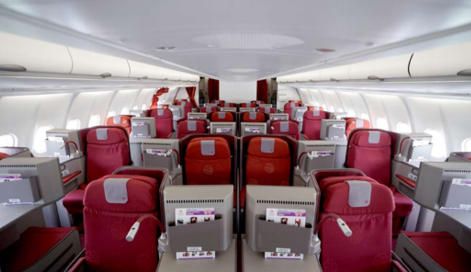
Economy uses "seat-back video + tray table" for broad reach; business/first uses "headrest texture + private publication" to lock high-net-worth; long-haul uses "multi-touch sequence" to tell one brand story; short-haul uses "strong symbol + QR" for quick conversion. The essence of in-flight advertising is matching the sensory mix to the cabin class and route audience's state.
8. Measurement metrics for the experience
Multi-sensory in-flight advertising should track video completion rate, interaction participation, post-landing scans and duty-free pre-orders, and destination search and visits. These indicate far better whether an in-flight advertising campaign truly moved travelers.
9. Common mistakes
Ignoring aviation approval so it never goes live; audio interfering with safety broadcasts and getting pulled; interaction thresholds too high for tired travelers; unapproved scent violating rules; confusing it with airport advertising and missing the "two-leg relay." Remember: in-flight advertising must be compliant first, creative second.
10. FAQ
Q1: Is in-flight advertising the same as airport advertising?
No. In-flight is inside the cabin, needing airline authorization and civil-aviation approval; airport is in the terminal. They should run as a "two-leg relay."
Q2: Are cabin scents compliant?
Only with strict aviation approval, minimal concentration, and neutral notes; unapproved use is prohibited.
Q3: How do I measure in-flight advertising?
Use entertainment interaction, post-landing scans, and duty-free pre-orders against cost, not just passenger volume.
Summary
The next stage of in-flight advertising is upgrading from "being seen" to "being exclusively accompanied." When vision, sound, touch, and interaction cooperate at 35,000 feet, cabin media stops being background and becomes a brand solitude that high-value travelers willingly immerse in, interact with, and act on after landing.