In-Flight Advertising: Owning the 'Exclusive Companionship' of the Enclosed Cabin
2026-08-21Tianci MediaViews:16
Highlights
In-flight advertising is the most "extreme" form of offline media—it traps the audience in a space they cannot leave, cannot fast-forward, and share for an average 2–3 hours. Seatbacks, tray tables, headrests and window shades are each a "forced and exclusive" touchpoint. But its selection logic differs completely from airport advertising: airports read terminal zoning, while aircraft read route OD and cabin class—which route you fly and who you carry decides whether that flight reaches business travelers, tourists or students. This article uses a "route OD + cabin enclosure" framework to explain how in-flight advertising selects and executes, and how it "relays" with airport advertising.
1. Why "Location" Is the First Principle of In-Flight Advertising
The "location" of in-flight advertising is a route, not a screen. The Beijing–Shanghai line is dense with business travelers; Sanya lines carry family tourists; study-abroad lines carry youth. A route is a container of people. The first principle of in-flight advertising is to treat "buying media" as "buying route audiences": you are not buying a seatback slot, you are buying those few hours of attention from people strapped in their seats with nowhere else to look. That "no-escape" exclusivity is something ground media can never give.
2. The Unique Spatial Data Assets of In-Flight Media
In-flight advertising owns distinctive "route-level" spatial data:
Route OD (origin–destination): defines passenger industry attributes and consumption intent.
Cabin class: first/business cabins gather high-net-worth decision-makers; economy covers mass and families.
Destination profile: flying to a leisure city vs a business city yields very different audience states.
Enclosed exclusive dwell: 2–3 hours of forced companionship—memory depth far beyond short-exposure media.
Seat touchpoint distribution: seatback, tray table, headrest, window shade are high-frequency, low-intrusion "companionship slots."
These "route + cabin" data let in-flight advertising precisely define "whose flight this is."
3. Gravity Models and Route Network Catchment
The "trade area" of in-flight advertising is city-to-city remote connection. Through a route OD model: a Beijing–Shanghai line connects business elites of two megacities; a "tier-1 to leisure-city" line connects high-spending vacation families; a study-abroad line connects youth and the family decision behind them. In-flight advertising's value lies not in "local 3 km" but in "it hands two high-value cities' people to you, exclusively, for hours, inside an enclosed space." This remote, dense, exclusive reach is hard for premium brands to refuse.
4. Competitor Adjacency and Positioning Strategy
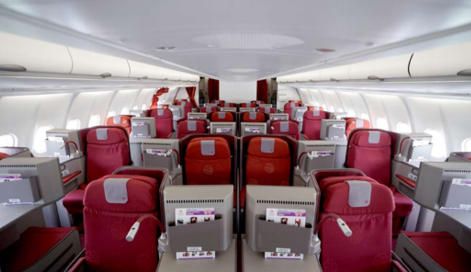
In-flight advertising prizes "cabin monopoly." Exclusive media in first/business (seat screens, headrest cloth) enable the most private premium communication with the most expensive audiences; economy seatbacks and tray tables do broad brand companionship. Smart brands charter a flight or cabin by route, making the whole journey "yours from first to economy," a cross-cabin complete narrative. Paired with airport advertising, it forms a "two-stage relay": airport terminals do premium endorsement, the cabin does exclusive companionship, covering the traveler's full journey.
5. Capture Timing and Movement Nodes
The golden windows of in-flight advertising are the relaxed receiving state after takeoff and the anticipating state before landing. After takeoff passengers drop phones and look around—most sensitive to seatback and tray-table content; in cruise, bored, they can finish long copy; before landing they are most receptive to destination info (hotels, car rental, attractions). Great in-flight advertising acts as a "travel companion": brand at takeoff, story in cruise, destination at descent—riding the passenger's psychological curve.
6. Industry-Specific In-Flight Advertising Playbooks
Travel/destinations: buy leisure routes; push destination hotels, car rental, attractions; hit the "anticipation state."
Duty-free/watches/premium goods: business and international routes; push travel souvenirs and high-end items.
Credit cards/banking: first/business cabins and frequent flyers; push platinum cards and airport benefits.
Automotive/real estate: high-net-worth routes; push flagship models and vacation property as "successful lifestyle" narrative.
The essence of in-flight advertising is making the brand "the only conversational partner at 30,000 feet."
7. Data Tools and Key Metrics
For in-flight advertising, read: route passenger flow by cabin, frequent-flyer profiles, route destination consumption traits, on-board interaction (e.g., scan) data. Track effective passengers reached, high-net-worth cabin share, brand recall, destination booking/visit uplift, membership conversion. With on-board WiFi and digital screens spreading, in-flight advertising can now rotate by route and cabin dynamically.
8. Common Mistakes
Spraying across routes without discrimination—business creative on a family route.
Ignoring cabin differences—one creative for all audiences.
Creative too "hard-sell," breaking the cabin's relaxed atmosphere.
No relay with airport advertising—missing the full journey.
No link to destination/membership data—failing to retain high-net-worth clients.
9. FAQ
Summary
The core of in-flight advertising is translating "one flight" into "hours of exclusive companionship" with route OD and cabin data. When you select by route rather than by flight count, the enclosed cabin becomes the only stage where a brand holds the most private, most memorable conversation with high-net-worth travelers—and its "two-stage relay" with airport advertising lets the brand fully own every departure and arrival.