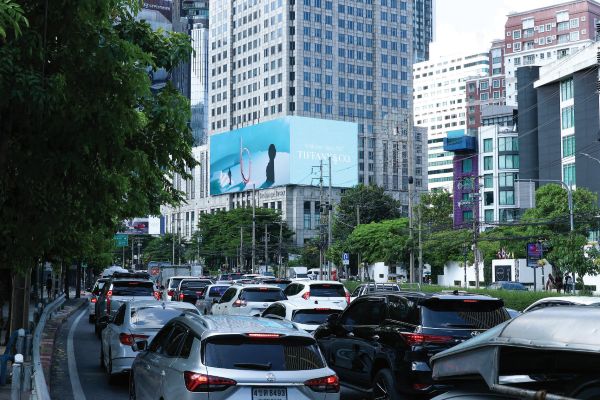
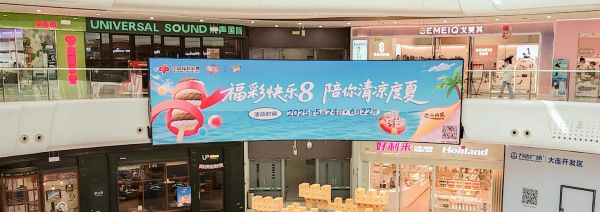
Out-of-Home Advertising 2026: How OOH Builds Brand Trust and Drives Growth in a Skeptical Digital Era
2026-08-01Tianci MediaViews:2
Highlights
In 2026, advertisers face a paradox: digital channels offer unprecedented targeting precision, yet consumer trust in online advertising is eroding. A recent study found that 43% of consumers report decreased trust in AI-labeled ads, with young audiences aged 16–28 being the most skeptical at 58%. Meanwhile, 33% feel AI personalization is invasive. In this environment, out-of-home (OOH) advertising has emerged as a trusted antidote — a medium that exists in the real world, cannot be skipped, and builds brand equity through physical presence. With global OOH spend reaching $54.2 billion in 2025 and forecast to hit $56.4 billion in 2026, this article explores why OOH is uniquely positioned to build brand trust and drive growth in an era of digital skepticism.
1. The Trust Advantage: OOH in the Real World
Digital ads are temporary — they appear, scroll past, and disappear in seconds. OOH, by contrast, occupies physical space in the real world. Billboards, digital screens, and transit ads are tangible, familiar, and visible to everyone. This physical presence translates into trust.
According to a 2026 consumer survey, 38.7% of consumers say that digital roadside ads build the most brand trust. This is significant in an era where consumers are increasingly skeptical of online advertising. The trust consumers have in OOH advertising was a central theme at the World Out of Home Organization’s 2026 Annual Congress, where industry leaders emphasized OOH’s ability to hold people’s attention in the “real world” when so many are facing digital fatigue.
OOH doesn’t just build trust — it builds brand stature. IPA data shows that OOH drives an +88% lift in premium brand cues, +41% in brand esteem, and +32% in brand fame. These metrics demonstrate that OOH is not merely a reach vehicle but a medium that fundamentally shapes how consumers perceive brands.
2. The Return to Brand Building
After years of obsessive focus on short-term sales and performance marketing, 2026 signals a return to brand building as a strategic priority. More than a third (37%) of advertisers plan to increase their brand advertising investment in 2026. Brands are shifting back to consistent, always-on brand-building — not because budgets are suddenly overflowing, but because confidence is fragile and every dollar needs to work harder.
OOH is central to this shift. Research shows that brands allocating at least 15% of their budget to OOH can experience significant increases in sales, profit, and market share. OOH power-users — brands that invest strategically in the medium — see a 3% boost in display effectiveness, a 17% boost in social effectiveness, a 21% boost in TV and VOD, and a notable 129% boost in search. OOH doesn’t just work in isolation; it amplifies the performance of every other channel in the marketing mix.
3. Attention and Creative Quality
In a fragmented media landscape where marketers must work harder for diminishing returns, OOH commands unmissable attention. Industry leaders are showing CMOs that OOH is not just a brand channel — it’s a high-attention, high-impact driver of growth, effectiveness, and sales in a market where accountability matters more than ever.
Creative quality has emerged as a key factor in OOH campaign performance. New analysis from Clear Channel Outdoor found a strong link between creative execution and brand outcomes. Consumers themselves confirm this: 27.3% say that funny or memorable messages are most likely to drive a purchase. 69% cite humor, emotion, or entertainment as the reason an ad sticks, while 53% say an ad feels personally relevant.
Creative excellence in OOH isn’t just about aesthetics — it’s about cultural currency. OOH in 2026 is building long-term brand health through strategic brand partnerships and community-led activations that tap into fan culture, creating engagement that is both authentic and more meaningful.
4. Omnichannel Integration: OOH as the Foundation
OOH is no longer a standalone channel — it is the foundation of connected commerce. According to the Outdoor Advertising Association of America (OAAA), 98% of marketers say OOH is foundational to connected commerce strategies, with 86% expecting their investment to increase over the next two years.
In 2026, the question is no longer whether OOH belongs in omnichannel strategies, but how it continues to evolve. Brands increasingly view outdoor formats not as standalone assets but as components of a holistic campaign. As OOH becomes easier to buy and integrate alongside other channels, it is moving from a supporting role to a more strategic one.
Programmatic DOOH (pDOOH) is accelerating this integration. Nearly one-third of surveyed companies already use programmatic in their DOOH campaigns, expected to grow to a 48% share within the next 18 months. The use of dedicated programmatic DOOH teams has increased significantly, rising from 32% in 2024 to 53% in 2026. pDOOH allows OOH to be bought and measured with the same precision as digital channels, making omnichannel integration seamless.
5. The Digital Transformation: DOOH Leading the Way
Digital out-of-home (DOOH) is the primary growth engine of the OOH industry. DOOH expenditure rose to $25.5 billion in 2025, equivalent to 47% of all OOH revenue, and is forecast to reach $28 billion in 2026 — 49% of total OOH spend, overtaking static outdoor advertising for the first time.
DOOH offers advantages that static OOH cannot match: dynamic content, real-time updates, data-driven audience targeting, and programmatic buying. Major trends in the DOOH market include programmatic advertising adoption, real-time audience targeting, interactive and engaging content experiences, location-based advertising optimization, and data-driven campaign analytics.
The U.S. OOH industry posted a record $2.12 billion in Q1 2026 revenue, extending OOH’s growth streak to 20 consecutive quarters. This momentum is driven by digital growth and the increasing presence of AI brands. A new Advanced Measurement System (AMS) is set to help turn the real-world power of OOH into greater buyer confidence.
6. Tianci Media: Your Partner for Trust-Building OOH Campaigns
Tianci Media (天赐传媒) is a professional outdoor advertising service provider with deep expertise in OOH ad placements across global markets. The company operates on the principle of “precision communication · value enhancement” .
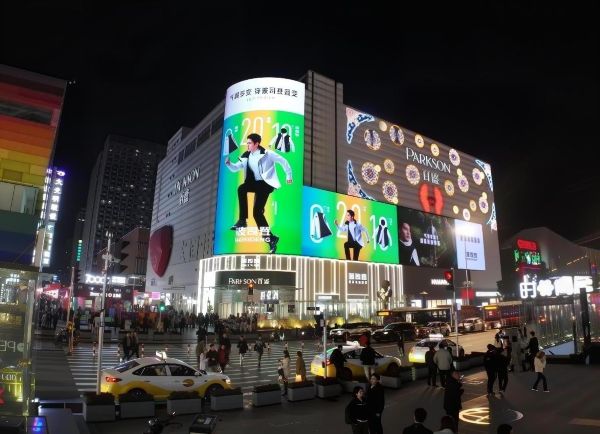
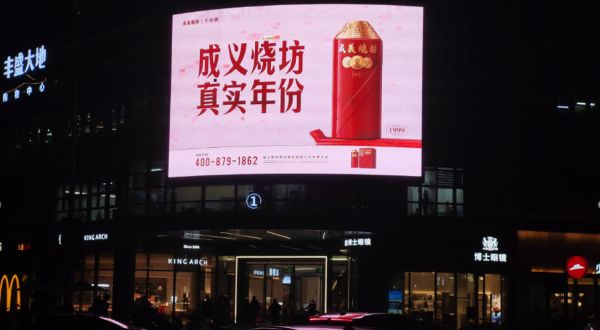
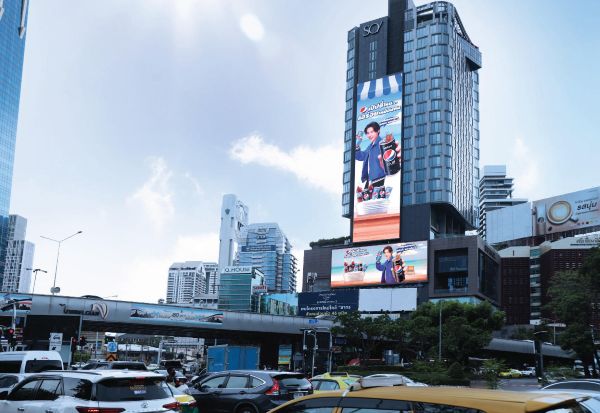
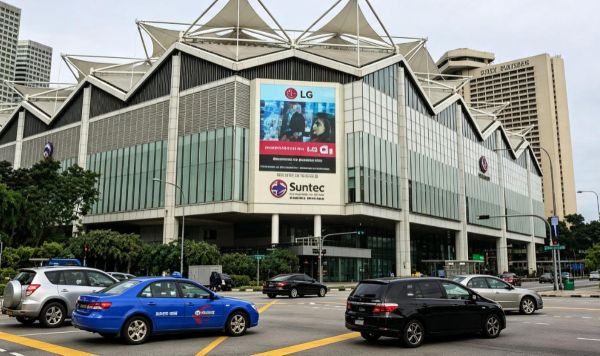
Broad Resource Coverage: Tianci Media has integrated OOH resources across core commercial districts, urban landmarks, transportation hubs, and international media networks — including iconic screens in New York’s Times Square and Tokyo’s Shinjuku. The company serves a diverse range of brands across multiple categories.
Data-Driven Targeting: Leveraging audience data assets and intelligent placement systems, Tianci Media uses foot traffic analysis and audience profiling for scientific site selection — ensuring that OOH advertising is no longer a blind “spray and pray” approach. As the company notes, the key question has shifted from “will people see this screen?” to “are the people walking past this screen the people I want to reach?”
Full-Service Capabilities: From resource reservation and creative planning to execution and performance tracking, Tianci Media provides end-to-end services that help brands achieve a complete loop from exposure to conversion. With over 20 years of industry experience, the company helps brands navigate the complex OOH landscape with precision and accountability.
7. Strategic Takeaways for Brands
Invest in OOH for brand trust — in a skeptical digital era, OOH’s physical presence builds consumer confidence and brand stature (+88% premium cues).
Allocate at least 15% of budget to OOH — brands at this threshold see significant gains in sales, profit, and market share.
Prioritize creative quality — humor, emotion, and memorability drive consumer action and purchase intent.
Integrate OOH into omnichannel plans — OOH amplifies the effectiveness of every other channel, from social to search to TV.
Embrace programmatic DOOH — pDOOH enables precision targeting, real-time optimization, and seamless integration with digital campaigns.
Partner with experienced providers — companies like Tianci Media offer the data-driven site selection, broad resource coverage, and full-service capabilities needed to maximize OOH impact.
Conclusion
In 2026, as digital advertising faces growing consumer skepticism and diminishing returns, out-of-home advertising offers something increasingly rare: trust. With $56.4 billion in global spend, 49% DOOH penetration, and proven ability to build brand stature (+88% in premium cues) and amplify every other channel, OOH has earned its place at the center of the marketing mix. The medium is no longer just about reach — it’s about building brand equity, driving growth, and earning consumer trust in a world where trust is the most valuable currency. For brands ready to invest strategically, partnering with experienced providers like Tianci Media can unlock the full potential of this essential, trust-building channel.