China Outdoor LED Billboard Advertising 2026: Market Trends, Smart Tech & Proven Strategies
2026-07-25Tianci MediaViews:7
Highlights
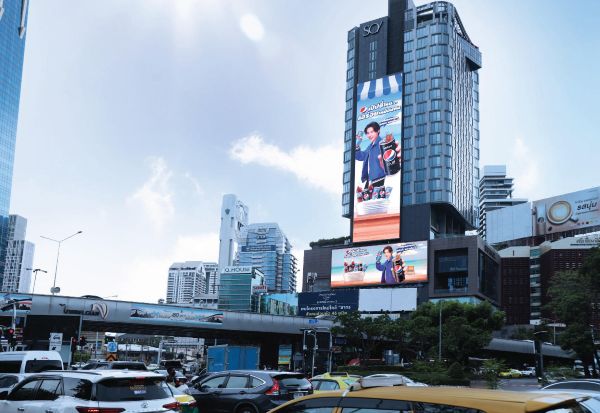
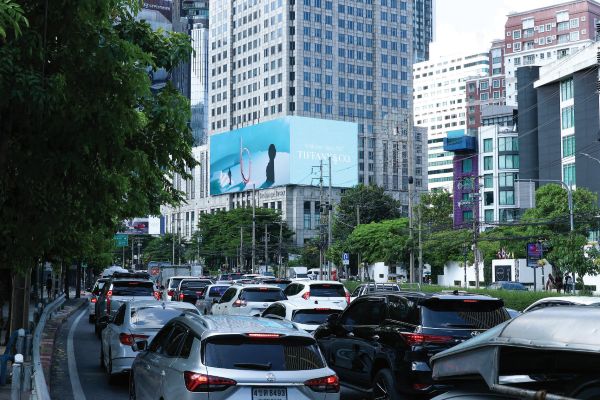
Outdoor LED billboards have become the visual backbone of China’s modern urban landscape. From the bustling commercial districts of Shanghai and Beijing to the dynamic city centers of Chengdu and Shenzhen, large-format digital screens command attention in ways online ads simply cannot. In 2026, China’s Outdoor LED Display market is projected to reach a value between USD 8.5 billion and USD 9.5 billion, driven by the rapid replacement of static billboards and significant investment in smart city infrastructure. The market is expected to grow at a compound annual growth rate (CAGR) of 12–15% through 2035. At the same time, China’s broader LED advertising market is forecast to exceed RMB 49 billion, with digital out-of-home (DOOH) penetration surpassing 60%. This article explores the key trends shaping China’s outdoor LED billboard sector, the technology driving its evolution, and practical strategies for brands looking to leverage this powerful medium — with insights from Tianci Media (天赐传媒), a professional outdoor advertising service provider with deep expertise in large-screen ad placements across China.
1. Market Landscape: Three Engines of Growth
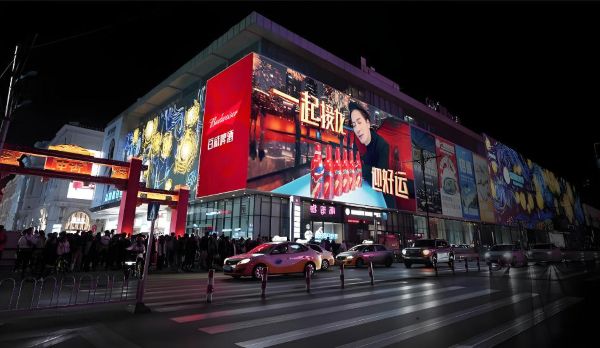
China’s outdoor LED billboard market is powered by three primary growth engines: commercial district LED screens, transportation hub LED displays, and lower-tier market LED deployments. Commercial districts in tier-1 cities remain the most sought-after locations, with iconic screens in Beijing, Shanghai, and Guangzhou generating substantial revenue. Transportation hubs — including subways, airports, and high-speed rail stations — offer high-traffic environments with captive audiences. Meanwhile, demand in tier-3 and tier-4 cities is growing faster than in tier-1 cities, making lower-tier markets a new growth frontier.
China dominates the global supply chain for outdoor LED displays, accounting for an estimated 70–80% of worldwide module and cabinet manufacturing. This production scale has driven down costs significantly: pricing per square meter has declined by approximately 40–50% over the past five years for mainstream pixel pitches. However, premium segments for fine-pitch outdoor displays (P2.5–P4) and high-brightness HDR-capable systems maintain higher price points — typically 2 to 5 times that of standard P10 screens.
2. Technology Evolution: Smarter, Brighter, More Efficient
The technology powering China’s outdoor LED billboards has advanced dramatically. The industry has shifted from conventional DIP (Dual In-line Package) to high-density SMD (Surface Mount Device) and COB (Chip-on-Board) technologies, with SMD and COB combined representing over 60% of new installations by value in 2026.
Key technological trends include:
Ultra-High Brightness: Demand for displays exceeding 8,000 nits is surging, particularly for digital billboards in high-ambient-light environments. This pushes LED chip suppliers to develop specialized, high-efficiency flip-chip and COB architectures that maintain visibility while reducing power consumption.
Smart IoT Integration: The integration of IoT sensors, AI-driven content management, and real-time data analytics into outdoor LED displays is becoming standard for large-format DOOH advertising networks. Media owners increasingly demand systems that can adjust brightness automatically, report maintenance needs, and support interactive advertising via mobile connectivity.
Modular and Weatherproof Designs: Modular, lightweight cabinet designs with IP65/IP68 weatherproofing and advanced thermal management are gaining preference, especially for building facade and transportation hub installations.
3. Programmatic DOOH: Precision Meets Scale
Programmatic Digital Out-of-Home (pDOOH) is transforming how brands buy and measure outdoor LED advertising in China. In 2026, programmatic buying is expected to account for 35% of total outdoor advertising spend. This marks a shift from “buying space” to “buying audiences” — enabling real-time targeting by time, location, weather, and demographic profiles.
The core advantages of pDOOH are data-driven precision and real-time responsiveness. Advertisers can use demand-side platforms (DSPs) to bid on ad slots in real time, targeting specific time windows, scenarios, and audience segments. For example, outdoor screens near office buildings can automatically trigger food delivery or umbrella brand ads on rainy days; subway ads can prioritize coffee and commuting products during morning peak hours.
This programmatic shift is made possible by smart terminal hardware. LED screens equipped with intelligent algorithms can automatically adjust brightness based on ambient light and even push differentiated content based on audience attributes captured by cameras (within compliance frameworks). Advertisers no longer pay for “wasted impressions” — they can precisely target specific scenarios where their target audiences congregate.
4. Creative Trends: From Brand Monologue to Emotional Dialogue
The most significant creative shift in 2026 is how brands use outdoor LED billboards. The era of simply looping logos and sales pitches is over. Today’s winning campaigns treat large screens as “public emotional windows” rather than advertising space.
Naked-Eye 3D technology has evolved from an experimental novelty to a standard feature in tier-1 commercial district landmarks. Using light and spatial distance to create powerful depth and impact, naked-eye 3D transforms outdoor screens into “urban digital art showcases”. Meanwhile, AIGC (AI-Generated Content) is now deeply integrated into the ad production workflow — from concept generation and original design to scene construction — dramatically improving creative efficiency.
But technology alone isn't enough. The most shareable content today is emotionally resonant. As one industry observer notes, outdoor screens are shifting from “brand monologue” to becoming “the user’s voice”. A simple, relatable message — like “Keep going today” on a morning commute screen or “Leave on time” on an evening商圈 screen — generates far more social sharing than a traditional brand pitch. This “big screen photo → social sharing” loop amplifies campaign reach far beyond the physical placement.
5. Tianci Media: Precision Targeting for Outdoor LED Campaigns
Tianci Media (天赐传媒) is a professional outdoor advertising service provider with extensive experience in large-screen ad placements across China. The company’s core strengths lie in three areas:
Broad Resource Coverage: Tianci Media has integrated LED resources across China’s core commercial districts, covering urban landmarks, trendy shopping areas, transportation hubs, and other diverse scenarios. The company also operates international media networks, covering iconic outdoor screens in locations such as New York’s Times Square and Tokyo’s Shinjuku.
Data-Driven Site Selection: Leveraging audience data assets and an intelligent投放 system, Tianci Media uses foot traffic data and audience profiling for scientific site selection — ensuring that large-screen advertising is no longer a blind “spray and pray” approach.
Full-Service Capabilities: From resource reservation and creative planning to execution and performance tracking, Tianci Media provides end-to-end services that help brands achieve a complete loop from exposure to conversion. With over 20 years of industry experience, the company operates on the principle of “precision communication · value enhancement”.
Tianci Media has executed campaigns for a diverse range of brands across multiple categories, including luxury, fashion, and consumer goods, in key markets such as Shanghai, Beijing, Chongqing, Chengdu, and Shenyang.
6. Measuring What Matters
One of the industry’s biggest historical challenges — proving ROI — is being solved. Brands can now track:
QR code scans and short-link clicks to quantify engagement
Search index comparisons (e.g., Baidu Index, WeChat Index) to measure brand awareness lift
LBS foot traffic analysis to connect outdoor exposure to store visits and sales conversions
This multi-dimensional attribution means outdoor LED advertising is no longer a “black box.” It is a measurable channel that can be optimized in real time.
7. Strategic Takeaways for Brands
Match screen specs to viewing distance — use fine-pitch (P4 or below) for pedestrian-close placements; larger pitch works for highway and landmark screens.
Prioritize emotional, shareable creative — the best content isn’t a sales pitch; it’s a feeling that makes people stop, look, and snap a photo.
Embrace programmatic — pDOOH delivers precision targeting and real-time optimization that traditional OOH cannot match.
Demand measurement — work with operators who offer attribution data, not just “proof of posting.”
Consider tier-2 and tier-3 cities — lower-tier markets are the fastest-growing segment for LED advertising.
Partner with experienced providers — companies like Tianci Media offer the data-driven site selection, broad resource coverage, and full-service capabilities needed to navigate China’s complex outdoor advertising landscape.
Conclusion
China’s outdoor LED billboard market in 2026 is defined by technological sophistication, creative maturity, and data-driven precision. The USD 8.5 billion+ LED advertising sector is no longer about putting up a big screen and hoping for the best. It is about choosing the right screen, the right technology, the right creative, and the right audience — all measured and optimized with the rigor of digital marketing. For brands willing to invest thoughtfully, partnering with experienced providers like Tianci Media can unlock the full potential of this powerful, unskippable attention channel in the world’s largest outdoor advertising market.