China’s Outdoor LED Billboards 2026: Market Scale, Creative Trends & Programmatic Buying Guide
2026-07-24Tianci MediaViews:9
Highlights
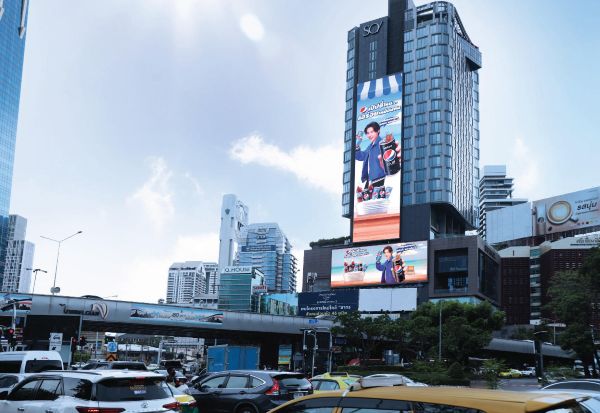
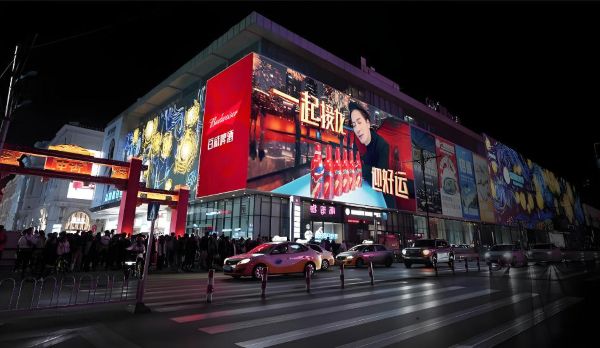
Outdoor LED billboards have become the visual anchors of China’s modern cities. From the neon-lit skylines of Shanghai and Guangzhou to the bustling commercial districts of Chengdu and Zhengzhou, large-format digital screens command attention in ways that online ads simply cannot. In 2026, China’s LED advertising market is projected to exceed RMB 49 billion, with digital out-of-home (DOOH) penetration surpassing 60%. Brands are rediscovering the power of “big screens” – not as static billboards, but as dynamic, data-driven, and emotionally resonant media assets.
1. Market Scale: A Sector in Full Swing
China’s overall outdoor advertising market is set to reach RMB 98.7 billion (≈US$13.6B) in 2026, growing at 7.1% year-on-year. Within this, LED displays have emerged as the dominant force. Industry data shows that national core city commercial district LED screens alone generate over RMB 20 billion in annual revenue, with top-tier individual screens pulling in over RMB 1 million per month in ad income.
The 2026 market is driven by three key growth engines: commercial district LED screens, transportation hub LED displays, and lower-tier city LED deployments. As urbanization continues and consumer mobility rises, LED billboards are becoming indispensable infrastructure for brand communication.
2. Technology Evolution: From Single-Color to Ultra-HD Micro-Pitch
The technology behind China’s outdoor LED screens has advanced dramatically. In the late 1990s, LED displays were monochrome or dual-color text boards in a few first-tier cities. The 2000s brought full-color displays and dynamic video. Today, the industry has entered the “ultra-HD micro-pitch” era.
The market now shows a clear technological bifurcation:
Long-distance landmark screens (P8–P16 pitch): Positioned on rooftops and highways, these prioritize ultra-high brightness (≥8,000 nits) for daylight visibility and IP65+ weather protection.
Close-proximity commercial screens (P2.5–P4 pitch): Found in shopping districts and pedestrian streets, these deliver finer image quality, eliminating pixelation at close range. Smaller pixel pitches make naked-eye 3D content more immersive – objects appear to “break through” the screen, triggering passerby photos and social sharing.
Beyond hardware, LED screens are becoming “smart.” Light sensors automatically adjust brightness based on sunlight, reducing light pollution and saving energy. Data-linked playback adjusts content based on foot traffic – peak hours show core selling points, while low-traffic periods shift to brand storytelling.
3. Creative Revolution: From Brand Monologue to Emotional Dialogue
The most significant shift in 2026 is how brands use LED billboards. Gone are the days of simply looping logos and sales pitches. Today’s winning campaigns treat large screens as “public emotional windows” rather than advertising space.
Nike recently took over Shanghai’s urban landscape – subway passages, building screens, and even construction crane banners were linked into an emotional running narrative. From excitement to hesitation to persistence, the entire city became a runner’s inner monologue. The screens weren’t selling shoes; they were saying, “I understand how you feel in this city.”
Tai Er Suan Cai Yu (a popular Chinese restaurant chain) turned a Guangzhou subway corridor into a “contemporary office worker spirit exhibition.” Slogans like “As fierce as you are after work” and “Raised this big just so I won’t be looked down on” transformed the brand into a relatable, rebellious companion.
Even shopping malls have joined the trend. A Wuhan mall went viral not with 3D technology, but by creatively arranging three brand logos (McDonald’s, Luckin, Mixue) to spell “McLuckyMixue” – a homophone for “Marry Me” – turning the mall into a “cyber marriage proposal destination” and boosting foot traffic by 20%.
This “3.0 phase” of large-screen advertising doesn’t rely on technical spectacle. It relies on emotion, leaving white space, and speaking directly to people – not brands. Screens now offer messages like “May you become a woman who can hear her own inner voice” – containing zero sales pitch, yet generating immense social sharing because they provide emotional value.
4. Programmatic Buying: Precision Meets Scale
What does this mean for brands? Outdoor LED buying is shifting from “buying space” to “buying audiences.” Screens can now be purchased by time slot, location, weather, and demographic profile – with the same precision as online ads.
5. Measuring What Matters
For years, the industry’s biggest challenge was proving ROI. That’s changing rapidly. Brands can now track:
QR code scans and short-link clicks – quantifying engagement
Search index comparisons – measuring brand awareness lift
LBS foot traffic analysis – connecting outdoor exposure to store visits and sales
This multi-dimensional attribution means outdoor LED advertising is no longer a “black box.” It’s a measurable channel that can be optimized in real time.
6. Strategic Takeaways for Brands
Match screen specs to viewing distance – use micro-pitch (P4 or below) for pedestrian-close placements; larger pitch works for highway landmarks.
Prioritize emotional, shareable creative – the best content isn’t a sales pitch; it’s a feeling that makes people stop, look, and snap a photo.
Embrace programmatic – pDOOH delivers precision targeting and real-time optimization that traditional OOH cannot match.
Demand measurement – work with operators who offer attribution data, not just “proof of posting.”
Consider tier-2 and tier-3 cities – lower-tier markets are the fastest-growing segment for LED advertising.
Conclusion
China’s outdoor LED billboard market in 2026 is defined by technological sophistication, creative maturity, and data-driven precision. The RMB 49 billion LED advertising sector is no longer about putting up a big screen and hoping for the best. It’s about choosing the right screen, the right technology, the right creative, and the right audience – all measured and optimized with the rigor of digital marketing. For brands willing to invest thoughtfully, outdoor LED billboards offer one of the most powerful and unskippable attention channels in the world’s largest outdoor advertising market.