Why China OOH Advertising Works in 2026: Creative Strategies, Cost Efficiency & Brand Impact
2026-07-20Tianci MediaViews:30
Highlights
In an era of digital ad saturation—where consumers are bombarded with thousands of online messages daily—out‑of‑home (OOH) advertising in China offers something digital channels cannot: physical presence that cannot be skipped, blocked, or scrolled past. With the market projected to reach RMB 98.7 billion (≈US$13.6B) in 2026, growing at 7.1% year‑on‑year, OOH has become an essential component of brand marketing strategies. This article explores why OOH works, how brands are using it creatively, and what makes it a cost‑effective choice.
1. Why OOH Works: The Attention Advantage
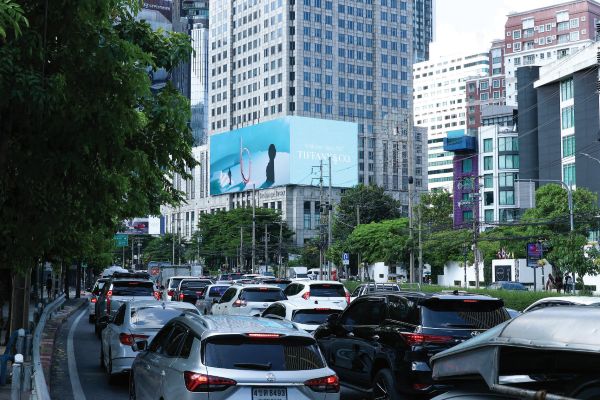
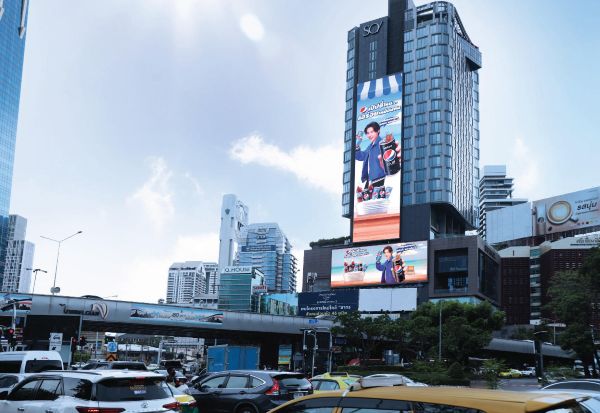
Online advertising faces a fundamental problem: consumers have learned to ignore it. Ad‑blockers, skip buttons, and banner blindness have eroded digital advertising’s effectiveness. OOH, by contrast, occupies physical space in the real world. A giant LED screen on a busy Shanghai intersection or a digital panel in a Beijing subway carriage commands attention simply by being there.
Brand recall is significantly higher. Studies show that brand recall from DOOH ads is 25% higher in urban areas. OOH doesn't just reach consumers—it stays with them.
It drives real‑world action. A 2025 study found that 72% of Chinese consumers say OOH advertising has a significant impact on their purchasing decisions. This makes OOH not just a brand‑building tool but a performance driver.
2. Creative Campaigns That Break Through
Chinese brands are pushing OOH creativity to new heights. Here are three campaigns that demonstrate the power of innovative OOH:
Heinz: Turning Fries into Football Moves
Ahead of the FIFA World Cup 2026, Heinz launched its “Fries That Want to Win, Dip Heinz” campaign across key metro lines in Beijing, Shanghai, and Guangzhou. The campaign transformed “fries dipped in Heinz ketchup” into three classic football moves—a sliding tackle, a bicycle kick, and a thunderbolt strike. It invited the public to invent more “fries × ketchup” moves and share them on Xiaohongshu. The result:线下 exposure triggered organic social discussion, creating a “offline exposure → online conversation” loop that amplified reach far beyond the physical placements.
Absolut: Playful Underground
Absolut’s “Playful Underground” campaign transformed subway stations in Shanghai, Chengdu, and Guangzhou into vibrant art spaces inspired by Keith Haring. The campaign targeted young office workers navigating high‑pressure daily routines, offering a “playful interruption” in the middle of an ordinary commute. With a localized tagline—“打破日常 绝对出逃 / Break the Routine, Absolut Unbound”—the activation spanned OOH, digital, retail, and influencer channels. It reached over 24 million commuters in a single month.
Budweiser: Barely Noticeable Promotions
Budweiser took the opposite approach: subtlety. The brand placed NFC‑enabled posters near convenience stores across major Chinese cities. The posters featured a slightly deeper shade of red—a packaging change so subtle that consumers had to look closely to notice it. Those who did could tap their smartphones to unlock rewards. The campaign generated 3.67 million impressions, increased packaging change awareness by 32% among beer drinkers, and grew in‑store sales by 43% compared to the previous year.
3. Real Results: Measuring OOH Impact
OOH is no longer a “spray and pray” medium. Brands are using sophisticated measurement tools to prove ROI.
Dafeixin, a hair care brand, ran a six‑month Beijing Metro campaign. A brand impact survey (500 commuters) and an AI‑driven creative performance analysis using Optix Creative Heatmap. The analysis showed one creative outperformed another with a higher focus score (83% vs 78%) and superior engagement (67 vs 58). 38.9% of the audience recalled the product and slogan.
Ganten, a natural mineral water brand, ran a bus body campaign across 50 bus routes covering 12 key areas of Shanghai. A post‑campaign brand impact survey found that 85% of respondents recalled a Ganten ad in the past month, and 97% were willing to recommend the brand’s products. Respondents reported seeing Ganten ads an average of 5.4 times per month.
These case studies demonstrate that OOH can be measured, optimized, and tied to tangible business outcomes.
4. Cost Efficiency: OOH vs. Digital
One of the most compelling arguments for OOH is cost efficiency. The cost per thousand impressions (CPM) for a billboard in China can be as low as $2.00—compared to up to 4x more for radio, 16x more for TV, or 40x more for newspapers. In tier‑1 cities, elevator advertising CPM ranges from RMB 5‑10, while social media CPM can reach RMB 50‑100.
Beyond raw CPM, OOH offers unique value: it reaches consumers in high‑attention, low‑distraction environments where they are more receptive to brand messages.
5. The pDOOH Opportunity
Programmatic Digital Out‑of‑Home (pDOOH) is transforming how brands buy and measure OOH in China. Adoption reached 30% in 2025, up from 24% in 2023, and 42% of advertisers plan to allocate dedicated pDOOH budgets. pDOOH is expected to rank 4th among 14 major media channels for planned investments.
pDOOH enables real‑time targeting by time, location, weather, and audience demographics. Advertisers are funding pDOOH by reallocating budgets from other digital channels (58%) and traditional channels (59%). It is no longer a “supplementary medium” but a standard part of omnichannel marketing strategies.
6. Strategic Takeaways for Brands
Prioritize creative differentiation. In a crowded OOH environment, creativity cuts through. Interactive installations, culturally relevant themes, and shareable experiences generate organic social amplification.
Integrate OOH with digital channels. The most effective campaigns pair OOH with social media, mobile, and e‑commerce to create seamless consumer journeys.
Measure what matters. Use brand impact surveys, AI‑driven creative analysis, and attribution tools to prove ROI and optimize campaigns.
Consider pDOOH for precision. Programmatic buying offers flexibility, efficiency, and data‑driven targeting that traditional OOH cannot match.
Think beyond tier‑1 cities. While Shanghai, Beijing, and Guangzhou dominate, OOH in mid‑tier cities can deliver strong returns with less competition and lower costs.
Conclusion
China’s OOH advertising market in 2026 offers brands a powerful combination of attention, creativity, and cost efficiency. As digital channels reach saturation, OOH provides a tangible, unskippable presence that drives brand recall and consumer action. With pDOOH opening new possibilities for precision and measurement, the case for OOH has never been stronger. Brands that embrace creative, data‑driven OOH strategies will capture a significant competitive advantage in the world’s largest outdoor advertising market.