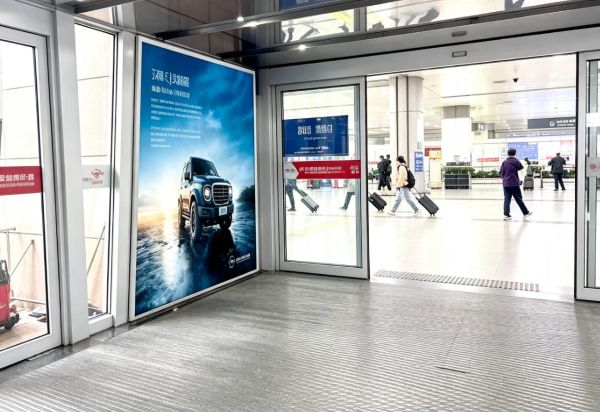
Guangzhou Baiyun Airport Advertising Guide: Formats, Audience & Strategy
2026-06-10Tianci MediaViews:54
Highlights
As the busiest aviation hub in South China, Guangzhou Baiyun International Airport (CAN) has cemented its place among the world's top airports. In 2025, Baiyun Airport welcomed over 83.58 million passengers, breaking into the prestigious “80 million-level passenger travel club”. With the addition of Terminal 3 (T3), the airport can now handle up to 120 million passengers annually. For brands aiming to tap into China's prosperous Greater Bay Area, Baiyun Airport delivers a premium, captive audience with unmatched regional influence.
Why Advertise at Guangzhou Baiyun?
Baiyun Airport is the Southern gateway to the world's most dynamic economic region. It attracts high-net-worth business travelers, international tourists, and elite families — individuals with strong purchasing power and influence.
With over 80 airlines operating more than 146 international routes, Baiyun connects to 105 global cities, including nearly 30 intercontinental destinations. During major trade events like the Canton Fair, over 60% of international buyers arrive through Baiyun Airport, making it a prime location for B2B brand exposure.
Premium Advertising Formats
1. World-Class Digital Mega-Screens
Baiyun Airport features some of the world's most impressive digital displays. In T2, the airport unveiled a 33m-high by 25m-wide LED screen totaling 825 sqm—the world's largest terminal-based naked-eye 3D display. It delivers nearly 500 million pixels and showcases stunning visuals of Lingnan culture, waterfalls, and lion dances.
In T3, the security checkpoint features two massive LED screens measuring 36.6m × 5.4m each, with a total area of 395 sqm and 8K resolution, creating a “visual canopy” over passengers queuing for security.
2. Checkpoint Media
Security checkpoint zones are “mandatory stop points” where travelers wait 3–5 minutes in near-zero distraction. Multiple screens operate along queue paths, allowing brands to deliver detailed messages. FLYCO executed a high-impact campaign at T2 using 15 digital screens at checkpoints, achieving 360 daily rotations and immersive storytelling.
3. Baggage Claim & Arrival Zone
The baggage claim exit in T2 features twin LED screens (total 115.2 sqm) running 320 rotations daily. Positioned as a 100% coverage visual barrier, this spot captures both arriving domestic and international travelers.
T2‘s international arrival zone is exclusively operated for foreign trade brands, capitalizing on Baiyun’s status as the primary entry point for Canton Fair buyers.
4. Full-Passenger Journey Matrix
T3‘s advertising layout follows the complete passenger flow from check-in through security to luggage claim. The media mix includes ceiling-mounted ultra-thin LED screens at check-in, both digital and static placements in departure lounges, and strategic displays at boarding bridges.
Audience Breakdown
Business Travelers: Peak morning and evening hours; high demand for premium auto, finance, and tech products. Make up a significant share of T3's passenger mix.
International Arrivals: Over 17.44 million international and regional passengers in 2025, up 19.3% year-on-year.
Canton Fair Buyers: Two peak windows (April–May and October–November) where global procurement professionals pass through daily.
Key Considerations
Cost Range: Premium international zone placements command significant premiums, while domestic departure areas offer more accessible rates. Long-term contracts provide substantial discounts.
Planning Ahead: Major seasonal peaks such as Spring Festival (January–February), Canton Fair (April–May and October–November), and summer holidays (July–August) require booking 4–8 weeks in advance.
Real-World Success
FLYCO × Wang Yibo: Created a multi-touchpoint campaign covering check-in LED, checkpoint digital screens, and mixed-flow zone displays. By leveraging the forced dwell time at security, the brand delivered detailed product narratives.
Heitu Youpin: Agricultural brand deployed high-frequency rotations across T3, achieving premium brand positioning traditionally reserved for luxury categories.
The Bottom Line
Guangzhou Baiyun Airport advertising offers brands direct access to South China's most influential travelers. With T3‘s expanded capacity, world-class digital infrastructure, and measurable DOOH options, smart advertisers can align creative placement with passenger flow to maximize ROI. For companies targeting the Greater Bay Area, Baiyun isn’t just a media channel — it‘s a strategic necessity.