Shanghai Outdoor Large Screen Advertising: Complete Guide to DOOH in China’s Most Dynamic City
2026-06-06Tianci MediaViews:93
Highlights
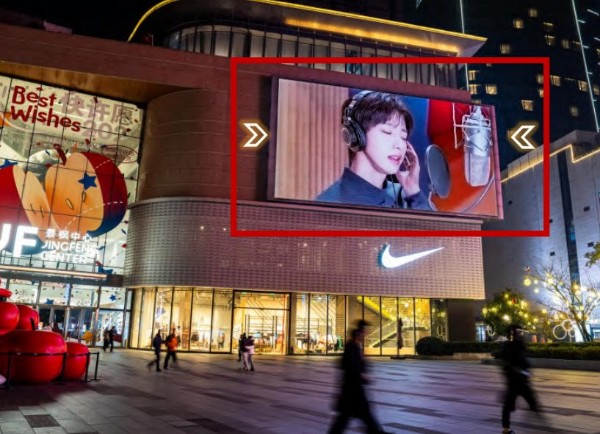
With a population exceeding 24 million, Shanghai is China’s undisputed economic, financial, and fashion capital. For brands seeking to dominate the world’s second-largest advertising market, outdoor large screen advertising in Shanghai offers unparalleled reach, prestige, and measurable results. From the historic Bund to the bustling Xujiahui commercial district, the city is blanketed with some of Asia’s most advanced digital out-of-home (DOOH) screens. This comprehensive guide explores Shanghai’s top DOOH locations, programmatic buying opportunities, regulatory landscape, creative best practices, and campaign costs to help your brand succeed in the “Magic City.”
Why Shanghai’s DOOH Market Stands Out
Shanghai’s outdoor advertising ecosystem is uniquely mature and competitive. Three factors set it apart:
Strict but clear regulation – The Shanghai Municipal Greening Department enforces the most detailed outdoor advertising regulations in China, ensuring a safe, compliant environment for brands while eliminating illegal clutter that dilutes impact.
Extreme value stratification – Media resources in prime locations command premium pricing, while cost-effective alternatives in community and regional commercial districts offer precise penetration opportunities.
Highly segmented audiences – Shanghai’s consumer market is distinctly stratified. International communities, fashion elites, young families, and tech professionals each have predictable geographic footprints, allowing brands to match screens to their ideal customer profiles.
Top Outdoor Large Screen Locations in Shanghai
The Bund – China’s Most Iconic Digital Canvas
The Bund remains the crown jewel of Shanghai outdoor advertising. The National Guest Center Pujiang Large Screen stands 88 meters high by 78 meters wide—6,864 square meters of LED brilliance visible simultaneously from the Bund heritage buildings and Pudong’s Lujiazui skyline. With 300 million annual person-vehicle passes, this dual-facing screen delivers unmatched organic and tourist reach.
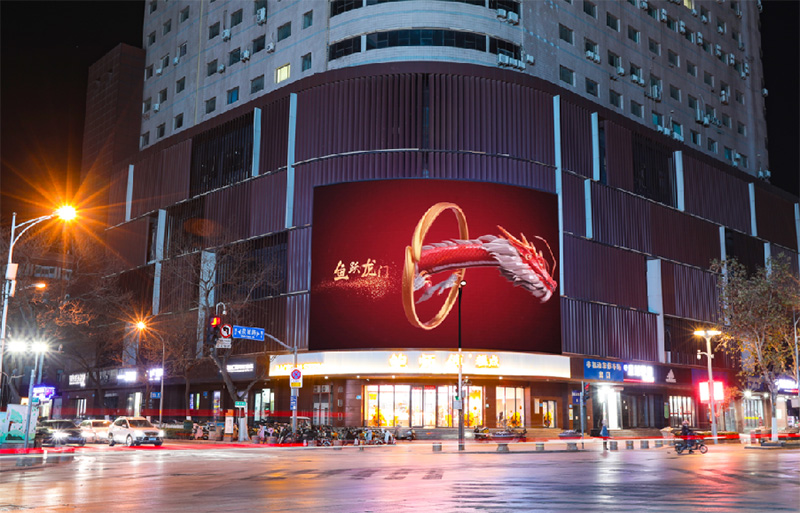
Alongside it, the Bund Financial Center curved LED screen wraps the building’s architecture, creating a seamless 3D visual experience. For premium global brands and IPO announcements, the Bund offers the ultimate brand halo effect.
Xujiahui – Shanghai’s Commercial Powerhouse
Xujiahui is the southwestern gateway to Shanghai’s economic heart. Three major metro lines (1, 11, and 9) converge here, delivering over one million daily passengers.
Key screens include:
Zhongjin International Plaza LED (360㎡) – Occupying the west wall at Caoxi North Road. Among viewers, 60% are business professionals, with high-net-worth density ranking top in Xujiahui.
Dahua Guangqi City LED – Positioned at Yishan Road with access to Metro Lines 3, 4, and 9, attracting over 300,000 daily visitors.
CP Lecheng outdoor LED – Anchoring the Xuhui Binjiang strategic development belt. This screen offers scarcity, high-end crowd cohesion, and intelligent upgrading potential.
Xujiahui screens target mid-to-high-end consumers and tourists, making them ideal for luxury goods, finance, and premium retail campaigns.
Wujiaochang – Northern Shanghai’s Rising Media Hub
As one of Shanghai’s four sub-central urban districts, Wujiaochang serves the city’s northern population with a uniquely youthful, ACG-themed character.
The Puhe Shenghui LED (141.5㎡) sits in the square’s core, adjacent to Metro Line 10 Exit 5 with 80,000 daily footfall. Surrounded by university clusters and the northern Shanghai CBD, this screen is ideal for consumer electronics, entertainment, and F&B brands targeting young professionals and students.
People’s Square – The Civic Epicenter
Anchored by the Shanghai Museum, Grand Theatre, and City Hall, People’s Square offers screens visible to both business commuters and international tourists. Landmark LED displays here serve as powerful tools for corporate prestige campaigns targeting government relations and public-sector stakeholders.
Programmatic DOOH Across the Metro Network
Beyond landmark screens, Shanghai’s subway system—the world’s largest by route length—has emerged as a programmatic DOOH powerhouse. JCDecaux China connected nearly 700 digital screens across the network, enabling real-time, data-driven programmatic buying.
Programmatic DOOH in Shanghai: The Future Is Here
Shanghai is leading China’s transition to programmatic digital out-of-home (pDOOH) . WPP Media China’s unified pDOOH platform aggregates premium inventory, geolocation data, creative assets, and real-time measurement into a single interface.
Through partnerships with VIOOH, agencies like Vistar Media now access JCDecaux’s network of over 864 DOOH screens across Beijing and Shanghai, enabling data-driven planning, programmatic activation, and digital retargeting of DOOH-exposed audiences.
Live Example: FIA’s First Programmatic Shanghai Metro Campaign
The Fédération Internationale de l’Automobile (FIA) launched the first-ever programmatic DOOH campaign in the Shanghai Metro to promote its 2024 FE Electric Formula event at the Shanghai International Circuit. Using JCDecaux’s Metro Audience Metrix (MAM) demographic data, the team identified optimal screens across stations. Mid-campaign, FIA requested screen changes—executed within a single hour. The campaign delivered 9.6 million viewed impressions, reaching 131% of traditional exposure benchmarks.
Case Study: Weather-Triggered Creative in Action
Mizone (脉动) demonstrated the power of dynamic creative optimization (DCO) in Shanghai’s subway. Using pDOOH and weather APIs, its ads switched messaging when temperatures exceeded 33℃—a threshold aligning with Shanghai’s high-temperature subsidy policy. Instead of generic brand visuals, commuters saw contextually relevant “feeling dizzy from the heat” creative, transforming advertising from noise into empathetic utility.
Regulatory Compliance: What You Must Know
Before launching any outdoor campaign in Shanghai, understand the regulatory framework:
Approval authority – The Shanghai Municipal Greening Department oversees all outdoor advertising and has the strictest regulations in China.
District-level plans – Each district maintains its own implementation plan. Yangpu District’s 2025 plan, for example, added new permitted display locations at properties including the TikTok (Douyin) Jiangwan Plaza.
Protected areas – Historical zones like the Bund heritage strip have additional restrictions. Work with specialized agencies to ensure full compliance.
Non-compliance risks include fines, demolition of ads, and reputational damage. Always engage local media partners with established relationships with municipal authorities.
Cost Structure & Budgeting
Shanghai outdoor large screen costs vary dramatically by location, time, and technical specifications. A general price framework:
| Screen Type / Location | Estimated Cost (weekly) | Best For |
|---|---|---|
| Wujiaochang commercial screen (141㎡) | $13,000 – $27,000 | Youth brands, tech, F&B |
| Xujiahui core screen (360㎡) | $27,000 – $55,000 | Luxury, finance, automotive |
| Bund landmark screen | $45,000 – $100,000+ | Global brands, prestige campaigns |
| Programmatic metro screens (per impression) | $0.04 – $0.30 CPM | Mass reach with audience targeting |
Key cost drivers:
Time-of-day – Golden hours (6 PM–10 PM) typically cost 2–10× daytime rates.
Seasonality – Chinese New Year, National Day Golden Week, and international events command significant premiums.
Duration – Monthly or quarterly commitments often include bulk discounts.
Creative production – 4K/8K native assets and special formats add to the total.
For efficient spending, consider:
Dayparting – Focus on your audience’s peak visibility hours.
Programmatic spot buys – Purchase remnant inventory 24-48 hours in advance.
Multi-screen networks – Bundle multiple displays through a single agency.
Creative Best Practices for Shanghai’s Ultra-High-Definition Screens
Shanghai’s premium screens demand premium creative. Follow these guidelines:
Asset resolution – Bundle screens with 4K or even 8K output capabilities. Use native-resolution assets.
Legibility-first design – Maximum 5–7 words. Sans-serif fonts. High-contrast color pairings.
Controlled motion – Subtle animation catches the eye without overwhelming.
Localization – While Shanghai is international, consider bilingual or Chinese-language creative for deeper resonance.
QR codes and short URLs – WeChat mini-program codes drive high engagement among Chinese consumers.
Curved screen optimization – If using the Bund Financial Center’s curved canvas, wrap visuals around the architecture for the “naked-eye 3D” effect.
Measuring Campaign Success in Shanghai
Combined with programmatic platforms, you can now track meaningful metrics:
Brand lift – Baidu Index and social listening (Weibo, Xiaohongshu, Douyin) search volume changes.
Foot traffic – Geofencing mobile data (via TalkingData or Tencent’s data ecosystem) measures store visits after DOOH exposure.
Direct response – QR code scans, WeChat follow rates, and mini-program interactions.
Retargeting – Programmatic DOOH enables digital retargeting of audiences exposed to your outdoor campaign.
Earned media value – Screenshots and videos of high-visibility Bund or Xujiahui ads often generate significant organic social sharing.
Getting Started
If your brand is ready to leverage Shanghai’s outdoor large screen market, start by:
Engaging a specialized DOOH agency – Local partners (e.g., VIOOH, JCDecaux China, Elonex Outdoor Media) provide access to premium inventory and regulatory guidance.
Choosing your approach – Premium landmark display, programmatic metro network, or a hybrid combination.
Budgeting and scheduling – Book 4–8 weeks in advance for standard placements, 3+ months for high-demand holiday periods.
Building compliance – Ensure all creative clears content and technical approval.
Conclusion
Shanghai represents the pinnacle of outdoor large screen advertising in Asia. Whether you seek the iconic prestige of a Bund display, the commercial density of Xujiahui, the youthful energy of Wujiaochang, or the precision targeting of programmatic metro DOOH, the “Magic City” offers a solution for every brand ambition.
Ready to make your brand visible across Shanghai? Contact a DOOH specialist today and turn the city’s largest screens into your most powerful marketing asset.