Maximizing Brand Impact: The Ultimate Guide to Airport Advertising
2026-06-05Tianci MediaViews:67
Highlights
In a world where consumers are bombarded with digital messages across social media, streaming platforms, and mobile apps, capturing undivided attention has become a marketer’s greatest challenge. Enter airport advertising – a timeless yet rapidly evolving out-of-home (OOH) medium that offers a unique combination of high footfall, premium demographics, and extended dwell time. For brands looking to achieve top-of-mind awareness and drive meaningful engagement, airport advertising is not just an option; it’s a strategic imperative.
Why Airport Advertising Works
Airports are more than transit hubs – they are dynamic ecosystems of emotion, anticipation, and purpose. Travelers are often in a receptive state of mind, whether they are heading for a business meeting, a long-awaited vacation, or a family reunion. This emotional context makes advertising messages more memorable compared to routine commutes.
Key advantages include:
Captive Audience with Extended Dwell Time
From check-in to boarding, passengers spend an average of 1.5 to 3 hours at airports. Long security lines, waiting at gates, and baggage claim create idle moments perfect for absorbing brand messages.Affluent and Influential Demographics
Air travelers typically represent higher income brackets, frequent international travelers, and decision-makers in business. Reaching this audience in an airport environment signals prestige and credibility.High Frequency and Reach
Major airports see millions of passengers monthly. For brands targeting travelers or establishing a global presence, airports offer unmatched scale.Low Ad Avoidance
Unlike online ads that can be blocked or skipped, airport advertising is integrated into the physical environment. Passengers cannot easily ignore a massive digital screen or a striking floor decal.
Types of Airport Advertising Formats
Modern airport advertising goes far beyond static billboards. Here are the most effective formats available today:
1. Large-Format Digital Screens
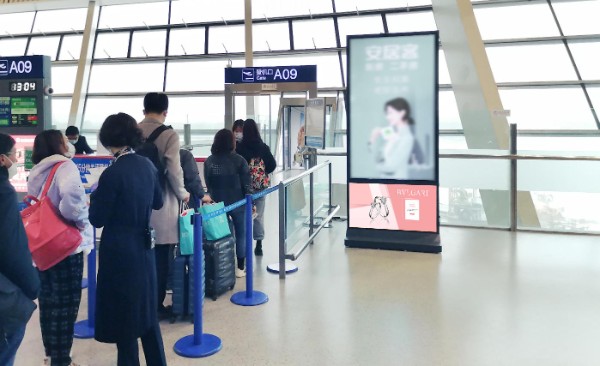
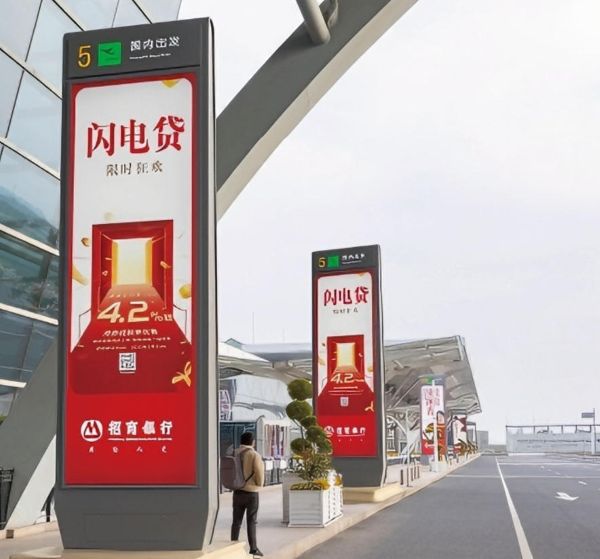
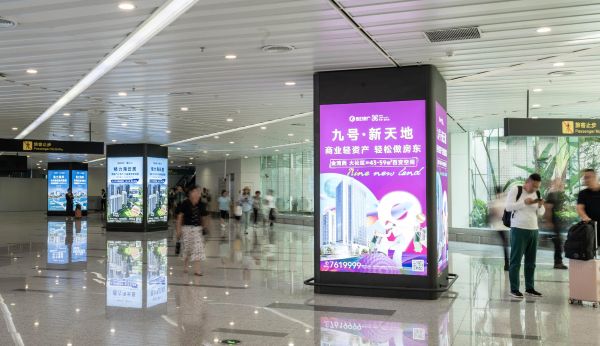
Strategically placed at arrivals, departures, and security areas, these high-resolution LED displays rotate multiple brand messages. They offer dynamic creativity – think motion graphics, countdown timers, and real-time social media integration.
2. Airport Domination (Takeovers)
For brands with bigger budgets, airport domination means covering multiple touchpoints: check-in counters, baggage claim belts, moving walkways, and jet bridges. This creates an immersive brand environment that travelers cannot miss.
3. Advertising on Airport Lounges
Premium lounges host business-class passengers and elite frequent flyers. Advertising here can take the form of sponsored Wi-Fi, digital wall screens, or even product sampling stations.
4. Baggage Claim and Carousel Ads
After a long flight, passengers wait for luggage in a relatively relaxed state. Wrapping baggage carousels or placing floor graphics in the claim area captures attention during this downtime.
5. Interactive Kiosks and Charging Stations
Offering utility – such as free device charging or wayfinding – with branded content builds positive brand association. Interactive screens can also run gamified ads or sweepstakes.
6. Transit Advertising within Airport (People Movers, Trains, Shuttles)
Inter-terminal trains and moving walkways create linear visual sequences. Digital or static panels placed along these routes deliver repeated exposure.
Strategic Planning for Airport Ad Campaigns
To maximize ROI, follow a structured approach:
Define Clear Objectives
Are you launching a new product, building brand awareness, driving footfall to a duty-free shop, or promoting a local attraction? Your goal determines creative and placement.
Understand Airport Passenger Segments
Airports serve different traveler personas:
Business travelers (weekdays, early mornings, lounges)
Leisure travelers (weekends, family-friendly zones)
International transit passengers (gate areas, currency exchange points)
Tailor messaging accordingly. A luxury watch brand will focus on premium lounges and international departures; a family resort might target baggage claim areas during holiday seasons.
Leverage Data for Placement
Advanced airport advertising networks now offer data on passenger flow, dwell times, and demographics per terminal. Use this to identify high-traffic zones such as security lines, main walkways, and food courts.
Creative Best Practices
Keep it simple – Travelers are often distracted; use bold visuals, minimal text, and high contrast.
Use motion and looping – Digital screens can cycle messages; ensure the core message appears frequently.
Include a call to action (CTA) – Even offline, a QR code, hashtag, or short URL can drive online engagement.
Consider multilingual content – For international airports, dual-language ads (e.g., English + Mandarin or Arabic) increase relevance.
Measuring the Effectiveness of Airport Advertising
One common misconception is that OOH advertising is difficult to track. But today, several methods exist:
Geofencing & Mobile Data – Partner with an ad tech firm to set a virtual fence around the airport. When devices enter the zone, you can measure subsequent online actions (website visits, app installs, social engagement).
Unique QR Codes or Short URLs – Assign different codes to each ad placement and track scan rates.
Promo Codes – Offer airport-exclusive discounts (e.g., “FlySave20”) and monitor redemption.
Surveys & Brand Lift Studies – Conduct post-campaign surveys asking travelers where they saw the brand.
Digital Integration: The Future of Airport Advertising
The line between physical and digital is blurring. Smart airports now offer programmatic DOOH (digital out-of-home), where ads can be triggered by real-time data – such as flight delays, weather at destination, or time of day. Imagine a sunscreen brand’s ad running near gates for flights to Miami on a sunny day, while switching to an umbrella brand for London-bound flights.
Additionally, beacons and proximity marketing can push notifications to travelers’ smartphones when they pass a specific screen or store, bridging offline exposure to mobile action.
Cost Considerations
Airport advertising costs vary widely based on:
Airport size and traffic (JFK vs. regional airport)
Time of year (peak holiday seasons command premium rates)
Format (digital screens cost more than static posters)
Duration (typical campaigns run 4–12 weeks)
Expect to pay between $5,000 to $150,000+ per week for major airport placements. While entry costs are higher than standard billboards, the quality of audience and engagement often justifies the investment.
Top Airports for Advertising (Global Examples)
Heathrow (LHR) – London – Heavy international business traffic.
Dubai International (DXB) – World’s busiest for international passengers; luxury brands dominate.
Los Angeles (LAX) – High volume of affluent leisure and entertainment industry travelers.
Singapore Changi (SIN) – Known for its “destination” appeal; ad fatigue is low due to unique passenger experience.
Common Mistakes to Avoid
❌ Overcrowded creative – Too much text or complex imagery gets ignored.
❌ Ignoring dwell time differences – A security line ad needs a 10-second message; a lounge ad can tell a longer story.
❌ No conversion path – Without a QR code or web link, you miss online engagement.
❌ Poor placement – Ads near restrooms or smoking areas often have lower visibility.
Conclusion
Airport advertising remains one of the most powerful out-of-home channels for brands seeking reach, prestige, and an attentive audience. With the rise of digital and data-driven DOOH, campaigns can now be both creative and measurable. Whether you are a global luxury brand, a tourism board, or a B2B service provider, investing in well-planned airport media can deliver impressive returns – and put your message in front of millions of travelers while they are literally on the move.
By combining strategic placement, compelling creative, and modern tracking technologies, your next airport advertising campaign can take off successfully.