A Comprehensive Analysis of Outdoor Advertising Placement: Types, Strategies, and Effectiveness Measurement Guidelines
2026-02-02Tianci MediaViews:148
Highlights
This guide is designed for beginners in outdoor advertising, providing a systematic explanation of placement steps, cost control, and effectiveness evaluation. Covering innovative forms such as LED screens and 3D advertising, and analyzing practical cases such as Tianci Media's outdoor advertising. Get the complete strategy now to make your brand stand out in outdoor settings.
In today's era of ubiquitous digital advertising, do you feel that the cost of online traffic is increasing and user attention is becoming more dispersed? At this moment, an ancient and vibrant medium is emerging with new opportunities - outdoor advertising. It is not only a part of the urban landscape, but also a key touchpoint for brands to establish a real and unavoidable connection with consumers. Whether it's light boxes at bus stops, LED screens in office buildings, or stunning outdoor 3D advertisements, outdoor advertising is continuously occupying an important position in the marketing battlefield in innovative forms.
This article aims to systematically review all aspects of outdoor advertising for you. Whether you are a startup owner, a newcomer in the market, or a practitioner seeking marketing breakthroughs, you can quickly grasp the logic and practical skills of outdoor advertising placement through this guide.

1、 What is outdoor advertising? It's not just about "brand"
Outdoor advertising, abbreviated as OOH, refers to the form of advertising set up in public outdoor spaces such as buildings, transportation vehicles, and streets. Its core features are "scenarization" and "forced exposure". Unlike online advertisements that can be skipped or turned off, outdoor advertising exists in real physical spaces, and people naturally receive advertising information when they are in a specific scene.
Modern outdoor advertising has long surpassed traditional road signs and developed a rich and diverse range of forms, mainly divided into:
Static advertising: such as lightboxes, billboards, wall posters.
Dynamic digital advertising: such as outdoor LED display screens and digital bus stop signs.
Transportation advertising: such as advertisements in subways, buses, and airports.
2、 Why choose outdoor advertising? Its five irreplaceable advantages
Understanding the unique value of outdoor advertising is crucial when formulating marketing strategies.
High coverage and high-frequency reach: Covering the core pedestrian areas of the city, repeatedly exposing passing crowds, helps to quickly enhance brand awareness.
Scenario driven, stimulating immediate demand: Seeing food and beverage advertisements near shopping centers and office service advertisements in business districts can effectively stimulate consumers' desire for immediate consumption.
Brand trust and authority building: Outdoor advertising that successfully lands on city landmarks or core business districts is itself a symbol of brand strength and industry status, which can greatly enhance public trust.
The perfect complement to digital advertising: achieving integrated online and offline marketing. For example, a prominent outdoor advertisement combined with QR code interaction or specific brand keyword search can effectively attract traffic online.
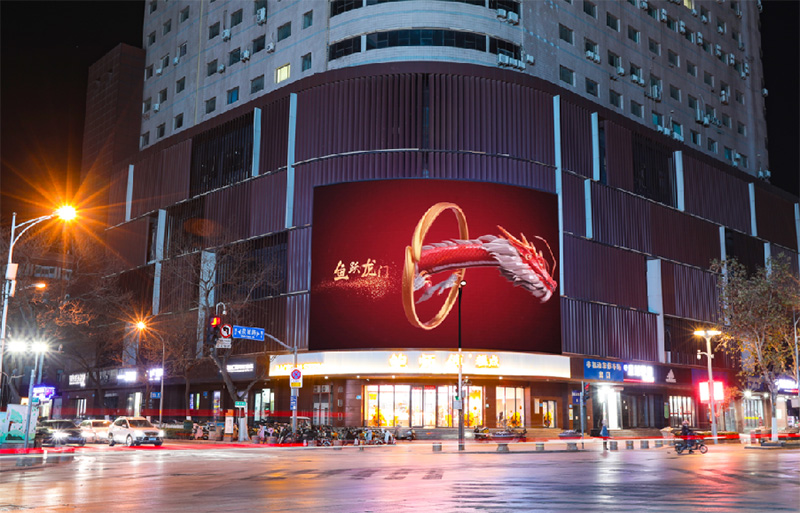
Strong creative carrying capacity: Large size and new technologies (such as 3D and AR) provide a broad stage for creativity. Tianci Media's outdoor advertising often utilizes its large screen resources to trigger secondary dissemination on social networks through stunning visual creativity, achieving a "breaking circle" effect.
3、 Five practical steps: Starting from scratch to place outdoor advertisements
Step 1: Clarify goals and audience
Don't advertise just for the sake of advertising. First, ask yourself: Is this launch aimed at enhancing brand awareness, promoting new products, or attracting traffic to offline stores? Who are your target customers? Which areas of the city do they often appear in? A clear answer is the cornerstone of all subsequent decisions.
Step 2: Understand the main types and choose the appropriate medium
Evaluate different media based on goals and budget:
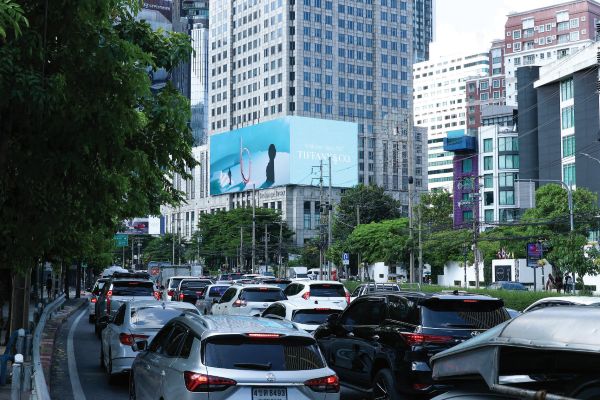
Pursuing broad exposure: You can choose outdoor LED advertising in core business districts or bus body advertising.
Pursuing precise scenes: You can choose community elevator advertisements, office building advertisements, and subway channel advertisements.
Pursuing phenomenal influence: Consider using city landmark screens or exploring innovative outdoor 3D advertising, such as the naked eye 3D effect presented by Tianci Media's outdoor 3D advertising, which can create strong visual topics.
Step 3: Creativity and Content Design
The viewing time for outdoor advertisements is usually only a few seconds. Therefore, creativity must:
Extremely concise: The core information (brand, slogan, product) is clear at a glance.
Strong visual impact: using bold colors, high-definition images, or dynamic videos.
Strong appeal: If the goal is to attract traffic, a clear QR code or search command is crucial.
Step 4: Budget Planning and Procurement Negotiation
The cost of outdoor advertising varies greatly, influenced by factors such as location, area, duration, and time period. Suggestion:
Consult multiple media suppliers (such as professional operators like Tianci Media) to obtain pricing solutions.
Understand the publication price, but actively negotiate, especially for long-term or cross site cooperation.
Considering cost-effectiveness, not the most expensive is necessarily the best. Choose the "cost-effective point" that can best reach the target audience.
Step 5: Execution, Monitoring, and Effectiveness Evaluation
After signing the contract, it is necessary to confirm the drawing time and image quality. The evaluation of effectiveness should not be 'mystical', it can be tracked through the following methods:
Online linkage: Use unique QR codes, exclusive activity codes, or designated topic tags.
Offline data: Compare the changes in store customer flow and telephone consultation volume during the advertising period.
Brand research: Conduct a small-scale brand awareness survey before and after the launch.
Social volume: Monitor whether any advertising images are spontaneously shared by users on social media.

4、 Common Misconceptions and Avoiding Pits Guide
Misconception 1: Information overload: Treating outdoor advertising as a product manual with densely packed text. The result is that nothing can be seen clearly, wasting resources.
Misconception 2: Neglecting picture quality: Using low resolution images or rough designs can seriously damage the brand's high-end image.
Misconception 3: Location selection is based on intuition: making decisions based solely on "I think there are many people here". It is necessary to conduct on-site inspections or rely on data reports to analyze pedestrian flow, crowd attributes, and duration of stay.
Misconception 4: Lack of integrated marketing thinking: Treating outdoor advertising as an isolated part. Successful cases often echo online and offline, with outdoor advertising igniting attention and online channels receiving traffic and completing conversions.
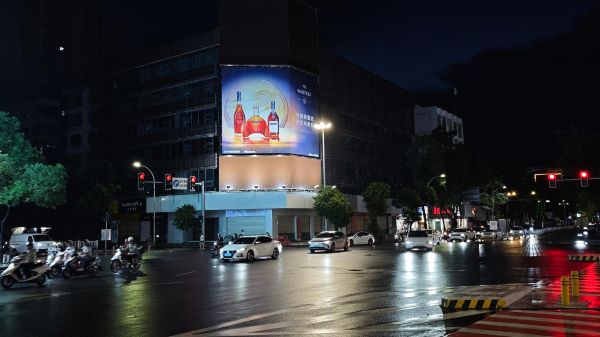
Misconception 5: Ignoring nighttime effects: For luminous media such as LED, nighttime effects are half or even worse than daytime effects. Make sure to confirm its visibility and attractiveness at night.
Conclusion
Outdoor advertising is by no means an outdated medium. On the contrary, with the empowerment of technology, it is becoming more precise, dynamic, and interactive than ever before. From traditional static posters to the stunning Tianci Media outdoor large screen advertisements and Tianci Media outdoor LED advertisements today, their essence remains unchanged: to effectively communicate with real consumers at critical moments in the real world.
For beginners, the key is to understand its logical framework: clear goals → matching scenarios → ultimate creativity → scientific evaluation. Avoid common misconceptions and embrace innovative forms such as 3D and interaction. Through systematic planning and execution, outdoor advertising is fully capable of becoming the most powerful and stable part of your brand's growth engine.
Now, it's time to write your brand story into the scenery of the city.