Shanghai Outdoor Advertising Practical Guide: Seizing the High Ground of Offline Traffic in the Magic City
2026-02-03Tianci MediaViews:201
Highlights
This guide comprehensively analyzes the outdoor advertising market in Shanghai, covering core business district resources, advertising approval processes, cost strategies, and effectiveness evaluations. Whether you are a local brand or a national enterprise, you can find a path to efficiently advertise outdoors in Shanghai. Read now and develop your Magic City brand acquisition plan.
Shanghai, the economic, financial, and fashion center of China, is a super city with a population of over 24 million. Here, outdoor advertising is not only a carrier of commercial information, but also a symphony of urban landscape and brand strength. From the shocking LED giant screen on the Bund to the busy subway channel in Jing'an Temple, from the skyscrapers in Lujiazui to the exquisite street light boxes in wutong District, Shanghai outdoor advertising market has attracted the attention of global brands with its high maturity, fierce competitiveness and unlimited creative possibilities.
However, for newcomers, this market also means complex planning, strict approvals, and high costs. How to avoid investing heavily but achieving minimal results? This article will systematically outline the complete logic of outdoor advertising placement in Shanghai, from market awareness, resource selection to execution evaluation, to help you make scientific decisions and efficiently reach the core consumer power of this magic city.

1、 Understanding the unique ecology of Shanghai's outdoor advertising market
When doing outdoor advertising in Shanghai, the first thing to understand is its three major characteristics that distinguish it from other cities:
Strict supervision, compliance first: The Shanghai Municipal Greening Department has the strictest and most detailed planning and management regulations for outdoor advertising in China. There are clear guidelines for the establishment of major commercial districts, historical areas, and transportation hubs. Any placement must be based on the premise of 'compliance and legality', otherwise there is a risk of demolition and fines.
Polarization of resource value: Media resources in core areas such as Nanjing West Road, Huaihai Middle Road, Lujiazui, and the Bund are "strategic locations" that are expensive and require long-term contract lock-in. At the same time, there are also a large number of cost-effective resources covering communities and regional commercial districts, which are suitable for precise penetration.
The audience segmentation is extremely clear: the consumer market in Shanghai has distinct characteristics of segmentation. International communities in Gubei and Lianyang, fashion elites in Jing'an and Huangpu, young families and science and technology creators in Yangpu and Pudong... Outdoor advertising in different regions is essentially a dialogue with customers with different portraits.
2、 Step by step guide: Five steps to complete the scientific placement of outdoor advertising in Shanghai
Step 1: Clarify strategic objectives and target areas
This is the starting point for all decisions. Ask yourself three questions:
Brand Goal: Is it to create a high-end image or promote regional sales?
Who is the audience: In which areas of Shanghai do they live, work, and entertain?
Campaign nature: Is it a long-term brand dominance or a short-term promotional explosion?
For example, luxury brands may prefer the top tier commercial district screens along Nanjing West Road Jing'an Temple; A new consumer tea brand may focus on advertising in busy commercial districts such as Renguang and Wujiaochang, where young foot traffic is concentrated.
Step 2: Inventory the types of core media resources
The forms of outdoor advertising in Shanghai are extremely diverse, mainly divided into:
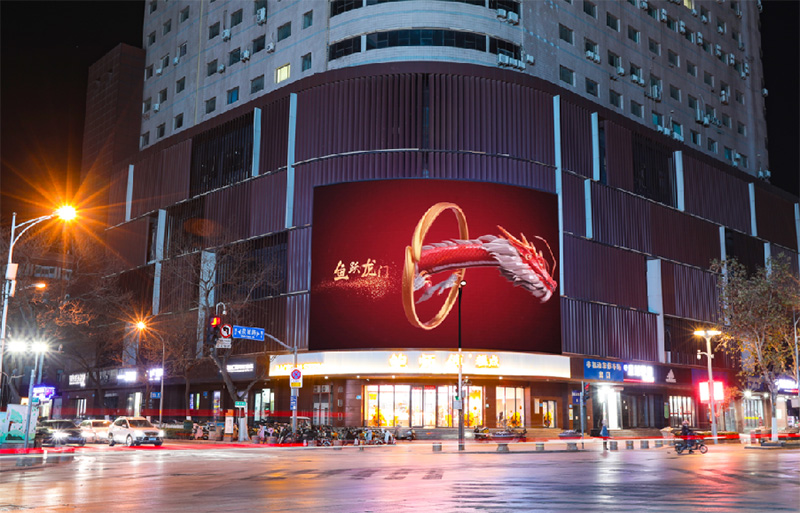
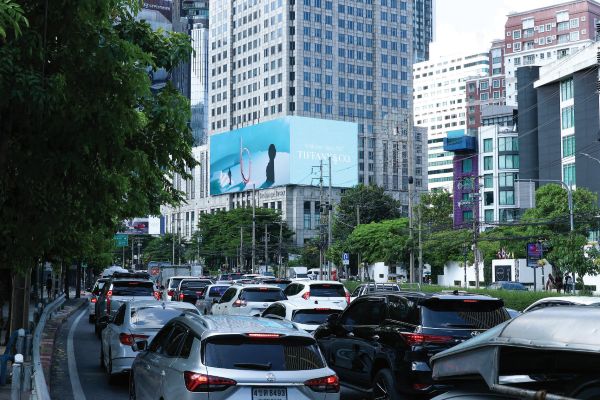
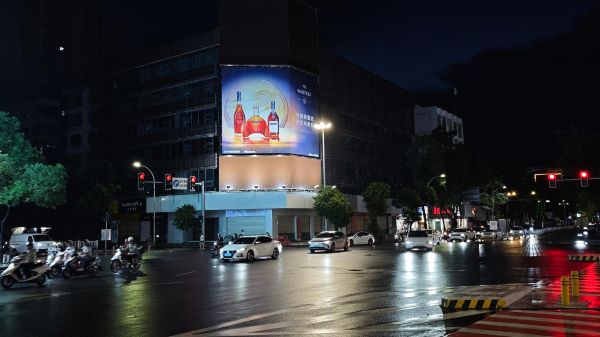
Urban landmark LED screens: giant LED screens in places such as the Bund, People's Square, Xujiahui, etc., visually stunning and suitable for creating city wide events.
Subway advertising network: covering the entire city's rail transit system, with various forms such as channel wall stickers, carriage interior packaging, station hall lightboxes, digital screens, etc., it is the absolute main force in covering commuters.
Business district and office building media: including large screens inside and outside shopping centers, elevator frames, door lintel light boxes, etc., with clear consumer orientation in the scene.
Bus advertising: Bus bodies and shelters have the characteristics of fixed routes and deep penetration into communities.
Special forms and innovative media, such as drone advertising, drone light shows, art installation collaborations, etc., are suitable for brands seeking breakthrough communication.
Step 3: Budget Planning and Resource Inquiry
The cost of outdoor advertising in Shanghai varies greatly. The monthly rent for a large screen at a core intersection may reach millions, while a community lightbox may only cost a few thousand yuan. Suggestion:
Clearly define the overall budget scope and reserve 15-20% for approval, production, and emergency expenses.
Seeking professional company inquiries: The real prices and high-quality resources in the market are often controlled by a few core operators. For example, as a professional outdoor advertising placement company, Tianci Media has long been deeply rooted in first tier cities and has a profound understanding of the actual value, approval difficulties, and combination strategies of media in various regions of Shanghai. It can help enterprises avoid the trap of information asymmetry.
Evaluate cost-effectiveness: Do not simply compare unit prices, but evaluate the "cost per thousand effective exposures". A mid-range point that covers a precise audience may be worth far more than an expensive point that covers a broad audience.
Step 4: Creative Design and Compliance Review
In Shanghai, creativity must balance "attention grabbing" and "compliance".
The design should conform to the regional tone: in areas that restore historical charm, advertising design should be more exquisite and stylish; In trendy business districts, one can be bolder and more avant-garde.
The copy and visuals should be concise and powerful: the audience has a short exposure time, and the core information must be conveyed within 3 seconds.
Conduct compliance pre review in advance: The design draft must ensure compliance with requirements such as the "Technical Specification for Outdoor Advertising Facility Installation in Shanghai", including size, brightness, structural safety, etc. This step can be completed with the help of a professional company to improve the approval rate.
Step 5: Approval, Drawing and Effect Tracking
Administrative approval process: It is usually necessary to submit an application to the district greening and urban appearance bureau, involving opinions from multiple departments such as planning, safety, and urban appearance. Collaborating with partners with rich approval experience, such as Tianci Media, can greatly improve efficiency.
Execution and monitoring of painting: Ensure timely and high-quality painting, and require service providers to provide third-party monitoring reports (photos/videos).
Multi dimensional evaluation of effectiveness: Combining changes in offline customer flow, online social media volume (such as Xiaohongshu and Weibo check-in), brand search index, and sales data, conduct comprehensive effect attribution.

3、 Common Misconceptions and Avoiding Pits Guide
Misconception 1: Blindly pursuing landmarks and neglecting brand fit: Not all brands are suitable for the Bund screen. If the brand tone does not match the landmark aura, or if the subsequent conversion capacity is insufficient, the sky high investment may only result in a "sound".
Misconception 2: Underestimating the difficulty and cycle of approval: thinking that 'money can get you up'. In fact, the approval process for many core locations in Shanghai can take up to 1-3 months and is subject to uncertainty. Approval time must be included in the overall marketing plan.
Misconception 3: Applying a national strategy to the Shanghai market: The aesthetic preferences and information reception habits of Shanghai audiences are more unique, and international creativity and localized insights are equally important in Shanghai.
Misconception 4: Advertising Strategy "Sprinkle Pepper": When the budget is limited, resources are scattered across multiple different types of media, resulting in each being unable to form effective momentum. The correct approach is to concentrate firepower and saturate attacks, forming a high-frequency, multi touchpoint encirclement in the selected core area or crowd.
Misconception 5: Completely outsourcing execution without process management: Even if a professional company is commissioned, the brand needs to deeply participate in key processes such as site investigation, creative confirmation, and effectiveness evaluation to ensure that the strategy is accurately executed.
Conclusion: In complex markets, expertise is the most efficient leverage
The outdoor advertising market in Shanghai is a rich mine, but mining it requires professional maps, compliant tools, and efficient operational processes. For brand owners, the key to success lies in a clear localization strategy, a reverence for compliance, and a professional partner who truly understands Shanghai, has resources, and can implement it.
In this era of dual surplus of information and attention, outdoor advertising provides a precious opportunity to establish a strong connection with consumers in the real physical world. In Shanghai, a super city full of opportunities and challenges, scientific planning and professional execution of outdoor advertising campaigns will be the decisive move for your brand to stand out from many competitors and truly "occupy" the minds of consumers.