Should outdoor 3D advertising be prioritized for outdoor advertising: effectiveness, cost, and decision-making guidelines
2026-01-26Tianci MediaViews:137
Highlights
Are you considering prioritizing outdoor 3D advertising for outdoor advertising? This article provides an in-depth analysis of the triggering principle, applicable scenarios, cost-effectiveness comparison, and scientific decision-making framework of outdoor 3D advertising. Contains practical steps and common misconceptions to help you make high ROI advertising decisions. Read now to master cutting-edge strategies
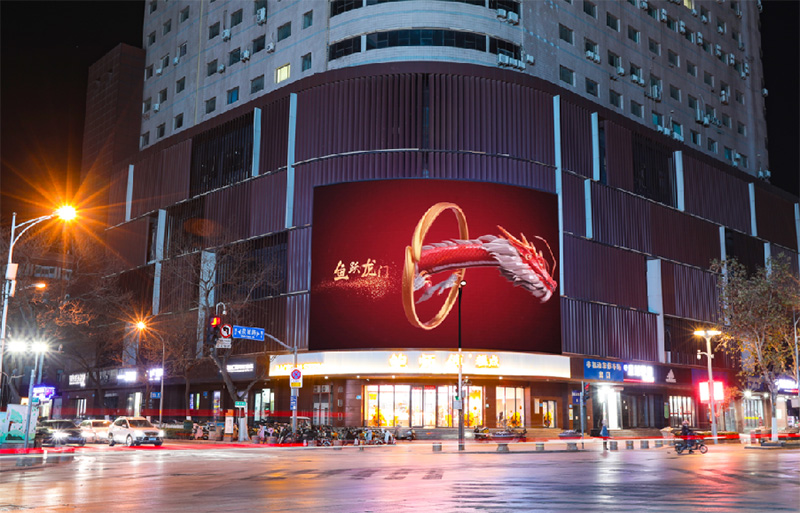
Imagine walking in the bustling city center and suddenly seeing a huge whale leaping out from the fa ç ade of a high-rise building, splashing realistic water droplets. Passersby stopped and exclaimed, raising their phones to take photos. This is not a science fiction movie, this is exactly the stunning experience brought by outdoor 3D advertising.
In recent years, from the "wall climbing panda" in Chengdu to the "light rail through buildings" in Chongqing, outdoor 3D advertising has repeatedly become a phenomenon level dissemination event. Faced with this new trend, many marketing novices and brand owners will have the core question in their hearts: Should outdoor 3D advertising be prioritized for outdoor advertising?
Don't worry, this article will serve as your ultimate guide, using easy to understand methods to help you analyze layer by layer and make the wisest decisions.
1、 First, clarify: What is outdoor 3D advertising? Why does it attract attention?
Before answering 'priority', we must understand the object.
Outdoor 3D advertising usually refers to the use of technologies such as LED screens, architectural projections, and naked eye 3D to create advertising forms with strong three-dimensional sense and visual impact in outdoor scenes. It goes beyond the static information transmission of flat posters, forcefully attracting the attention of passersby and stimulating their social sharing behavior within seconds through dynamic and realistic visual effects.
Outdoor 3D advertising (taking mainstream naked eye 3D screens as an example) is an experience creator that actively steals attention. Its core advantages are built on three levels:
Visual level 'forced interception': utilizing human instinct for motion and depth perception, through realistic 3D effects and screen impact, forcibly locking pedestrian gaze within 0.1 seconds. It's not waiting to be seen, but making it impossible not to look. This visual spectacle breaks the audience's inherent expectations of billboards and creates moments of surprise.
Psychological level 'deep memory': When advertising content is upgraded from 'viewing' to 'experience', it shifts from simple information transmission to emotional and sensory stimulation. This novel and shocking experience will trigger stronger emotional reactions, and emotions are the glue of memory. Compared to remembering a slogan, people are more likely to remember a "wow" visual experience and the brand associated with it.
Social currency at the communication level: This is the most disruptive advantage of outdoor 3D advertising. The unique visual content it provides is itself a highly shareable 'social currency'. Pedestrians stopped, exclaimed, raised their mobile phones to take photos and share them with social media (such as Tiktok, Little Red Book, WeChat friends circle), which transformed an offline and instantaneous exposure into online and sustainable secondary communication. The advertising effect has broken through the limitations of physical location and achieved a qualitative change from "venue exposure" to "event dissemination".

2、 In depth analysis: How to make a scientific decision on whether to prioritize investing in 3D?
Directly answering 'priority or no' is arbitrary. The correct approach is to follow the following four steps for self-assessment.
Step 1: Review your core marketing objectives
First of all, ask yourself: What do I most want for this advertising campaign?
If the goal is: brand building, event marketing, stunning new product releases, and enhancing high-end brand image.
Conclusion: 3D advertising should be prioritized as a candidate for evaluation. Its explosive power and topicality are highly matched with such targets.
If the goal is: short-term promotion, guiding to nearby stores, reaching specific community groups, pursuing instant conversion.
Conclusion: Traditional outdoor advertising or digital outdoor (DOOH) may be more direct and cost-effective. At this point, 3D advertising may not necessarily be a "priority" item.
Step 2: Evaluate your brand and product features
Brands that prioritize 3D:
Technology/Internet companies: they are naturally compatible with the tonality of "innovation" and "frontier".
Automobiles, gaming, 3C electronics: The product itself has cool and high-performance attributes, making it easy to present impact through 3D effects.
Trendy and luxury brands: need to create topics and maintain a high-end and unique brand image.
Cultural tourism, film, and entertainment projects: strong visualization, requiring the creation of immersive experiences to attract audiences.
Brands that require caution:
The brand tone is serious and conservative (such as certain B2B industrial products and financial services).
The benefits of the product are very complex and difficult to explain in just a few seconds of visual imagery.
Step 3: Deep comparison of key consideration dimensions
We will help you analyze from several practical dimensions:
Budget and cost-effectiveness
Reality: The production cost of 3D advertising (creativity, video production) and the cost of high-quality placement (such as naked eye 3D screens in core business districts) are usually several times or even dozens of times higher than traditional outdoor advertising.
Decision point: Is your budget sufficient to support a complete high-quality project? Do not create a rough 3D advertisement due to insufficient budget, as it may have the opposite effect. Sometimes, using the same budget to create a set of traditional advertisements with wider coverage can have a more solid effect.
Match between location and audience
The Golden Rule: No matter how flashy the 3D advertisement is, it's a waste if it's placed in the wrong place. Priority must be given to selecting landmark locations with high foot traffic, easy to stay, and social atmosphere (such as top commercial intersections and trendy gathering places).
Ask yourself: Are the audience and dissemination of past cases at this location your target customers?
The integration of creativity and technology
Core: Technology serves creativity. A successful outdoor 3D advertisement, "ingenuity" is more important than "showing off skills". Creativity must be strongly associated with the brand, simple and easy to understand, and able to surprise people within 3-5 seconds.
For example, a sports brand that allows athletes to "break through the wall" from the screen has more memorable points than simply displaying a rotating 3D logo.
Step 4: Develop a hybrid strategy (common optimal solution)
For most brands, especially beginners, the answer is often not "choose one or two", but a combination strategy:
Using 3D advertising as a "pioneer" and "breakthrough point": creating a visual feast at core landmarks, harvesting the maximum volume and brand height.
Using traditional outdoor advertising as the "army" for saturation coverage: high-frequency and wide coverage information enhancement is carried out on the daily life routes of target customers (subway, community, office buildings).
This "explosion+coverage" model can not only enjoy the benefits of 3D dissemination, but also ensure basic exposure and conversion effects, making it a more stable and efficient strategy.
3、 Common Misconceptions and Tips for Avoiding Pits
Misconception 1: "As long as you make 3D, you can become popular.
Reality: The emergence of a circle of fire is the result of the combined effects of timing, location, people, and creativity. Lack of good creativity and positioning may just be an expensive self pleasure.
Misconception 2: "The cooler the technology, the better.
Avoiding pitfalls: Excessive pursuit of technical effects leads to the audience only remembering cool visuals, but forgetting what brand it is and what it is trying to express. Brand information must be clearly and cleverly presented in a visual spectacle.
Misconception 3: Neglecting the combination of offline experience and online traffic attraction.
Correct approach: When designing advertisements, social interaction entrances should be planned well, such as clear brand logos, activity topic tags, QR codes, etc., to seamlessly guide offline stunning moments to online platforms (official WeChat, mini programs, e-commerce) for sedimentation and conversion, extending the life cycle of the activity.
Misconception 4: Only do one-time advertising.
Suggestion: Cut the exciting content of 3D advertisements into multiple short videos and spread them on social media for secondary and tertiary dissemination, maximizing the use of creative assets and allowing people who were not present to feel the shock.
4、Conclusion
Returning to the original question: Should outdoor 3D advertising be prioritized for outdoor advertising?
For novice marketers, our final recommendation is:
Do not blindly prioritize, but rather evaluate scientifically and use strategically.
If your brand is at a critical stage where it needs to generate buzz, establish a high-end image, and create iconic events, with budget and creative support, then outdoor 3D advertising can be elevated to a strategic priority level and equipped with the best resources and locations.
If your goal is stable brand exposure, regional penetration, or direct effect conversion, then traditional outdoor or digital outdoor may be a more basic and reliable priority choice.
For the vast majority of brands, the wisest strategy is a hybrid tactic of "creating peak experiences with 3D and solidifying market foundations with traditional advertising".
Outdoor 3D advertising is undoubtedly the visual darling of this era, representing the direction of outdoor advertising evolution. But for decision-makers, calmness is more important than fanaticism. I hope this guide can help you clear the fog and invest your valuable marketing budget in the areas that can generate the most returns.
Step 1: Take out your marketing plan and conduct a quick self-assessment and scoring based on the four steps mentioned in the article. The answer may be in your hands.