China Airport Advertising 2026: AI Giants, Tech-Driven Value & the New Frontier
2026-07-31Tianci MediaViews:1
Highlights
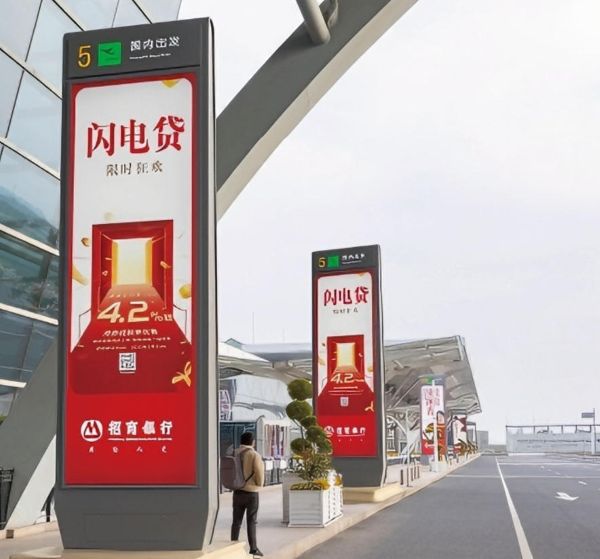
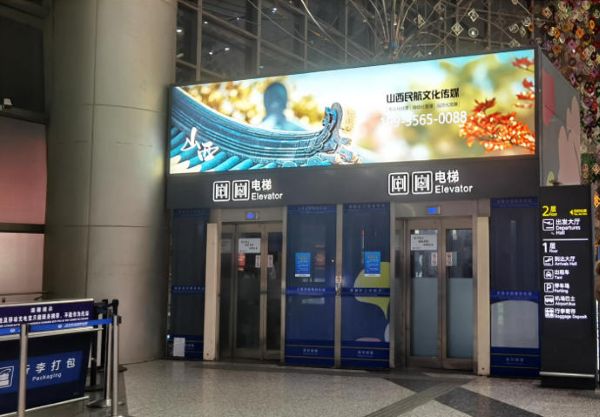
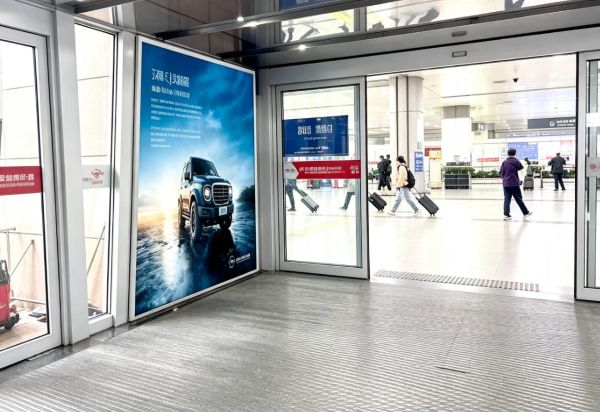
Walk through any major Chinese airport today, and a striking shift becomes immediately visible. Traditional liquor and building material brands have largely disappeared from the terminal walls. In their place, a new class of advertisers dominates the landscape: AI cloud providers, large-model companies, and tech giants—all competing for the attention of the nation‘s most valuable business travelers. This transformation is not merely cosmetic. It reflects deeper changes in who advertises at airports, how they advertise, and why airport advertising has become an indispensable channel for building brand credibility in 2026.
The New Advertisers: AI and Cloud Take Over
The numbers tell a dramatic story. In 2026, cloud service industry outdoor advertising spending reached RMB 352 million in the first four months alone—nearly double the same period last year and a five-year high. Airport media accounts for an overwhelming 84.7% of this spending, making it the dominant channel for reaching enterprise decision-makers, technical professionals, and business travelers.
At Beijing Capital Airport‘s Terminal 3 departure hall, Alibaba Cloud, Baidu Cloud, and Volcano Engine appear simultaneously on lightbox displays in the same area. Alibaba Cloud promotes its market leadership with “China‘s leading AI cloud market share, surpassing the sum of 2nd through 4th place”; Baidu Cloud emphasizes “six consecutive years of leading China‘s AI public cloud market share”; Volcano Engine highlights its 49.2% share of China‘s large-model public cloud market invocation volume. Each ad uses data-driven messaging to build credibility with the high-value business audience flowing through the terminal.
At Hangzhou Xiaoshan Airport, Alibaba Cloud occupies a pillar lightbox directly above the security checkpoint—a visual focal point for passengers queuing for screening—while Volcano Engine covers a large LED screen above the check-in counters. This dual coverage creates a “pre-security + during-check-in” double touchpoint strategy that precisely targets business travelers.
From Static Displays to Intelligent Touchpoints
The technology behind airport advertising is evolving just as rapidly as its advertisers. The industry is shifting from static billboards to smart, responsive media assets that adapt to real-time conditions.
Digital Out-of-Home (DOOH) is accelerating toward programmatic buying. Airport screens are no longer fixed playlists with static content. They can automatically match ad content based on real-time conditions—flight status, passenger profiles, time of day, and even weather—achieving what industry leaders call “thousands of faces, thousands of messages” precision targeting.
China Advertising Association President Zhang Guohua has emphasized that airport advertising must embrace AIGC, interactive ads, and glasses-free 3D technologies to revitalize traditional media. He also called for accelerating data-driven and programmatic投放 to improve ad fill rates and targeting precision.
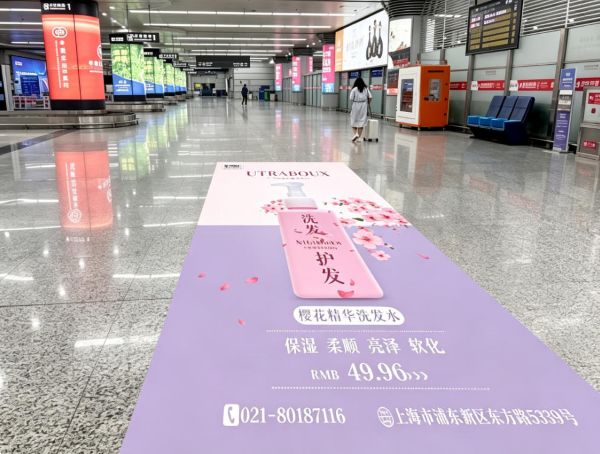
The airport advertising format itself has evolved from “one big screen” to an integrated media matrix covering check-in, security, waiting, boarding bridges, and baggage claim. Each stage corresponds to a different passenger psychological state—focused at check-in, relaxed during waiting, captive on the boarding bridge—allowing brands to communicate at moments of peak attention.
The Endorsement Power of Gateway Airports
What makes airport advertising fundamentally different from other media is not traffic volume—it is scene scarcity and audience quality. As Zhang Guohua has articulated, airport advertising possesses a unique “scene scarcity + premium audience + brand empowerment” triple特质 (characteristic).
Airports concentrate business elites, high-income travelers, and international passengers in a captive, high-attention environment. Unlike cluttered shopping mall ads or fragmented digital feeds, airport environments are intentionally minimalist and premium, with minimal informational interference. This combination creates an endorsement effect—a brand that appears in a gateway airport signals stability, scale, and credibility.
The data confirms the value: 83% of frequent flyers actively notice airport ads, and 75% associate these ads with high-quality brands. Airport passengers have an average family income significantly higher than the general population, making them an ideal audience for premium brands.
Measurable Value: The 2026 Shift
Until recently, airport advertising suffered from a measurement problem. Brands knew they were getting exposure but could not quantify its value. That changed in October 2025 with the release of the industry‘s first Airport Advertising Resource Value Evaluation Guide.
This landmark standard established quantifiable pathways for measuring the core values of “scene scarcity” and “premium audiences”. Airport advertising is no longer about “how many screens you bought”—it has entered an era of measurable results and assessable value. The guide provides a unified evaluation framework that enables scientific pricing, efficient resource allocation, and transparent cooperation between advertisers, airports, and operators.
Through QR codes, short links, and search index changes, advertisers can now see the real impact of every advertising dollar. Airport audience data can also be connected to global digital platforms, enabling Lookalike audience expansion and precise re-marketing.
The Future: Smart Marketing at Scale
Looking ahead, China‘s airport smart marketing market—leveraging big data, AI, and IoT for precise targeting and personalized services—is projected to reach RMB 898 million in 2026, growing 8.8% year-over-year.
The market is moving toward full automation and data-driven delivery. Industry leaders are calling for airports to actively embrace programmatic buying, interactive ads, and immersive technologies to enhance passenger experience and ad effectiveness.
Conclusion
China‘s airport advertising in 2026 is defined by three fundamental shifts: new advertisers (AI and cloud giants replacing traditional categories), new technology (programmatic DOOH and data-driven attribution replacing static displays), and new value (measurable ROI replacing vague exposure).
For brands seeking to reach China‘s most influential consumers, airport advertising is no longer just about buying space—it is about buying precision, attribution, and credibility in an environment that cannot be replicated anywhere else. And for the AI giants dominating the terminals today, airport advertising has become the ultimate stage for building trust, asserting leadership, and winning the battle for business decision-makers.