China Airplane Advertising Guide 2026: Costs, Channels & Strategies for Brands
2026-07-18Tianci MediaViews:17
Highlights
If you're a brand marketer looking for ways to reach China's high-value consumers, you've probably wondered about airplane advertising. It's not just about putting a logo on a plane anymore—it's become one of the most effective ways to get in front of business travelers and affluent passengers in a captive environment. Let's break down what actually works in China's aviation advertising space right now.
Why Airplane Advertising Matters More Than Ever
The numbers tell a clear story. In 2025, China's in-flight advertising market reached 8.06 billion yuan, and global projections show the market growing to 72.98 billion yuan by 2032. Meanwhile, China's airports handled 1.46 billion passenger trips in 2024, up 15.9% from the previous year. That's a massive audience, and they're not scrolling past your ad—they're sitting in a seat with nowhere else to look. When you're considering China airplane advertising, you're tapping into a channel where passengers have an average dwell time of over 100 minutes per flight. That kind of undivided attention is hard to find anywhere else.
Fuselage Advertising: Your Brand in the Sky
Fuselage advertising is probably the most visible form of airplane advertising out there. Think about it—a painted aircraft becomes a flying billboard that travels across cities, gets photographed at airports, and generates organic social media buzz. Major Chinese carriers like China Southern, China Eastern, and Hainan Airlines all offer fuselage livery options. For example, China Southern partnered with GAC Trumpchi to turn one of its Boeing 737-800s into a rolling ad for the Trumpchi M8 MPV. The cost? Full fuselage Spraying runs anywhere from 15 to 20 million yuan per year per aircraft. It's a premium option, but for brands looking to make a statement, there's nothing quite like having your logo painted across an aircraft.
In-Flight Smart Screen Advertising: High-Impact Digital Reach
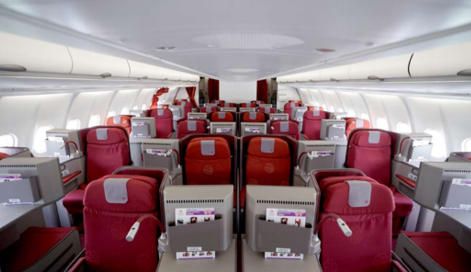
In-flight smart screen advertising has completely changed the game. Today's aircraft are equipped with AVOD (Audio Video On-Demand) systems that let passengers choose what they watch—and that means advertisers can deliver targeted video content right to their seatback screens. China Southern alone has about 238 aircraft equipped with AVOD, totaling roughly 29,421 screens across its fleet. Eastern Airlines operates 16,842 personal TV screens. These screens run 4K ultra-high-definition displays with anti-glare technology, and passengers typically engage with them for extended periods during flights. Advertisers can run 5-second spots at around 356,000 yuan per month on China Eastern, or 15-second spots at 550,000 yuan per month. The reach is substantial, and the engagement is high.
In-Flight Magazines: Print Still Works at 30,000 Feet
Don't count out print just yet. In-flight magazines remain one of the most trusted advertising formats in China's aviation space. China Eastern Airlines publishes its flagship in-flight magazine, which has been running since 1988 and is distributed bilingually in Chinese and English. It reaches 11 million passengers monthly, with a print run of 350,000 copies per issue. A full-page interior ad runs about 342,000 yuan per issue. What makes in-flight magazines special is the reading environment—passengers actually flip through them during flights, giving your brand story time to land. South China's Southern Gateway magazine has even won multiple industry awards for design and editorial quality.
Putting It All Together: Your Airplane Advertising Strategy
So how do you actually approach China airplane advertising? Here's what works:
Start with your objective. Brand awareness? Go with fuselage advertising. Product launch? In-flight smart screens give you video and interactivity. Storytelling? In-flight magazines let you dive deep.
Consider the audience. Airline passengers are disproportionately high-income, well-educated, and influential. They're exactly the demographic many premium brands want to reach.
Mix and match. The most successful campaigns combine multiple touchpoints—a fuselage wrap that gets attention on the ground, in-flight smart screen ads that reinforce the message during the flight, and in-flight magazine features that tell the full story.
Budget realistically. Entry-level options like boarding pass advertising start around 45,000 yuan per campaign, while full-scale integrated campaigns can run into the millions. There's a tier for almost every budget.
Looking Ahead
The airplane advertising space in China is evolving fast. Airlines are investing in better in-flight entertainment systems, more interactive ad formats, and deeper data integration. The push toward programmatic buying and data-driven targeting is already underway. For brands that get in now, there's a real opportunity to build lasting presence in a channel that's only going to become more sophisticated. Whether you're a luxury brand, a tech company, or a tourism board, airplane advertising offers something few other channels can match: a captive, premium audience at scale.
Want to explore more about in-flight advertising opportunities? Check out our other articles on aviation media and brand partnership strategies across China's major carriers