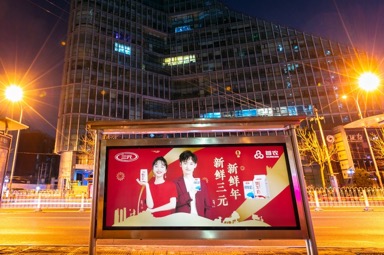
The placement of bus advertisements has entered the 3.0 era: it is no longer just "sticking posters on vehicles", but creating "mobile smart screens".
2026-05-31Tianci MediaViews:62
Highlights
When it comes to bus advertisements, many people still only picture simple decals on vehicle bodies. However, in 2026, bus advertising has evolved into a smart outdoor media that integrates LBS technology, dynamic creativity and performance tracking. It is no longer an isolated large-format ad, but a crucial offline touchpoint in a brand's omni-channel marketing strategy. This article will help you gain a new understanding of bus advertising and share a set of practical placement strategies.
I. Three Evolution Stages of Bus Advertisements: From General Publicity to Precise Engagement
Traditional bus advertisements rely on "high traffic plus high repetition", yet their effectiveness is hard to measure. Nowadays, three major trends are changing the rules of the game:
- Dynamic Creative (DOOH): E-paper screens have been piloted on bus bodies in some cities, which can switch advertising content according to time, weather and even vehicle locations. For instance, advertisements for food delivery apps will be displayed automatically on rainy days, and recommendations for educational courses will be shown near schools.
- 2. QR Code & AR Interaction: Dynamic QR codes are placed at fixed positions on bus bodies. While waiting for buses or during traffic lights, pedestrians can scan the codes to access brand mini-programs to collect coupons, play games or view AR animations. The conversion paths can be quantified.
- 3. Data-driven Route Optimization: Based on operator signaling data or map heat maps, we accurately match high-traffic routes with areas where target crowds gather, instead of purchasing routes across the whole city blindly.
II. Four Innovative Forms of Bus Advertisement Placement (With Latest Cases Attached)
1. Smart Car Body – Digital Panel with Replaceable Content
The cost is slightly higher than traditional colorful decals, but it enables "multiple creative designs for one vehicle". Throughout the week, business-style suits can be featured on workdays and casual outfits on weekends.
2. In-vehicle Bluetooth Beacon
Install low-power Bluetooth devices on buses. Passengers can receive brand coupons or interactive H5 pages by turning on Bluetooth and opening the designated app (or WeChat Shake). After a milk tea brand launched this campaign, more than 3,000 coupons were claimed via scanning codes in a single day, with a redemption rate of 51%.
3. LBS Red Packets Combining Bus Shelters and Vehicle Bodies
When a bus with specific advertisements approaches a bus shelter, the electronic screen at the shelter automatically displays "This bus is arriving soon. Scan the code to claim your exclusive red envelope". The combination of virtual and real elements prompts immediate actions.
4. Voice Broadcast Naming Rights + In-vehicle WiFi Landing Page
"Next stop, Guomao. This stop is sponsored by XX Decoration. Book a home measurement service for a chance to win a free order." Meanwhile, the portal page of the free in-vehicle WiFi displays a brand-exclusive landing page to capture leads from potential customers.
III. How to quantify the effectiveness of bus advertising placements? (Breaking free from the dilemma of "half of the advertising budget being wasted")
In the past, advertisers often complained: "I know bus advertising works, but I have no idea which buses deliver results." Now there are four ways to measure its effectiveness:
| indicator | Tools / Methods | Significance of Data |
|---|---|---|
| Scan volume | Dynamic QR codes on vehicle bodies (different codes for different routes) | Direct response count |
| Brand search volume | Comparison of Baidu Index and WeChat Index for the Corresponding Period | Cognitive Improvement |
| In-store customer flow | Discount codes linked to the store POS system | Conversion Attribution |
| Poor regional sales performance | Coverage areas of distribution routes vs Non-coverage areas | Incremental calculation |
IV. Practical Guide: Bus Advertising Placement Plan with a Budget Under 50,000 (Suitable for Small and Medium-sized Merchants)
If you are a local catering, education, home decoration or medical beauty institution with a limited budget, please follow the steps below:
Step 1: Identify the target streets and peak hours
- Use Gaode/Baidu Map heatmaps to identify the most congested road sections within 3 kilometers around your store.
• Select bus routes that pass through these sections and operate no fewer than 6 trips per day.
Step 2: Select the media format with the best cost-performance ratio
We recommend the combined package of "three-side billboards + interior handrails + stop announcement naming". The cost per vehicle for a four-week campaign ranges from 3,000 to 5,000 yuan in second-tier cities. Full-body vehicle advertisements are not advised, as they deliver low brand recognition for small and medium-sized brands and come with a high overall cost.
Step 3: Creative Design Formula – "The 3-Second Rule"
- Main copy within 7 words (e.g. "Come to XX for pickled fish")
• Brand logo shall take up no less than 15% of the screen area
• A benefit prompt must be placed next to the QR code (use "Scan to get a ¥50 coupon" instead of "Scan to follow")
Step 4: Stagger the time
Avoid the city-wide peak advertising periods (such as the eve of May Day and National Day). Choose off-seasons (March, June and November), when media companies usually offer a 20% to 30% discount.
Step 5: Online Cooperation
During the launch period, release short videos consistent with the bus advertisement visuals on Douyin and Kuaishou simultaneously. Position the content as a "special bus route" to guide online users to visit offline locations for check-ins and achieve secondary communication.
V. Four Don'ts and Four Dos for Bus Advertisement Placement
| Things not to do | Principles to abide by |
|---|---|
| Do not place more than 3 elements (Logo, copy, QR code) | Ensure that over 80% of the frame features a solid-color background and extra-large fonts. |
| Avoid choosing routes that are severely congested during morning rush hours yet have few buses during off-peak periods. | It is necessary to check the daily departure frequency of vehicles, and it is best to set the peak-hour interval to one bus every 5 minutes. |
| Do not ignore vehicle aging or changes in travel routes | Confirm with the bus company in advance about the route stability for the next three months. |
| Don't expect to see results after just one week of investment. | Run the campaign for at least four consecutive weeks to build a memory curve. |
VI. Real Case: How Did a Fitness Studio Acquire 120 Customers Through Bus Advertisements?
Background: A new Pilates studio has opened. It is surrounded by three high-end residential communities and one office building, targeting women aged 25 to 40.
Launch Strategy:
- Select one bus route that passes through the above three residential communities (with a total of 15 buses).
• Form: Hand straps inside the buses printed with "Lose 5cm off your waist, experience class for only 9.9 yuan" plus mini-program QR codes; Station announcement sponsorship: "Next stop, XX Garden — Pilates Body Shaping, come and experience when we arrive".
• Duration: 4 weeks, total cost: 7,800 yuan
Result:
- 447 new users registered via the mini-program
• 154 customers booked in-store trial lessons, among whom 120 actually visited the store
• 31 trial lesson participants converted to formal course members, generating a direct revenue of over 60,000 yuan
Person in charge commented: "Bus advertisements have helped us accurately target commuters in residential communities. They are more decent than distributing flyers on the ground and more cost-effective than elevator advertisements."
Conclusion: Redefining Bus Advertising Placement
Bus media is no longer a passive "display board", but a traffic entry point that can actively drive interactions, collect data and guide online conversions. Whether you are a chain brand or a local independent store, choosing the right routes, designing creative content and adopting simple digital tools will turn buses into your most cost-effective "mobile salespeople".
If you want to get the heat map of bus routes and the latest quotation in your city, feel free to send us a private message or leave a comment. We will provide you with a free Bus Advertising Placement Analysis Report.