

Search
3140results match your search criteria
HOT

Entrance and Exit Barrier Gate Advertisement at Shaoxing Kefu Community
Scan and go, worry-free parking
Leveraging the closed-community management setting, it creates an offline precise communication medium with high reach and strong focus. As a typical mid-to-high-end residential community, Kefu Community implements separate pathways for vehicles and pedestrians, and all vehicles and visitors must briefly stop at the entrance barrier, which operates on a one-in-one-out basis.
Quote
¥1000-2000Tips:Can match different media resources to create a quotation plan and download it
HOT

Chengdu Darongcheng LED Screen
Era of Light, Embracing the Future
As an important part of Dujiangyan City’s emerging urban commercial landmarks, it is becoming the core digital window for regional brand promotion, city image display, and public information interaction with high-standard visual presentation and intelligent content operation.
Quote
¥9 W-18 WTips:Can match different media resources to create a quotation plan and download it
HOT

Chengdu Lejia Plaza LED Screen
Color Master, Brighten Your Life
This media is located on the floor of Lejia Plaza at the intersection of Dujiangyan Avenue and Yong'an Avenue in Dujiangyan City. It is the core area of the new district and a necessary passage connecting the new and old districts. There is heavy traffic here, and Lejia Plaza hosts a large number of home furnishing and building material brand merchants.
Quote
¥7 W-15 WTips:Can match different media resources to create a quotation plan and download it
HOT

Chengdu Xuhai Times Square LED Screen
High-definition quality, stunning experience
Located opposite the Central Square in Jianyang at Xuhai Times Square, this is currently the largest LED screen in Jianyang. With well-developed surrounding transportation and a high volume of pedestrian and vehicle traffic, the advertising space uses a full-color LED display, featuring high clarity, strong brightness, vivid colors, good stability, and a strong visual impact. It is the best outdoor media choice for promoting brands and showcasing images.
Quote
¥8 W-16 WTips:Can match different media resources to create a quotation plan and download it
HOT
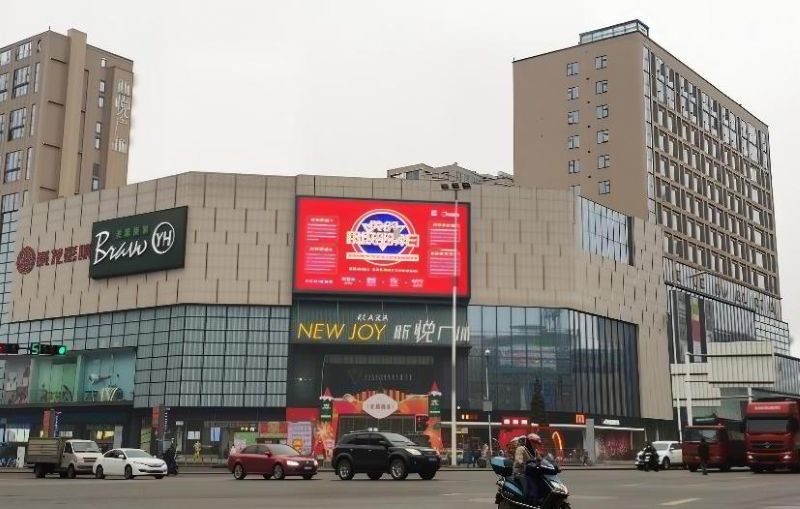
Chengdu Xinyue Plaza LED Screen
Extraordinary brilliance, growing fresher with time
Located at the intersection of Yingbin Avenue and Xingyuan Third Road in Xinjin District, adjacent to Exit of Xinping Station on Metro Line 10, it is the core visual focal point of the southern commercial area of Xinjin City, with an average daily coverage of about 30,000 metro passengers and over 500,000 permanent residents within a 3-kilometer radius, forming a stable consumer and information-receiving group.
Quote
¥8 W-16 WTips:Can match different media resources to create a quotation plan and download it
HOT
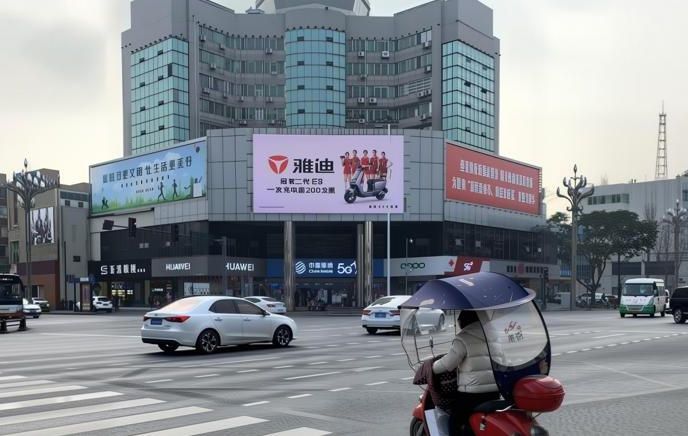
Chengdu City Star Clock Tower LED Screen
Immerse the senses, elevate the brand
As a regional landmark building, in recent years it has integrated modern digital communication elements while preserving historical memory. The LED screens on its facade or surrounding areas have become an important window for showcasing Xinjin's urban image and conveying public information.
Quote
¥8 W-16 WTips:Can match different media resources to create a quotation plan and download it
HOT
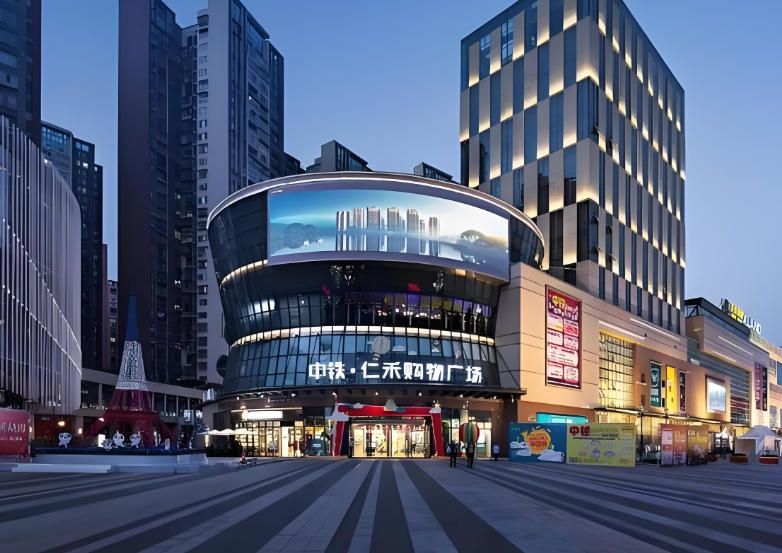
Chengdu China Railway Renhe Plaza LED Screen
Bright and dazzling, colorful technology
Located on Renshou Avenue in Renshou County, Meishan City, on the floor of the China Railway Renhe Shopping Center, the screen is huge, highly precise, and in excellent condition. This shopping plaza is currently the largest commercial center in Renshou, and it faces the central square and the road directly, making it highly effective at capturing both pedestrian and vehicular traffic.
Quote
¥10 W-20 WTips:Can match different media resources to create a quotation plan and download it
HOT
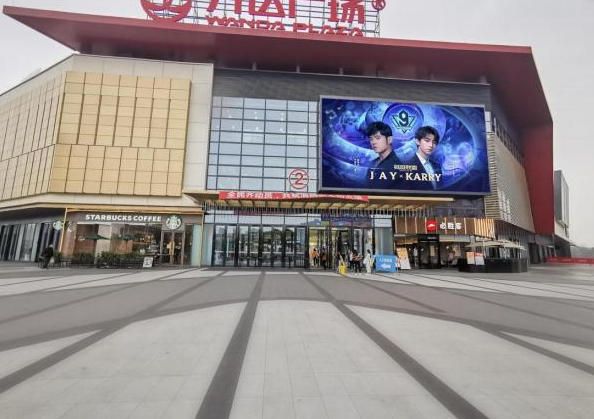
Chengdu Renshou Wanda Plaza LED Screen
Color Master, Brighten Your Life
LED large screens have not only become an important window for malls to convey information externally, but also attract the attention of nearby crowds with high-brightness, high-definition dynamic images, enhancing the overall commercial atmosphere of dining, entertainment, and recreation, drawing people together.
Quote
¥12 W-24 WTips:Can match different media resources to create a quotation plan and download it

We have over decades of experience in developing outdoor advertising media placement strategies to drive brand success on a global scale.
Community Ads
Other Ads
Copyright © 北京杨氏天赐传媒有限公司 版权所有京ICP备2021000929号-7Sitemap广告投放
Links:
天赐传媒