Analysis of the Outdoor Advertising Market in 2026: In Depth Interpretation of the Latest Scale, Trends, and Competitive Landscape
2026-01-29Tianci MediaViews:197
Highlights
This is the updated 2026 Outdoor Advertising Market Analysis Guide for you. This article will deeply analyze the latest trends in AI integration, spatial computing popularization, ESG standards, and neural measurement methods, revealing the core logic and investment strategies of market growth. Help you make accurate decisions in the new era of virtual real integration marketing. Read now and seize the key opportunities of the next three years.
By 2026, the definition of outdoor advertising (OOH) has been completely rewritten. It is no longer just a simple "advertisement outside the home", but has evolved into an intelligent interactive interface that connects the physical world with the digital universe, senses the pulse of the city, and responds to individual real-time needs. Under the multiple waves of generative AI, spatial computing devices, and carbon neutral city construction, the outdoor advertising market is undergoing a reevaluation of value and structural reshaping.
For market observers and marketing decision-makers, the key to understanding outdoor advertising in 2026 lies in stepping out of the "media" perspective and examining it from the dimensions of "smart city digital infrastructure" and "consumer dynamic scene servers". This guide will guide you to systematically grasp the core landscape of the current market.

1、 Redefining the current market situation: from "advertising space" to "scene port"
The underlying logic of outdoor advertising ecology in 2026 has undergone fundamental changes.
1. Market structure: DOOH completes dominance, static media is' assetized '
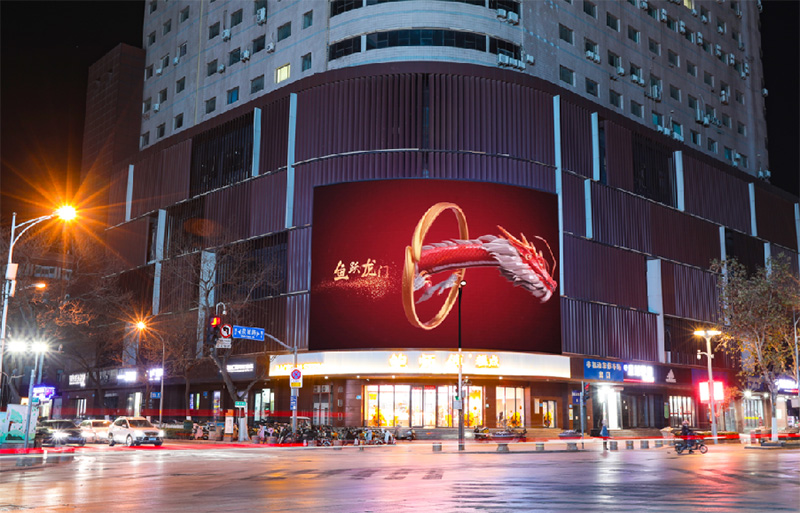
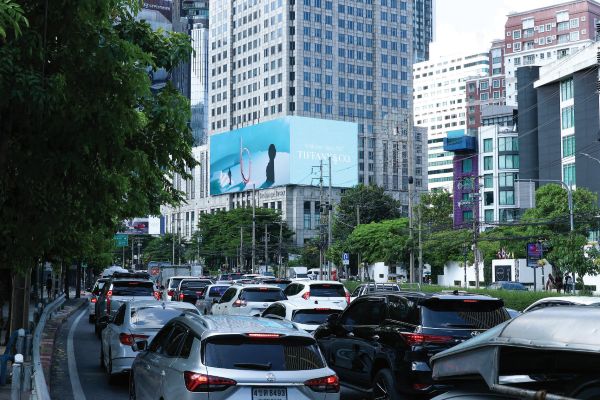
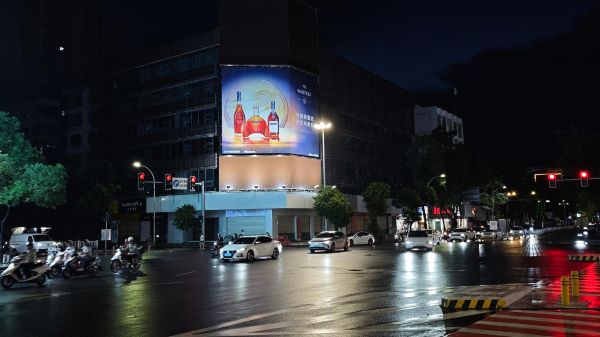
As of 2026, digital outdoor advertising (DOOH) revenue has accounted for over 70% of the total revenue of the global outdoor advertising market (data source: based on industry forecast consensus for 2025-2026). Traditional static billboards have not disappeared, but their role has transformed into a "scarce physical asset" serving luxury brands that pursue ultimate brand art and landmark identity, with stable value but shrinking total volume.
2. Evolution of the industrial chain: the rise of third-party platforms and the integration of software and hardware
Media owner: Leading groups such as Focus Group, JCDecaux, and JCDecaux have completed the digital transformation of over 90% of their resources and transformed into "operation+data service" providers.
New key role - spatial data platform: providing real-time data APIs for city level pedestrian, vehicular, and consumption heat, becoming the fuel for programmatic purchasing and effect optimization.
Technology supplier: Hardware (Micro LED transparent screen, flexible screen) is deeply bundled with software (AI content generation engine, privacy computing data platform) to provide a "software and hardware integrated" SaaS solution.
Core insight for 2026: The era of simply buying and selling "time" and "location" has come to an end, and the core commodity of market trading is the "attention opportunity to reach specific mental states in specific scenarios".
2、 The Four Core Dimensions of Market Analysis in 2026
Dimension 1: Core Growth Drivers - From "Digitization" to "Intelligentization"
The dividend of "screen digitization" that drove market growth in the early days is coming to an end, and the new growth engine comes from:
AI native content driven: Based on a large-scale model, the AIGC system can automatically generate and rotate thousands of advertising creatives according to weather, current events, and real-time crowd sentiment (by analyzing social media hot words), making DOOH content costs close to zero and greatly enhancing dynamism.
Regulatory and ESG driven: The "Net Zero Advertising" initiative in major cities worldwide mandates the use of renewable electricity for outdoor media equipment and encourages the promotion of sustainable products and services. Media and advertising content that meets ESG standards will receive additional weight in procurement bidding.
Popularity of spatial computing devices: With the popularity of next-generation devices such as Apple Vision Pro and Meta Quest, outdoor advertising can interact with pedestrians through AR layers, and physical billboards become "QR codes" that trigger mixed reality experiences, extending their value to virtual spaces.
Dimension 2: Frontiers of Technology Fusion - Neural Measurement, Privacy Computing, and Vehicle Road Collaboration
The application of neural measurement method: Under the premise of compliance, some high-end venues anonymously collect biometric data such as viewer's dwell time and pupil micro reaction through screens (non cameras) with built-in sensors, providing "attention quality" indicators for advertising effectiveness evaluation and subverting the traditional exposure rate (CPM) model.
Data fusion under privacy computing: Under strict data regulations, privacy computing technologies such as federated learning enable advertisers' first party data (such as CRM) to be securely integrated with outdoor media scene data without leakage, achieving true, compliant and accurate advertising.
Vehicle to Road Collaboration (V2X) Advertising Entrance: Targeting L3 level and above intelligent vehicles, relevant brand service information (such as gas station discounts after highways) is pushed to the in vehicle information and entertainment system through vehicle to road communication on specific road sections, opening up a new "indoor in motion" scene.
Dimension Three: A New Paradigm for Investment Return Evaluation - Global Attribution and Brand Health
In 2026, measuring ROI is no longer a challenge, but a standard configuration.
Deterministic attribution becomes possible: the operator's 5G signaling data (strictly anonymized and aggregated) is matched with the intelligent POS system of the brand's offline stores and the conversion data of online apps on a privacy computing platform, which can calculate the "visitor increment" and "sales uplift" brought by outdoor advertising.
Brand pulse monitoring: After outdoor major events are launched, the short-term impact of social media as a "brand pulse generator" is evaluated by real-time monitoring of the volume, emotional tendencies, and search index changes.
Mind share: Through continuous research, quantify the contribution of outdoor advertising in establishing a "scene brand" conditioned reflex (for example, when thinking about overtime and returning home late, associate it with a fast food advertisement in a community elevator).
Dimension Four: Explosion of Innovation Scenarios - Integration of Pan Outdoor and IoT
The boundaries of outdoor advertising continue to expand:
Pan retail media: The smart shopping cart screens of supermarkets, express cabinet displays, charging station screens, and smart table stickers in restaurants form the "last mile" touchpoint network that penetrates the consumption chain.
Smart city interaction nodes: government public information screens and convenient service terminals at bus stops, which provide public services while organically integrating commercial information to achieve a balance between social benefits and commercial value.
3、 Common pitfalls and strategic misconceptions in 2026
The market is evolving rapidly, and cognitive lag is the biggest risk.
Misconception 1: Still relying solely on the "location theory" for valuation
In 2026, the truth is that the static value of the location is declining, and the "data value density of the time period" is soaring. The low traffic screens in late night office buildings may have higher value if they can be integrated with ride hailing platform data and pushed to overtime workers. The core of evaluation is "scene data matching degree", rather than simply pedestrian flow.
Misconception 2: Using AI solely for creative generation
The truth in 2026: AI is not just a content tool, but also the brain of advertising strategy. Advanced applications use AI to predict the consumption demand of different communities at different time points (based on multi-source data), and automatically adjust budget allocation and creative versions to achieve full chain automation optimization.
Misconception 3: Ignoring the Disclosure Requirements of ESG Reports
The truth of 2026: Choosing media with high energy consumption and inability to provide carbon footprint data may not only face brand image risks, but may also affect the ESG rating of listed companies in the future. Green media procurement has become a necessary part of supply chain management for large enterprises.
Misconception 4: Equating interaction with "scanning codes"
The truth of 2026: Interaction in 2026 is' emotionless' and 'immersive'. Information acquisition or collection can be completed through the gaze of mobile UWB or AR glasses without interrupting the journey. When designing interactions, it is necessary to pursue "zero friction interaction".

Conclusion: Embracing "scene intelligence" and winning the battle for global integration
The analysis of the outdoor advertising market in 2026 ultimately leads to the conclusion that outdoor advertising has evolved into a core marketing channel based on physical scenes, real-time intelligence, measurability and optimization, and seamlessly integrated with the digital world.
It is no longer a supplement to online advertising, but a hub that drives online and offline traffic and data circulation. For brands, future success or failure will depend on their ability to possess "scene intelligence" - the ability to recognize, understand, and intelligently respond to consumers' instantaneous needs in different real-world scenarios.
Looking ahead to 2028, with the early exploration of Brain Computer Interface (BCI) technology and the development of 6G networks, outdoor advertising may further integrate with human biological signals and global environmental perception. But based on the current situation in 2026, please take immediate action: restructure your analytical framework to view outdoor as a dynamic, programmable, and continuously conversational intelligent network with consumers, and based on this, reconfigure your marketing budget and strategy. Whoever completes this cognitive upgrade first will occupy the high ground of future brand competition.