A Complete Guide to Outdoor Advertising Budgeting: How to Smart Spend Every Penny to Win Maximum Volume
2026-01-23Tianci MediaViews:152
Highlights
Do you know how to set a budget for outdoor advertising placement? This guide provides a detailed explanation of budget composition, scientific allocation strategies, cost negotiation techniques, and ROI evaluation methods to help you achieve maximum exposure with a limited budget. Read now and start your precise advertising planning!
Among all the decisions in brand marketing, the word 'budget' often touches people's hearts the most. When faced with the issue of outdoor advertising budget, many market leaders or entrepreneurs are caught in a dilemma: investing too little is like sinking into the sea, unable to create any water splashes; Too much investment may result in the inability to measure returns, leading to wastage of resources. The "heavy asset" attribute of outdoor advertising makes budget planning no longer a simple addition and subtraction, but a science that integrates market insights, media strategies, and financial management.
This article will abandon vague theories and focus on the core issue: how should your outdoor advertising budget be scientifically formulated, reasonably allocated, and effectively evaluated? We provide you with a practical budget management framework that starts from scratch.

Step 1: The starting point for budget formulation - clear goals rather than blindly quoting
Before asking 'How much does outdoor advertising cost?', it is necessary to first answer: 'What do we hope to achieve through this placement?' Different goals will result in vastly different budget sizes and structures.
1.1 Clearly defined marketing objectives
Transforming vague desires into measurable indicators is the cornerstone of budget rationality:
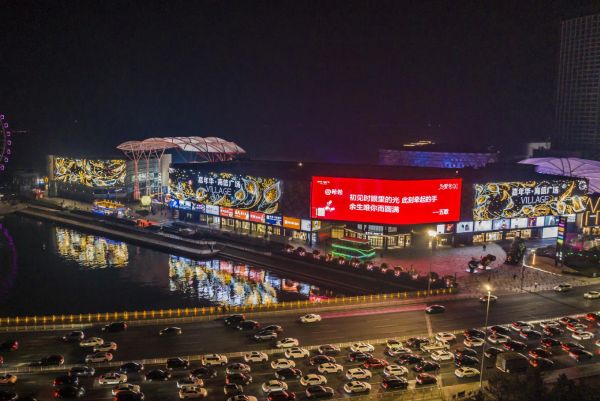
Brand building goal: For example, to increase brand awareness by 15% in core cities without prior notice. The budget will be tilted towards landmark and high exposure media, such as LED screens in core business districts.
Product promotion goal: For example, to bring 5000 sales leads to the launch of a new model. The budget should focus on precise coverage of the target customers' daily life routes, such as high-end communities and elevators in commercial buildings.
Promotion oriented goal: For example, to increase customer traffic by 30% for commercial district stores during the "National Day" Golden Week. The budget should be focused on short-term, high-intensity investments around the business district and transportation routes.
Regional tackling goals: for example, exploring new markets in East China. The budget needs to be used to create a three-dimensional media matrix in the target city.
1.2 Follow the principle of "target determines budget"
The wrong logic is: 'I have a budget of 500000, let's see what I can buy.'. The correct logic is: "In order to achieve goal A, it is evaluated that it is necessary to cover population B. During cycle C, the market cost of selecting media combination D is about E. Therefore, my budget framework is E." The budget should be the estimated result of resources to achieve the goal, rather than an initial limit that hits the head.
Step 2: Break down the budget structure - where did your money specifically go?
A clear budget table for outdoor advertising should not have only one total number. It must be a detailed cost list, typically consisting of the following core modules:
2.1 Media procurement cost (maximum expenditure item)
This is the advertising space rental fee paid to the media (or its agents). Its price is influenced by multiple factors, forming a complex composition:
Media type and location value: The price of LED screens in urban core business districts is tens of times higher than that of suburban bus stops. The core of media cost assessment is "Effective Thousand Person Cost (CPM)" rather than absolute low price.
Placement cycle and density: Long term contracts usually come with discounts. High frequency and multi-point coverage in the same area can form a synergistic effect, but it also significantly increases costs.
City level: The price difference between first tier cities and third - and fourth tier cities can reach more than ten times.
2.2 Creative and Production Costs (Amplification of Effects)
Creativity is the engine that doubles the value of media. This cost is often underestimated, but it is crucial.
Design fee: Creative planning and visual design for flat posters and dynamic videos.
Material production and installation costs: printing of advertising images, steel structure production, on-site hoisting and construction, etc. For large outdoor signs, this cost can be very high.
Technical expenses: If it involves interactive devices, AR effects, etc., additional technical development and content production are required.
2.3 Operating and monitoring costs (insurance to ensure effectiveness)
This is an indispensable "escort" fee to ensure the smooth progress of advertising.
Publication and maintenance fees: Ensure that advertisements are printed on time and of high quality, and conduct inspections and maintenance during the advertising period.
Third party monitoring and effectiveness evaluation fee: Hire a third-party company to provide exposure data, foot traffic analysis, or pre - and post advertising brand research to make the results visible.
Project management and agency service fees: If executed through an advertising agency, this usually includes this item.
2.4 Reserve Fund (Buffer Pool for Coping with Changes)
It is recommended to reserve 10% -15% of the total budget as unforeseeable expenses to cope with unexpected market opportunities, temporary program adjustments, or additional costs incurred during implementation.
Step 3: Develop an allocation strategy - how to maximize the effectiveness of the budget?
With the total plate and cost composition, the next step is intelligent allocation. The key lies in "focus" and "combination".
3.1 "721" focuses on allocation principles (applicable to most brands)
70% of the budget is allocated to the core battlefield: concentrate firepower on the core media and core areas that are most likely to match the target audience. Pursuing 'penetration' and forming an absolute advantage. For example, allocate the majority of the budget to the package station or charter project of the railway line with the highest sales volume in the target city.
20% of the budget is allocated for testing and innovation: to explore emerging forms of outdoor media (such as community express cabinet screens, power bank media) or new regional markets, accumulating data for the future.
10% of the budget is allocated as mobile expenses: used to seize sudden hot topics or offline linkage opportunities during the advertising period, enhance the flexibility and topicality of the campaign.
3.2 Building a "three-dimensional" media combination
A single media format is difficult to cover all scenarios. A wise budget allocation should build a combination of:
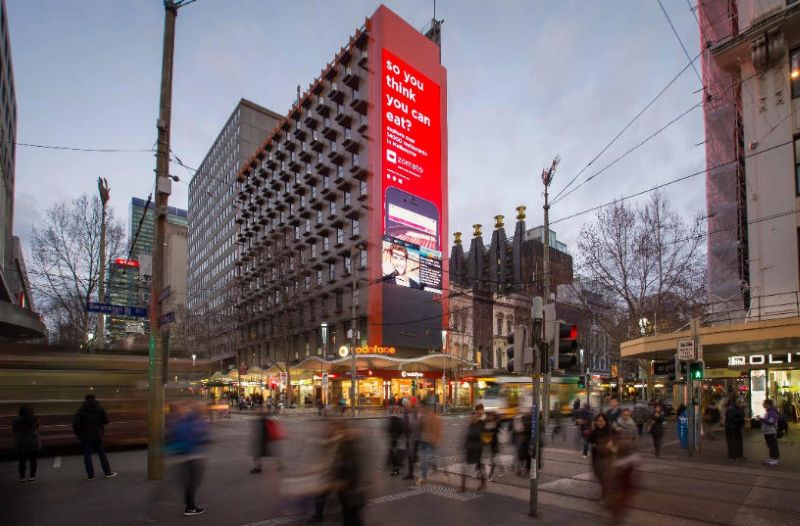
High altitude detonation (brand volume): Allocate a portion of the budget to city landmark screens for creating topics and establishing a high-end image.
Mid frequency interception (scene reach): Conduct high-frequency and precise penetration propagation in office buildings, community elevators, and shopping malls.
Ground coverage (action guidance): Set up advertisements to guide actions at densely populated traffic nodes such as bus stops and subway passages, directing traffic towards terminals.
3.3 Time rhythm: pulse vs. continuous
Pulse based advertising: Concentrate the budget on promotional periods and product launch periods (such as 2-4 weeks), conduct high-intensity, saturated bombing, and quickly ignite the market. Suitable for brands with limited budgets but pursuing short-term strong results.
Continuous advertising: Spread the budget over a longer period of time (such as 3-6 months) to maintain a stable brand presence, suitable for brand building and market defense. Usually requires a higher total budget.

Step 4: Negotiation, Execution, and Risk Control - Holding the Bottom Line of the Budget
No matter how well planned, strict execution is still necessary to ensure. The following are the key to controlling costs and avoiding risks.
4.1 Cost Negotiation and Procurement Techniques
Compare prices, but not just prices: inquire with multiple first tier agents or media direct customers. When negotiating, not only should discounts be negotiated, but also additional value should be sought, such as longer release time, free screen replacement times, and matching social media promotion resources.
Seize the timing of procurement: The media side has greater bargaining space at the end of the quarter, the end of the year, or when there is a gap period. Avoid absolute peak seasons such as "Golden September and Silver October".
Consider programmatic purchasing (digital outdoor): For digital outdoor screens (DOOH), programmatic purchasing can achieve precise procurement on demand and in time, which may improve budget efficiency.
4.2 Budget traps that must be guarded against
Trap 1: Blindly pursuing low-priced media. The cheapest is often the most expensive. A remote and unattended advertising space with a low CPM is worthless. The budget should be allocated towards' effective traffic '.
Trap 2: Neglecting the cost of "production and installation". Focusing solely on media rental fees, I eventually discovered that the installation cost of creating complex alien billboards exceeded the media fee itself. Suppliers must be required to provide a comprehensive quotation breakdown.
Trap 3: No reserved monitoring and emergency funds. Resulting in the inability to evaluate the effectiveness or the lack of funds to handle problems, putting the entire project in a passive position.
Trap 4: Pay the full amount at once. A reasonable payment method should be carried out in stages, including pre publication payment, post publication acceptance payment, and final payment after publication completion, in order to take the initiative.
Trap 5: The disconnect between budget and effectiveness evaluation. After the advertising campaign ended, the initial set goals (such as lead count and volume data) were not used to review ROI, resulting in the inability to optimize budget planning and falling into a cycle of repeated trial and error.
Conclusion: Budgeting is an art of dynamic management
Developing an outdoor advertising budget is not a one-time task completed before the project starts. It runs through the entire marketing campaign: starting with clear goals, skilled in scientific allocation, fixed in strict execution, and ultimately closed in deep effect review.
It is essentially an investment decision. Successful budget management is not about how much money is spent, but about whether every penny is spent on the "cutting edge" that can drive the achievement of goals. When you learn to view budgets with an investment perspective, allocate them with strategic thinking, and evaluate results with data, outdoor advertising will no longer be an elusive "brand mysticism", but a precise marketing tool in your hands that can be predicted, optimized, and bring rich returns.
Now, please return to your marketing goals and use this guide as a blueprint to start building your next round of precise and efficient outdoor advertising investment plan.