Outdoor advertising industry trend 2026: paradigm revolution from static display to dynamic interaction
2026-01-21Tianci MediaViews:153
Highlights
In depth analysis of outdoor advertising industry trends in 2026: from digital and programmatic purchasing to scene interaction and data-driven. This article reveals how outdoor advertising has evolved from one-way display to intelligent interactive media, and provides strategic insights for addressing future markets. Get a forward-looking industry analysis report immediately.
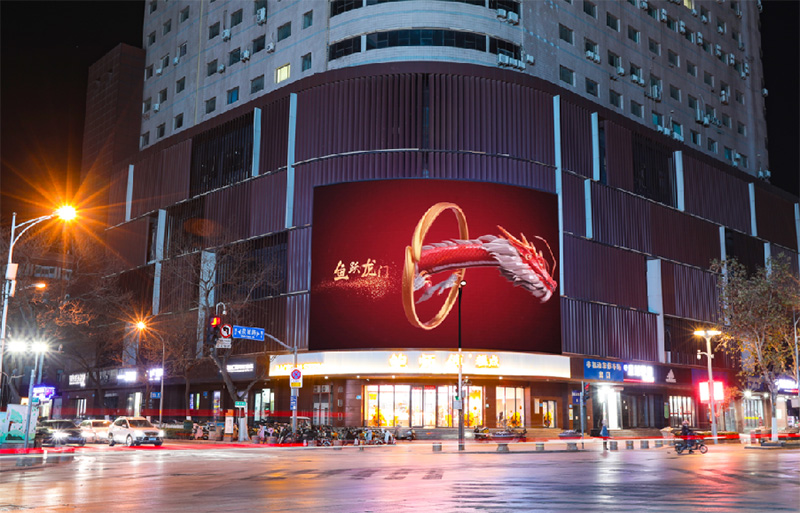
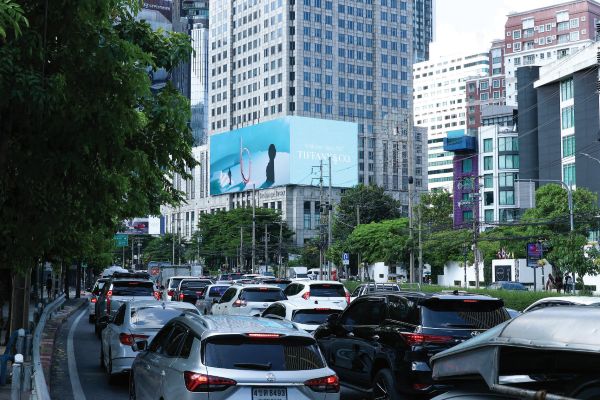
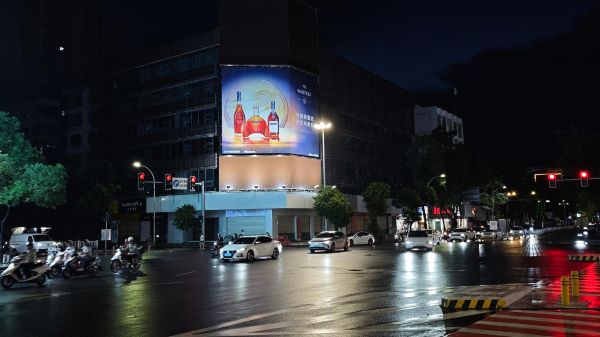
When it comes to outdoor advertising, does your impression still linger on static giant posters on high-rise buildings or the unchanging light boxes in bus shelters? If so, it's time to refresh your cognition. Under the sweeping tide of digitalization, outdoor advertising (OOH) is not an "old medium" that has been eliminated, but rather is undergoing a profound, inward-outward intelligent rebirth.
Today's outdoor advertising is evolving from a passive "display board" into an "intelligent interactive terminal" capable of sensing the environment, interacting with people, and optimizing its deployment in real time. For marketers, brand owners, and even newcomers to the advertising industry, understanding the core driving force and future direction of this transformation is no longer icing on the cake, but a compulsory course related to marketing efficiency and brand future. This article will guide you through the fog and systematically sort out the key outdoor advertising industry trends that will determine the future landscape.
Trend 1: From "One-way Presentation" to "Scenario Interaction" - The Upgrade of Experience Value
Traditional outdoor advertising is "I say, you look", while the future trend is "Let's play together". The popularization of interactive technology has completely changed the relationship between advertising and the audience.
Technology Empowers Interaction: Through technologies such as AR (Augmented Reality), QR codes, NFC (Near Field Communication), and sensors, a static screen or poster can be transformed into a game portal, a product experience window, or a social media check-in point. For instance, pedestrians can scan advertisements with their mobile phones to see virtual products superimposed on real-life scenes on the screen, or unlock exclusive discounts.
Value reshaping: The core value of advertising has shifted from "exposure" to "engagement" and "experience". The depth of brand memory and the potential for secondary dissemination on social media brought by a successful interaction are far greater than ten thousand passive exposures. Outdoor advertising is becoming a super interactive entry point for offline traffic.

Trend 2: From "Vague Coverage" to "Data-Driven" -- The Scientific Revolution in Advertising
"This location has a high pedestrian flow" was once the core rationale for purchasing outdoor advertising. Nowadays, this phrase is being replaced by a more precise description: "During the Tuesday evening rush hour, 35% of the people passing by this screen are women aged 25-35, car owners, and interested in technology products."
Diversified data sources: mobile operator data, business district Wi-Fi probes, intelligent camera analysis, third-party big data platforms, etc., have made the audience portrait of outdoor advertising clearer than ever before.
Measurable Effectiveness: Through data feedback, advertisers can more scientifically evaluate the actual reach and frequency of outdoor advertising. By integrating with online data, they can even analyze its contribution to brand searches, store visits, or online sales (attribution analysis). Outdoor advertising is no longer an untraceable "brand mystery".
Trend 3: From "manual booking" to "programmatic trading" - ultimate improvement in trading efficiency
Programmatic OOH is a concentrated reflection of the digital trend in the trading process, and it will fundamentally change the way outdoor advertising is bought and sold.
What is programmatic out-of-home advertising? In brief, just like purchasing online ads, advertisers can purchase out-of-home advertising spaces (especially digital screens) in real-time and automatically through digital trading platforms, based on conditions such as target demographics, time slots, and weather.
What kind of transformation will it bring?
Extreme flexibility: The content can be published, changed, or removed at any time based on promotional activities, weather, and hot events.
Dynamic optimization: Automatically adjust the delivery strategy based on actual exposure effect data.
Cross-screen integration: Realize programmatic linkage and delivery of outdoor digital advertising and online advertising on mobile phones, computers, etc., achieving true omnichannel marketing.
Trend 4: From "One Screen for All" to "Scene Intelligence" - Dynamic and Personalized Content
The outdoor advertising screens of the future will be "thinking" screens.
Dynamic Content Creativity (DCO): Advertising content is no longer static, but can be dynamically generated based on external data. For example, cereal advertisements are broadcast during breakfast time, umbrella or ride-hailing advertisements are displayed on rainy days, and down jacket information is pushed when the temperature drops sharply.
AI Creative Generation: Artificial intelligence is not only used for advertising deployment, but also begins to intervene in the creative process. AI can automatically generate or optimize advertising visual elements and copy based on brand tone, deployment scenarios, and real-time data, enabling large-scale personalized content production.
Scene depth integration: Advertising creativity will place greater emphasis on seamless integration with the physical environment. For instance, advertisements at bus shelters can be combined with real-time arrival information, and airport advertisements can be linked to the customs of flight destinations.
Trend 5: From "Independent Media" to "Ecological Node" - Maximizing Integrated Value
Outdoor advertising is no longer an isolated marketing channel, but a crucial physical node in the integrated brand marketing ecosystem.
Online-to-Offline-to-Online (O2O2O): The core task of outdoor advertising has shifted to "capturing attention from offline scenarios and driving traffic to online private domains." An extremely attractive outdoor advertisement must come with a clear QR code, social media hashtag, or search instruction, guiding viewers to immediately follow, interact, or make a purchase on their phones, forming a closed marketing loop.
Social media amplifier: Outdoor advertisements with strong visual impact or interactivity are inherently "materials" designed for social media dissemination. They encourage users to take photos, check in, and share, thereby igniting secondary dissemination online and achieving exponential growth in volume.
Common misconceptions and rational perspective on trends
While embracing the trend, we also need to be wary of several common misunderstandings:
Worship of technology and neglect of creative essence: No matter how cool the technology is, the core that touches people's hearts will always be story and creativity. Technology is an "amplifier", not a "replacement". Poor creativity combined with AR is still poor advertising.
Focusing solely on data and ignoring the uniqueness of specific scenarios: Data is a tool, but it cannot fully replace human intuition in judging scenarios, atmospheres, and cultures. Forcing technology-based advertisements that are data-driven but do not match the tone into historical and cultural districts may backfire.
It is believed that traditional outdoor advertising is dead: on the contrary, the wave of digitalization and programmatic advertising will first transform the core outdoor locations with the highest value and largest traffic volume (such as LED displays in business districts and transportation hubs). However, a large number of community frameworks, street light boxes, etc., due to their irreplaceable penetration and cost-effectiveness, will continue to maintain their "traditional" forms for a long time, forming a complementary combination with digital media.
Underestimating implementation complexity and cost: Programmatic buying, data integration, and interactive technology deployment require collaborative upgrades across all links of the industry chain (media owners, technology suppliers, and agents), and cannot be achieved overnight. For many local advertisers, a practical and cost-effective approach to "digitalization" may start with a digital lightbox that can be connected to the internet and has replaceable images.
Conclusion:
In summary, the core theme of the current outdoor advertising industry trend is "digitalization, data-driven, interaction, and integration". This does not signify the demise of traditional outdoor formats, but rather marks a comprehensive upgrade in the industry's value measurement standards, operational modes, and thinking paradigms.
Future outdoor advertising will be a "spatial media" that integrates environmental perception, data intelligence, and interactive experience. For brands, it is no longer merely a budget expenditure for purchasing "locations", but a "spatial computing" capability that requires the comprehensive use of creativity, data, and technology to create unforgettable brand experiences in the real physical world.
This transformation brings new opportunities to all market participants: for media outlets, it enhances asset value and operational efficiency; for agencies, it extends and deepens the service value chain; for brands, it provides a super weapon for offline marketing that enables precise reach, deep interaction, and effective measurement of returns. Insight into and mastery of these trends will be the key to success in the next stage of marketing competition.