A complete guide to outdoor advertising placement: from zero to one, make your brand deeply rooted in people's hearts
2026-01-20Tianci MediaViews:135
Highlights
Do you want to know the correct steps for outdoor advertising placement? This guide provides you with a detailed explanation of the entire process from target setting, selection of placement location, pricing budget, to placement precautions. Assist you in using professional strategies to enhance brand influence and avoid common misconceptions. Read now to get your exclusive advertising plan!
Why is outdoor advertising still attractive in today's era of digital marketing? The answer lies in its irreplaceable mandatory exposure, scene integration, and strong brand potential shaping power. Whether you are a startup brand seeking to break through or a mature enterprise consolidating its position, a successful outdoor advertising campaign can bring significant returns. However, for beginners, this process is full of unknowns: how to start? Where should the money be spent? What pitfalls should be avoided? This article will serve as your guide, systematically breaking down every step of outdoor advertising placement.
Step 1: Pre launch strategy foundation - clarify "why" and "for whom"
Any successful advertising campaign begins with a clear strategy, not blind execution.
1.1 Set clear and measurable goals
Your goal determines all subsequent choices. Please avoid using vague expressions such as' enhance brand awareness' and try to concretize them:
Enhance awareness: Increase brand implicit awareness from X% to Y% within the target area.
Drive to store: Drive traffic to newly opened stores within a 3-kilometer radius, with the goal of reaching XX foot traffic in the first month.
Promote products: During peak sales season, bring direct product code search volume growth to the core product line.
Shaping Image: Establishing a connection between brand and "quality life" in high-end commercial districts.
1.2 Accurately outline the target audience portrait
Understanding 'who to show' is more important than 'what to show'. You need to go beyond demographics (age, gender) and gain a deeper understanding of their behavior and life trajectories:
Where do they live? (Distribution of Residential Areas)
What is their commuting route? (Subway, bus, main road)
Where do they spend and socialize on weekends? (Shopping center, entertainment district)
What are their interests and values?
Step 2: Core Decision - How to Scientifically Choose the "Placement Location"
The placement location is the soul of outdoor advertising, directly determining the coverage efficiency and quality of the advertisement.
2.1 Analysis of mainstream outdoor advertising location types
The transportation sector (subway, airport, high-speed rail, bus body) has a huge flow of people, covering commuters and business travelers, with frequent contact. Consumer goods, Internet services, city brand promotion. Choose a route instead of a single point (such as a subway network covering the entire city versus a single station).
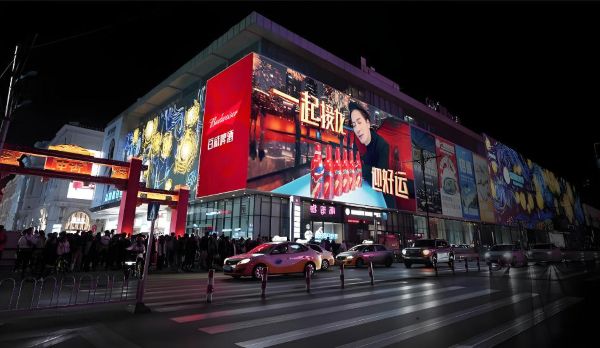
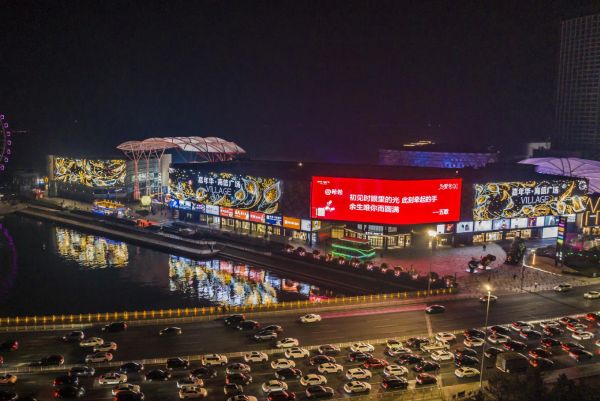
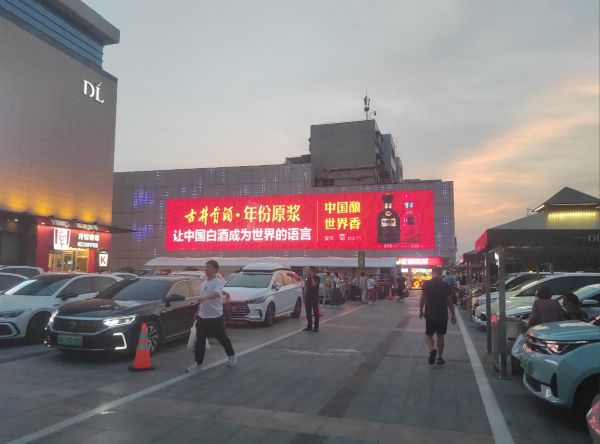
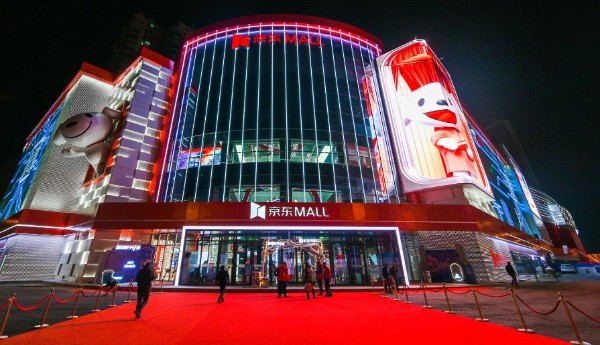
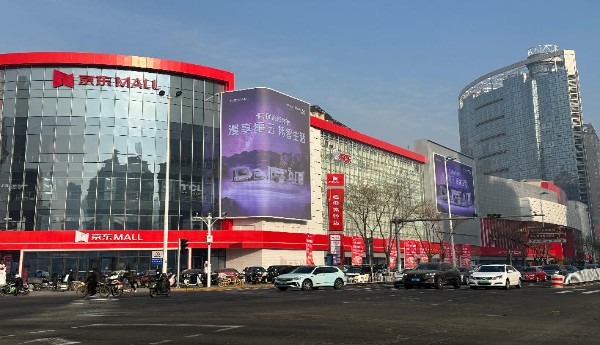
The consumption scene of commercial districts (shopping center LED screens, elevator frames, square light boxes) is strong, and the audience's mentality is relaxed and they have a willingness to consume. Retail, beauty, 3C digital, catering, luxury goods. Match the level of the commercial district with the brand positioning (high-end/mass market).
Community oriented products (such as community lightboxes, access control, and elevators) accurately reach specific residential populations, are close to daily life, and have high levels of trust. Home decoration, property management, local living services, fast-moving consumer goods. Coverage of community density and resident portraits.
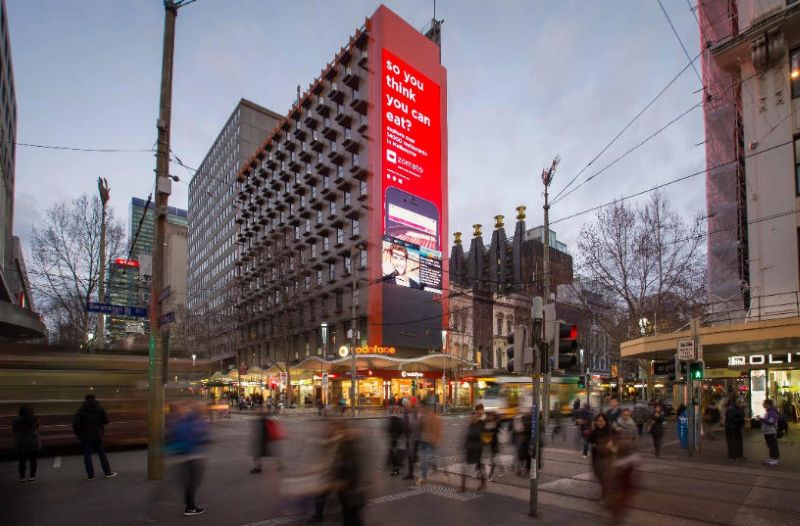
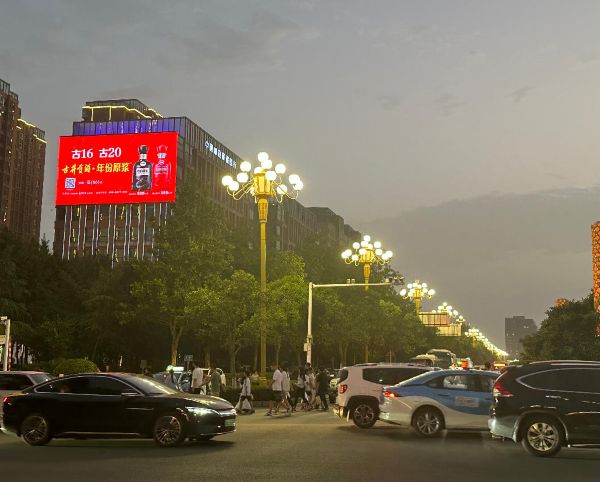
Roads (such as high-speed anti-aircraft guns and streetlights and flags on urban main roads) have strong visual impact and are symbols of city level brand activities. Advertising for automobile, finance, and large corporate image. Traffic speed, visible distance, and regulatory restrictions.
2.2 The Golden Rule for Choosing a Location
Follow the audience's trajectory: Implant advertisements into the daily "life path" that the target audience must pass through.
Pay attention to scene resonance: The advertising content should have a "1+1>2" effect with the surrounding environment (such as coffee brand advertisements appearing in elevators in business districts).
Pursuing effective traffic: Not all foot traffic is effective traffic. The evaluation is based on the traffic of people who are interested in your brand.
Combination coverage: Adopting a combination of "core business district big screen exposure+precise penetration of surrounding communities+coverage of traffic artery flow" to achieve three-dimensional reach.
Step 3: Budget and Price - Transparent Interpretation of "Advertising Price"
The price difference of outdoor advertising placement is huge and is influenced by various factors. Understanding its composition is essential for effective cost control.
3.1 Core factors affecting prices
Location value: The prices of core business districts and transportation hubs are much higher than those of ordinary locations.
Media format: LED screens and special shaped devices are priced higher than traditional static light boxes.
Delivery cycle: Usually includes weekly, monthly, quarterly and other packages, with discounts available for long-term delivery.
Advertising period: For LED screens that are played in different time periods, the price is higher during prime time (such as evening rush hour).
City level: The price difference between first tier cities and third - and fourth tier cities can reach several times or even tens of times.
3.2 Budget Planning and Negotiation Skills
Clear budget ceiling: Determine the overall budget and reserve 10-15% for mobile expenses.
Pursuing cost-effectiveness: Sometimes, long-term placement in a high-quality location can be more effective than short-term bombardment in multiple ordinary locations.
Seeking media combination packages: Directly communicating with media outlets or first tier agencies to package and purchase different locations often results in better prices.
Using data as evidence: The media is required to provide monitoring data on passenger flow, vehicle flow, etc. at the past location as a basis for price negotiation and value evaluation.
Step 4: Beginner's Must Read - Five Key "Advertising Precautions"
Avoiding common traps is the lower limit to ensure the effectiveness of advertising.
4.1 Content design: Simple to the extreme
Outdoor advertising is a '3-second art'. The audience is in a mobile state. Must achieve:
Oversized brand logo: The logo or product should be easily recognizable at a glance.
Minimalist copywriting: preferably within 7 words, clearly stating a core benefit point.
High contrast visual: vivid colors ensure clear visibility at long distances and in different weather conditions.
Conspicuous Call to Action (CTA): such as "scan code to collect" and "search for XX keywords".
4.2 Legal and Approval Risks
Confirm that the content of the advertisement screen (text, images, logos) has passed the relevant industrial and commercial review, and that the placement location has obtained legal permission from the city management department. This is a red line that cannot be crossed.
4.3 Effect monitoring and verification
The effectiveness of outdoor advertising is not completely untraceable. The following methods can be used:
Exclusive interactive design: Use unique QR codes, activity codes, or search keywords.
Geographic location analysis: Monitor the brand's social media check-in volume and map search popularity changes in nearby areas during advertising placement.
Research comparison: Conduct a small-scale brand awareness survey in the target area before and after advertising.
4.4 Linkage with Digital Marketing
Do not let outdoor advertising become an information island. Offline traffic should be directed to the online private domain.
Online topic linkage: Create social media topics for outdoor advertising themes and encourage users to take photos and interact.
Traffic absorption page optimization: The page redirected after scanning the code must be highly relevant to the advertising promise and have a smooth experience.
4.5 Review of Contract Details
Before signing the contract, it is necessary to clarify the specific number and physical photos of the placement location, the accurate dates and times of the previous and subsequent publications, the responsible party for the production and installation of the images, the acceptance criteria, and the compensation or extension plan for the possible withdrawal of the painting due to force majeure (such as municipal engineering).
Conclusion: Embark on your brand's outdoor journey
Outdoor advertising placement is a science that combines strategy, art, and rigorous execution. It is no longer just about "brushing presence", but an important way for brands to engage in deep conversations with cities and audiences. Starting from setting clear goals, carefully studying the placement location, rationally planning the placement price, and keeping in mind all key placement precautions, you can gradually transform from a beginner to a skilled trader.
Now is the time to transform knowledge into action.
Re evaluate your brand marketing plan, take out a map, and draw a line along the life trajectory of your target customers. Then, go out and personally visit the potential advertising locations to experience the crowds and scenes. When theory is combined with reality, an efficient outdoor advertising strategy that belongs to your brand will clearly emerge.
Start planning your first or next outdoor advertising campaign now, let the brand's light illuminate the real corners of the city.