Beijing Outdoor Advertising: Complete Guide to Budget, Location, and Approval Process
2025-12-18Tianci MediaViews:260
Highlights
This article provides you with a complete guide for outdoor advertising placement in Beijing, covering core scene selection such as commercial districts, transportation, and communities, analysis of the entire process of budget formulation and design approval, as well as common misconceptions and pitfalls to avoid. Read now for professional advice and make your brand speak out efficiently in the Beijing market!
一、 Introduction: Why is outdoor advertising in Beijing a strategic location for brand building?
In Beijing, a super first tier city with over 21 million permanent residents and an average daily floating population of over 10 million, outdoor advertising has never been a simple "information display", but a strategic competition for consumer attention, brand awareness, and urban space.
Imagine your brand image standing on the glass curtain wall of Guomao CBD, shining in the dazzling lights of Wangfujing Pedestrian Street, or appearing on the anti-aircraft gun billboard on the East Third Ring Road with the continuous flow of traffic. This is not only an exposure, but also a declaration of brand strength, market ambition, and urban style. The value of outdoor advertising in Beijing lies in its unavoidable reach, contextualized influence, and endorsement of authority.
For companies that are new to or looking to optimize their outdoor advertising placement in Beijing, this article will serve as your professional navigation, systematically breaking down every key link from strategic planning to execution and implementation, helping you achieve maximum budget value.
二、 Core cognition: Understanding the unique ecology of outdoor advertising in Beijing
Before starting the launch, it is necessary to understand the uniqueness of the Beijing market.
1. Highly standardized management environment
Beijing has the strictest management regulations for outdoor advertising in the country. Multiple departments such as urban appearance, municipal administration, planning, and transportation jointly supervise, and there are clear prohibitions or restrictions on the installation of facilities in major areas (such as along Chang'an Avenue and around important political and cultural venues). This means that compliance is the first prerequisite, and it is not something that can be freely invested with money.
2. Diversified scenarios and value stratification
The value of outdoor advertising scenes in Beijing varies greatly:
Core business districts (such as Guomao, Sanlitun, Xidan): top value, strong audience consumption power, and the best brand display effect.
Main transportation arteries (such as ring roads and airport highways): covering a large number of commuters, suitable for establishing broad recognition of mass brands.
Subway and bus networks: penetrate the urban capillaries to achieve high-frequency and mandatory access.
Community and surrounding living circle: Stable audience, suitable for targeted promotion of local services, real estate, education, etc.
3. High cost and strict requirements for effectiveness
Beijing's outdoor advertising media resources are scarce and the rent is high. This requires every investment to undergo precise calculations, with extremely high requirements for return on investment (ROI). Blind advertising can easily lead to huge waste.
Related LSI/long tail keywords: Beijing outdoor advertising approval, Beijing LED large screen advertising, Beijing bus station advertising, Beijing subway advertising prices, which outdoor advertising company is good in Beijing, Beijing commercial district billboards.

三、Step by step explanation: Seven step method for outdoor advertising placement in Beijing
Step 1: Clarify the advertising target and audience portrait
Goal setting: To enhance brand awareness? Promote specific products? Or to attract traffic to offline stores? The goal must be specific and measurable.
Audience analysis: Where do your target customers live, work, and travel in Beijing? What scenes do they often appear in? A clear audience portrait is a lighthouse that guides all subsequent decisions.
Step 2: Scientifically formulate budgets and evaluation indicators
Budget composition: It not only includes media rental, but also needs to reserve design and production fees, installation and construction fees, approval fees, maintenance fees, and possible taxes and fees. The total budget should be around 120% -150% of the media cost.
Performance indicators: Set core indicators based on different goals, such as daily pedestrian traffic (CPM), growth of in store customer flow, changes in brand search index, social media interaction volume, etc.
Step 3: Accurately screen advertising locations and formats
Location research: Conduct on-site inspections of candidate locations, observe the quality of pedestrian and vehicular traffic at different time periods, and examine the surrounding environment and competitive products.
Form matching:
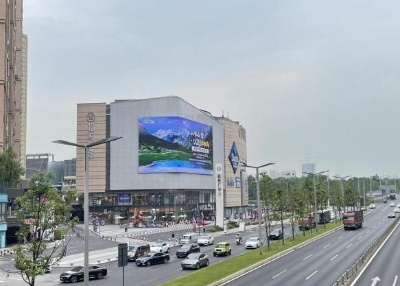
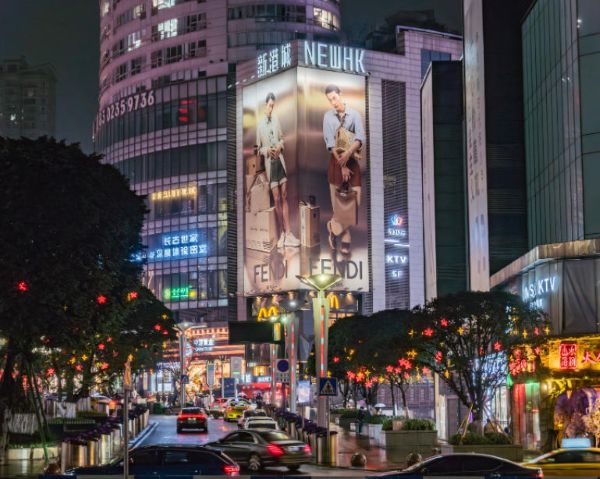
Brand image display: Select core business district LED screens and high-end building lighting curtain walls.
Product promotion notice: Suitable for subway channel lightboxes, community lightboxes, and bus bodies.
Large scale event promotion: Consider airport expressway single column, urban landmark projection, etc.
Step 4: Design advertising content that conforms to the tone of Beijing
Visual impact: Capture attention in a brief 3-5 second contact. Large font, strong contrast, minimalist information.
Localization of information: Beijing elements or dialects can be appropriately integrated to increase familiarity and resonance.
Strong Call to Arms (CTA): Clearly tell the audience what to do next, such as "scan the code to collect" or "navigate to".
Step 5: Complete the crucial approval process
This is the most complex aspect of outdoor advertising placement in Beijing. Usually requires:
Submit an application to the district level urban and environmental sanitation management department where the establishment is located.
Provide materials such as business license, media location ownership certificate, advertising design sample, safety commitment letter, etc.
The design scheme must comply with the "Beijing Outdoor Advertising Setting Standards".
The approval cycle is usually 15-20 working days, so it is important to plan ahead.
Step 6: Select reliable suppliers and supervise their implementation
Supplier selection: Evaluate whether they have successful cases, are familiar with the approval processes in various districts of Beijing, and can provide complete installation and maintenance services.
Execution supervision: Strictly supervise the quality of painting, installation safety, and release time to ensure complete consistency with the contract agreement.
Step 7: Continuously monitor the effectiveness and optimize adjustments
Process monitoring: Regularly check the integrity of advertising images to prevent them from being obstructed or damaged.
Effect tracking: Using a combination of online and offline methods (such as specific QR codes, activity codes, and public opinion monitoring) to evaluate actual effects and provide data support for subsequent optimization.

四、 Common Misconceptions and Avoiding Pits Guide (Beijing Market Special Edition)
Misconception 1: Blindly pursuing "landmarks" and ignoring the matching of cost-effectiveness and goals.
Although the Guomao large screen is good, if your goal is to reach community households, its cost-effectiveness may be far inferior to the lightbox at the entrance of a chain supermarket. What is suitable is the best.
Misconception 2: Underestimating the complexity and time cost of approval can disrupt the marketing rhythm.
Beijing has strict approval procedures, long cycles, and uncertainties. Do not wait until the marketing campaign is approaching before starting operations, be sure to reserve at least 1-2 months of approval buffer period.
Misconception 3: Design that is too self indulgent, overloaded with information, or disconnected from the Beijing context.
In the fast-moving streets of Beijing, complex designs are equivalent to ineffective designs. Meanwhile, content that is too westernized or unrelated to local culture is difficult to resonate with.
Misconception 4: Treating outdoor advertising as an isolated campaign and lacking integrated marketing thinking.
Outdoor advertising should be the tipping point or amplifier of the entire marketing campaign. It is necessary to synchronously plan social media interactions (such as check-in topics), online search acceptance, and offline activity drainage to form an integrated communication loop.
Misconception 5: Only focusing on the cost of "before" advertising, neglecting the maintenance of "during" advertising and the evaluation of "after" advertising.
Failure to repair damaged images in a timely manner, dim lighting, and lack of tracking of data effects can all greatly reduce the huge investment. Refined operation is the lifeline to ensure effectiveness.
五、 Conclusion
In Beijing, a city full of opportunities and challenges, outdoor advertising is a sharp double-edged sword. Used well, it can break through the noise of the market and make the brand stand out; If not used properly, it may result in significant waste of resources.