Outdoor Advertising's Near-Body Interception: Plant Your Landmark Next to the Rival's Sign
2026-09-07Tianci MediaViews:1
Highlights
The most common mistake in outdoor advertising is picking a "prime location and done". Real offense is not about reach but how close you stand to the competitor. Digital ads can target people precisely yet rarely appear physically next to a rival's sign; a city landmark screen, however, can sit on the skyline facing the competitor's flagship, HQ, or launch venue, so shoppers walking toward the rival's door see you first. This article uses competitive adjacency and share of context to upgrade outdoor advertising from passive coverage to an offensive science of near-body interception, turning the city skyline into a position that pressures rivals.
1. Why 2026 Must Talk About Near-Body Interception: Digital Targets, but Rarely Gets Close
Digital advertising excels at audience profiling and programmatic targeting, but its weakness is that the algorithm decides where you appear, and you can rarely specify "next to the competitor's store". When consumers scroll, rival and your feeds sit side by side and are swipeable. A physical landmark screen is an unavoidable presence: if the rival puts its store at the district's center, you plant your screen at the intersection facing its entrance, so the customer hits your creative on the way to the rival's door. This physical unavoidability is the one offensive lever digital media cannot give, and the value outdoor advertising should re-rate in 2026.
2. Outdoor's Unique Capital of Adjacent Interception
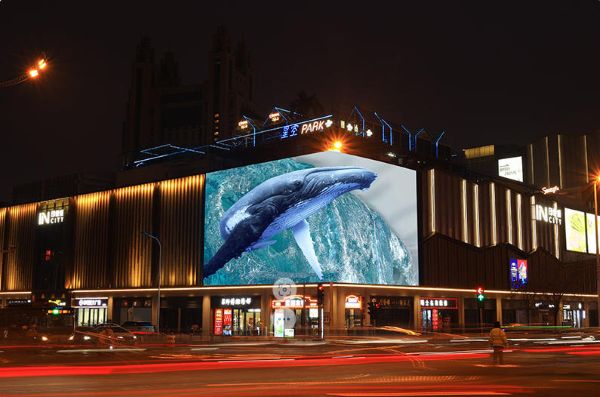
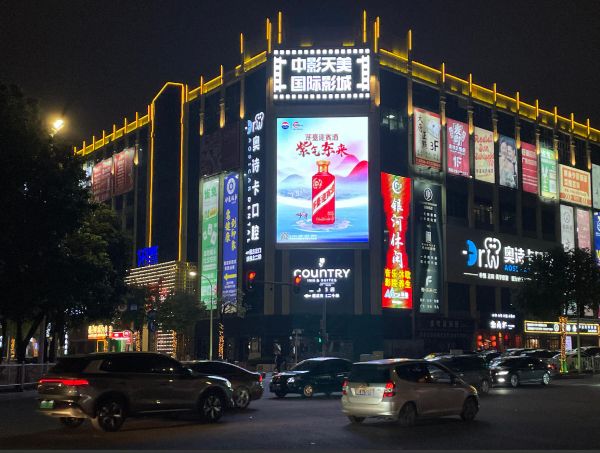
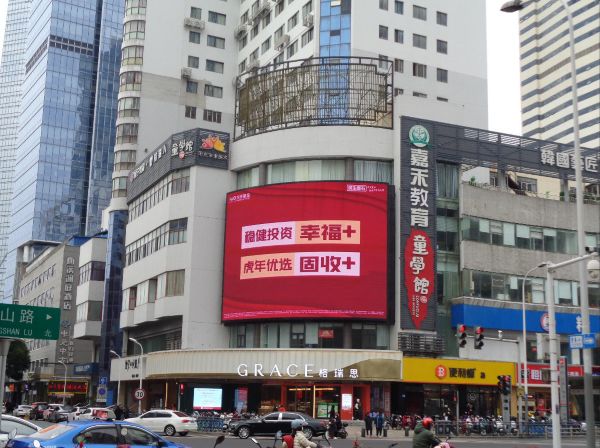
Landmark screens are the flagship carrier of adjacent interception. The differentiating capital is "city-scale unavoidability plus skyline-exclusive viewpoint": no matter how prominent the rival's flagship is, it occupies only the street level; your screen owns the whole building facade or intersection skyline, overlooking and surrounding the rival's entrance path. Compared with elevator's building-level or community's door-level, outdoor advertising's adjacency is a city-scale suppression. Once you lock the visual throat of the rival's core district, you plant a flag at the opponent's home gate. This is the loudest, most public share-of-context position.
3. Four Tactics of Adjacent Interception
Beside the rival store: plant a screen directly opposite or at the adjacent intersection of the rival's flagship to steal last-step foot traffic.
Rival customer movement: map the rival's high-penetration districts and surround them within the radius to remind "there is another choice".
Rival commute path: place screens in the CBD where the rival's HQ and core offices sit, repeatedly reaching decision makers.
Rival event venue: lock positions around the rival's launch, expo, or stadium to borrow and intercept the gathered precise crowd.
4. Share of Context: Win the Decision Situation, Not Impressions
The logic of near-body interception is not "how many impressions I bought" but "in the rival's decision situation, what share is mine". Share of context means, within a specific consumption situation (e.g., "go to the district to shop for a car"), the share of brand appearances. Outdoor advertising should count "within 500m of the rival's store, my screen vs their store, who is more eye-catching", not national total impressions. Moving budget from broad reach to the rival's contextual adjacency multiplies offensive efficiency per yuan.
5. Industry Plays for Near-Body Interception
Automotive: place LED screens in the district where rival dealerships cluster, pushing "same price, higher spec" to intercept store visitors.
Phones and digital: lock the intersection of the rival's flagship to remind "upgraded experience" at new-product launch.
Beverage and FMCG: deploy around rival campuses and core districts to intercept youth on after-school and weekend paths.
Local life: place screens within 300m of rival stores, pushing "a better option within walking distance" with instant coupons.
6. Offensive Tempo: Launch, Promotion, and Rival-Promo Counterstrike
Near-body interception is not permanent but point-strike. At new-product launch, concentrate screens beside the rival's core stores; at your own promotion, surround rival stores with "same price, more value"; the sharpest is the rival-promo counterstrike: when the rival spends to pull traffic, you intercept at their door with a screen, turning their pull into your conversion. Outdoor advertising scheduling shifts from "even pace" to "follow the rival's rhythm", spending where the opponent pushes hardest and the crowd concentrates.
7. Compliance and Ethics Guardrails for Adjacent Interception
Offense has boundaries. Advertising law forbids explicitly disparaging competitors (no "better than XX" comparative slam) and forbids imitating rival visuals to cause confusion. Near-body interception relies on "appearing next to the opponent and speaking with your own value", not attacking. Copy focuses on your own selling points, visuals keep independent identity, with compliant margins, so you stay close yet clean and avoid unfair-competition suits.
8. Common Mistakes
Mistake one: chasing total impressions without locking rival adjacency, wasting budget.
Mistake two: explicitly comparing and disparaging the rival, tripping the advertising-law red line.
Mistake three: wrong adjacency pick, locking beside the rival's low-end store with tonal mismatch.
Mistake four: permanent not point-strike, missing the counterstrike window of the rival's big promo.
9. FAQ
Summary
As reach dividends fade, the decisive edge in outdoor advertising is "standing close enough to the rival". Use competitive adjacency to lock the rival's flagship, HQ, and event skyline; use share of context to win the decision situation rather than total impressions; use point-strike over even pace. Turn the city landmark from a passive ad slot into an offensive position of near-body interception, the new OOH play brands must master in 2026.