In-Flight Advertising: Configure the Cabin's Exclusive Companionship into a Scarce Alternative Asset
2026-08-27Tianci MediaViews:3
Highlights
In allocation language, in-flight advertising is an "alternative asset" — like art or private equity: high gate, low liquidity, small scale, yet scarce premium by nature. It is not on a city landmark, not in a terminal, but inside the cabin at 30,000 feet: seatback, tray table, headrest, window. It sends a brand into the most relaxed mind of high-net-worth travellers through a fully enclosed, interference-free exclusive companionship. This article uses portfolio theory to break down in-flight advertising and explain why it must relay with airport terminals in a "two-leg" journey.
1. Why media budgets need "asset allocation" thinking
A complete mix depends on holding "low-correlation scarce assets." In-flight advertising's uniqueness: its audience is in a physically inescapable, digitally weak (flight mode) enclosed space, attention almost exclusively captured by cabin media. This scenario's correlation with any ground medium or digital channel is extremely low — the highest diversifier in the mix. As allocation thinking goes, treat it as a "scarcity premium sleeve" — not for broad reach, but for one unskippable, competitor-free exclusive companion with the hardest-to-reach high-net-worth audience. It supplies the "absolute exclusivity" that landmarks, airports and elevators cannot.
2. The return profile of in-flight advertising (where returns come from)
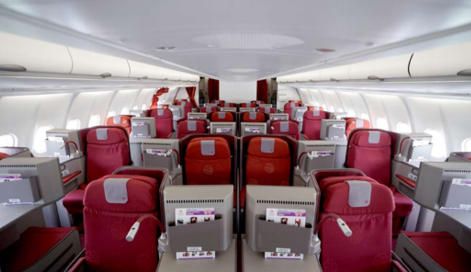
Returns come in three layers: first, enclosed exclusive companionship — in flight mode phones are limited, seatback screens, tray stickers, headrest covers and window media become few viewable brand carriers, unskippable; second, long-haul immersion — hours on medium/long routes repeat the brand, deep memory encoding; third, high-net-worth exclusivity — business and frequent flyers concentrate, matching automotive, finance, travel and duty-free. Unlike airport's "anticipation before departure," the cabin is "companionship in flight" — not breadth, but carving the brand into a relaxed high-net-worth mind, completing a premium-to-loyal leap.
3. The risk profile of in-flight advertising (where volatility comes from)
Risks are pronounced: hard airline authorisation — cabin media needs written airline permission, highly concentrated; civil-aviation safety and content approval — materials, light and placement must meet CAAC and airline safety rules; cross-border regulatory variance — international routes involve multiple jurisdictions; limited media slots — hot routes' cabin positions are scarce; small audience scale — per-flight reach is far below landmark and bus, weak for broad cover. The fix: lock annual airline packages early, use compliant lightweight materials, choose cabin by route OD, bundle with airport for two-leg cost spread.
4. Correlation: strongly complementary with airport, extremely low with everything else
In-flight advertising's correlation with airport terminal media (check-in, security, lounge, baggage) is high and complementary — the former covers "exclusive companionship in flight," the latter "ritual certification before/after departure," forming a "two-leg relay" from check-in to landing, the mix's strongest synergy pair. Its correlation with landmark, elevator, bus, subway, community and digital is extremely low — the highest-diversification, scarcest class. Hence its role is not "mainstay" but "finishing touch" — smallest weight, highest exclusive premium.
5. Industry allocation playbooks
Travel and destinations wake "next-trip impulse" in cabin by route OD; duty-free and luxury do high-net-worth exclusivity on intercontinental lines, with airport sterile-area as the last metre; credit cards and wealth management touch business flyers as a long scarce holding; automotive and premium liquor use cabin for status endorsement, weighting by business season; airline co-brands and destination marketing bundle the two-leg relay for synergy. The playbook: weight aircraft by how much the category depends on high-net-worth exclusivity and unskippability — the more, the more it should be a scarce finishing touch, relayed with airport.
6. Building the efficient frontier: three steps to make aircraft a scarce asset
First, choose cabin by route OD not fleet size, locking true high-net-worth density; second, split seatback, tray and headrest — seatback for key visual, tray for interaction hook; third, sign a "two-leg relay" with airport so one trip is accompanied twice, spreading airline-authorisation cost. Done, aircraft upgrades from "pricey and hard" to a measurable, synergistic, premium alternative asset, ideal for status- and loyalty-driven brands.
7. Rebalancing: when to add and when to trim
Add signals: new intercontinental/business route, holiday and business-travel season, competitor scaling in cabin (defensive top-up). Trim signals: route rejig mismatches audience, airline-authorisation premium exceeds ROI, creative fatigue, international flow shrinks externally. Review aircraft weight by IATA season using cabin audience and store-visit/inquiry data. Rebalance so "scarcity" always means "right high-net-worth travellers," not the priciest route.
8. Common misconceptions
One: treating aircraft as broad-reach media, ignoring its small scale — better as a scarce finishing touch. Two: airport and cabin bought separately, missing the two-leg relay premium. Three: ignoring written airline authorisation and civil-aviation safety approval, delaying with late materials. Four: one-size-fits-all cross-border compliance, triggering multi-jurisdiction risk. Five: treating cabin as pure branding, missing destination/duty-free hooks for exclusive conversion.
9. FAQ
Q: What is the difference between aircraft and airport advertising?
A: Aircraft is in-cabin media (seatback/tray/headrest/window); airport is terminal scenes; the two relay across the whole journey.
Q: Can a small budget do aircraft?
A: Lock one business route's seatback package for peak finishing touch, no full fleet.
Q: How to measure aircraft's portfolio contribution?
A: High-net-worth store-visit/inquiry uplift and premium brand-search spillover, not impressions.
10. Summary
In-flight advertising is the cabin-exclusive alternative asset of the media mix: scarce returns via enclosed unskippable, long-haul immersion and high-net-worth exclusivity; risks in airline authorisation, aviation approval and scale limits; extremely low correlation with all other media makes it the highest diversifier. Allocate it with portfolio thinking and you buy a brand exclusive companionship at 30,000 feet that is unskippable and competitor-free.