Is outdoor lightbox advertising worth investing in?
2025-12-11Tianci MediaViews:262
Highlights
Master the practical process of outdoor lightbox advertising from location selection, materials, design to installation and maintenance, with budget and effectiveness monitoring points attached. Download the advertising list immediately and start planning your first lightbox advertising campaign.
Outdoor lightbox advertising has become a commonly used offline reach method for local stores, chain stores, and short-term promotions due to its high visibility, all-weather availability, and controllable cost. For beginners, understanding the types, production standards, and placement logic of lightboxes can achieve stable exposure and in store effects with a lower budget. This guide breaks down each step by step, helping you turn your ideas into executable implementation plans.
Why choose outdoor lightbox advertising?
1. Core advantages
All day visibility: The backlight design is equally eye-catching at night, extending the brand exposure period.
Cost controllable: Compared to large LED screens, lightbox production and deployment cycles are flexible, and single investment is lower.
Strong near-field traffic diversion: suitable for store, catering, and service businesses to do peripheral traffic diversion.
Visual stability: Static or simple motion effects are more conducive to rapid recognition and memory.
2. Typical Applicable Scenarios
Community entrances and exits, commercial streets, exterior walls of office buildings, shop windows, bus shelters, etc.
New store opening, promotional activities, brand regional exposure, and long-term brand presence.
Step 1: Clarify the purpose and KPIs
Clearly define the advertising target
Enhance awareness: Focus on exposure and choose locations with high pedestrian flow.
Facilitating store access: Targeting QR codes, coupon codes, phone calls, or walking to the store, it is important to pay attention to nearby coverage and time periods.
Long term brand accumulation: Choose long-term fixed light boxes, pay attention to design durability and texture.
Set measurable KPIs
Exposure estimation (based on foot traffic/day)
Scan/short code clicks or phone inquiries
Conversion rate or number of cancellations upon arrival at the store
Incremental in store customer flow during the advertising period (compared to baseline)
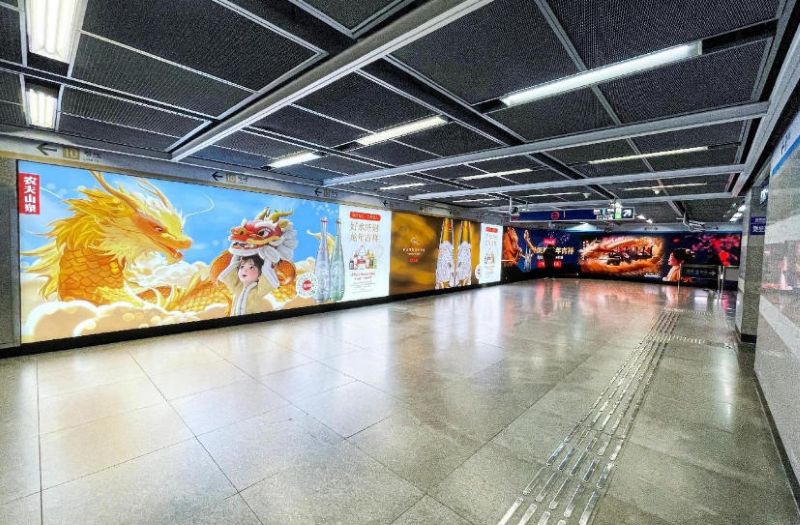
Step 2: Choose the type and material of the lightbox
Common types of lightboxes
Spray painted lightbox (soft film/photo paper): Low cost, easy to replace, suitable for short-term promotions.
Acrylic backlit lightbox: with good texture and full color, suitable for long-term brand display.
Blister lightbox: Strong three-dimensional effect, mostly used for door heads and signage.
Waterproof aluminum profile frame lightbox: Strong weather resistance, suitable for long-term outdoor use.
Neon/luminous characters (non-traditional light boxes): Strong decorative and brand style display.
Comparison of Materials and Durability
Photo printing+aluminum alloy frame: Low cost, suitable for short-term/variable images.
Transparent acrylic+LED strip: uniform light, long lifespan, high initial cost but low long-term cost.
Waterproof treatment and sealing structure: Must be selected in coastal or rainy areas to avoid short circuits and water ingress.
Step 3: Location selection and leasing
Selection principle (four elements)
Flow and Stay: Select the locations where the target audience often appears or stays.
Sight distance and viewing angle: The size of the lightbox and the size of the text need to adapt to common sight distances.
Exposure period: Do you need stronger backlighting or timed lighting at night.
Competition and environment: whether there is a large amount of visual interference or dense advertising of the same type around.
Obtain quotation and negotiation points
Clearly define the location, orientation, visible radius, contract period, and replacement frequency.
Confirm if installation, maintenance, energy consumption, and power access costs are included.
Agreement on compensation and supplementary broadcasting mechanism in case of force majeure or equipment failure.
Step 4: Design specifications and creative points
Design principles (outdoor readability)
Simplify the main message: Keep the main information within 3-7 words or a short sentence.
Strong visual contrast: The background and text should have a high contrast to ensure recognition from a distance.
Blank space and hierarchy: Avoid piling up information, place important information in the visual center.
QR code/short code conspicuous: Ensure that the scanning area is located in a safe and visible area, maintaining a certain size (at least 4 × 4cm on the actual lightbox).
Copywriting and CTA
Short copy and clear actions (such as "scan the code to receive coupons" and "get discounts at the store").
If used for long-term brand display, emphasize brand identity and core values.
Document and color specifications
Submit high-resolution files (TIFF/PNG) with bleeding (usually 3-5mm) included.
Use CMYK mode to print colors, consider color deviation after light transmission, and perform color sample verification.
The design draft must reserve a safe area for lightbox strips and installation holes.

Assemble the lightbox and perform waterproof and dustproof treatment.
After installation, conduct night and day performance tests.
Inspection Checklist
Uniformity check of lighting (no obvious dark areas).
The appearance has no wrinkles, bubbles, or color differences.
The circuit wiring is safe and insulated for protection.
The installation is firm, the fixing parts are not loose, and it meets the requirements of fire protection and municipal administration.
Step 6: Maintenance, Operation, and Replacement Strategy
Suggested maintenance frequency
Daily inspection: Inspect the appearance and lighting once a week.
Regular maintenance: Clean the photo face and test the power supply every 3-6 months.
Lamp lifespan management: LED beads generally need to be replaced within 3-5 years (depending on the brand and frequency of use).
Replacement and iteration strategy
It is recommended to replace promotional images in the short term (1-4 weeks).
Brand resident images can undergo creative evaluation and fine-tuning once every quarter or six months.
Save old material templates to accelerate subsequent replacement and A/B testing.
Step 7: Effect tracking and optimization
Available tracking methods
QR code/short chain: track the number of QR code scans and the behavior of jumping to the landing page.
Phone/Coupon Code: Configure a dedicated phone number or verification code to track offline inquiries and verification numbers.
Customer flow comparison: Compare the in store customer flow and sales data before and after the launch.
Questionnaire/source survey: Inquire about the proportion of users who "see advertisements coming to the store" at the checkout or service counter.
Optimization cycle and basis
On the 7th day, conduct the first round of data verification: scanning codes, making calls, and visiting store volume.
From the 14th to the 30th day, adjust the copy or replace the screen based on the data.
Long term investment will be evaluated quarterly for ROI and whether to renew the lease.
Common Misconceptions and Risk Tips (Pitfalls)
common misconceptions
Only looking at unit price and ignoring location quality: cheap but poor foot traffic cannot bring effective conversion.
Too much visual information: Lightboxes are not flyers, information needs to be extremely simplified.
Neglecting nighttime effects: Being beautiful during the day may not necessarily be equally eye-catching at night, it must be tested.
No landing tracking: The effectiveness of advertising cannot be quantified, making it difficult to optimize.
The issue of electricity and compliance is underestimated: failure to confirm electricity access or municipal approval in advance can lead to shutdowns.
Legal and Compliance Points
False or illegal content shall not be published (promotional terms must be clearly defined).
Some areas have additional approvals or restrictions for exterior advertising or community lightboxes, and local regulations must be verified before placement.
Pay attention to fire safety, electrical safety, and municipal environmental impact assessment requirements.
Practical Example (Short Case Reference)
Local food and beverage stores: Install a set of backlit light boxes on the main road of the community, combined with weekend limited time coupon codes. The scanning rate increased by 23% in the first month compared to the previous period, and the attendance rate increased significantly (data is for example purposes, actual results depend on the venue and creativity).
Beauty Chain: Using acrylic light boxes for long-term identification of stores, enhancing brand quality, and steadily increasing new members.
Conclusion points
Outdoor lightbox advertising is a low threshold, high-frequency offline outreach tool. The key to success lies in the appropriate location, concise and powerful visuals, traceable landing paths, and standardized construction and maintenance. For beginners, it is recommended to start with a small-scale pilot to test creativity and tracking methods, and then gradually replicate and scale them up.