Community Advertising Cases and Templates: Quick Copy of Local Traffic Gameplay
2025-12-10Tianci MediaViews:149
Highlights
A complete introductory guide to community advertising from strategy, materials to placement and optimization, including examples of community advertising materials and practical steps. Learn now and start placing.
Why do we need to do community advertising?
Community advertising refers to the localized advertising placement and promotion of communities, neighborhoods, and their surrounding populations. Compared with wide area advertising, community advertising has more controllable costs, more precise reach, and more direct conversion, making it suitable for businesses such as retail, service, education, and property activities that aim for "offline in store/appointment". For novices, community advertising is the fastest channel to reach the brand's "nearest customers".
一、 Basic cognition of community advertising
What is community advertising?
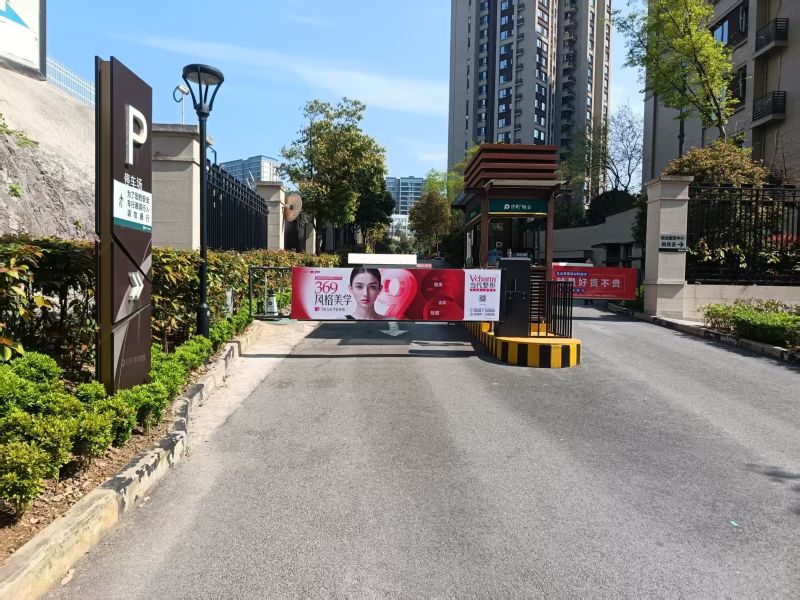
Community advertising refers to the precise dissemination targeted at people living in or frequently entering a community, street, or community service point. Forms include but are not limited to: community single page, bulletin board posters, building elevator posters, property group messages, community activity sponsorship, local app push, local food delivery/errand platform advertisements, etc.
The advantages of community advertising
High relevance: Users' geography and needs are highly matched.
Cost controllable: Compared to city level advertising, it has lower single cost and is easy to try and error.
Controllable reach frequency: Repeated exposure in fixed scenes to enhance memory points.
Short conversion path: often using phone calls, in store visits, and scanning codes as direct conversion actions.

二、 Goal setting and audience profiling
Clear advertising objectives (example)
Increase offline store visits (such as weekly store growth of 10%)
Get membership or leads (such as collecting 100 phone numbers within 30 days)
Promotion activities or brand awareness (target number of attendees on the day of the event)
Building an audience portrait (example steps)
Geographic range: centered around the store, within a radius of 300-1500 meters.
Population attributes: age group (such as 25-45 years old), family structure (with/without children), income range.
Consumer behavior: frequency of frequent visits to stores, shopping preferences, local service demands.
Media usage habits: whether to use community groups, whether to follow property group announcements, and whether to use local lifestyle apps.
三、 Preparation of Community Advertising Materials
Good materials determine the success or failure of the first round of advertising. Below are the types of materials and template essentials that beginners can quickly prepare.
Common types of materials
Offline materials: posters (A3/A4/80x120cm), color pages, roll up banners, stickers, door banners.
Online materials: Property group copywriting, community push graphics, same city app graphics, short videos (15-30 seconds).
Conversion materials: QR code cards, coupons (electronic/paper), activity registration forms.
Key points for producing community advertising materials (practical checklist)
Clear visual hierarchy: main title (product/activity selling point) → subtitle (discount/time) → action button (scan code/phone).
Literal wording: One sentence explaining what users can get (such as "20% off laundry | doorstep pickup and delivery"), avoiding industry jargon.
Strong CTA: Choose one from scanning the code, calling, or visiting the store, highlighting deadlines or quota restrictions (such as "top 50").
Readability: Offline posters can be read from 1.5 meters away, with font size not less than 36pt (main title).
Brand and contact information: LOGO, address, phone number, QR code (mini program or landing page).
A/B material version: At least two visual or textual versions should be made for testing (e.g. discounted pop-up publication vs. scene pain point version).
四、 Channel selection and advertising process
The following process is aimed at beginners, gradually unfolding from preparation to deployment and optimization.
Step 1: Select the advertising radius and channel combination
Suggest starting with the store as the center and piloting within a 500 meter range.
Example of channel combination (small budget): Property group+community bulletin board posters+surrounding single page delivery+local life app graphics and text.
Channel reason: The online group message coverage frequency is high, while the offline poster coverage passively reaches.
Step 2: Prepare materials and landing pages (or mini programs)
Create a one page landing page or mini program page, including: activity description, discounts, location, phone number, form/scan code entrance.
Ensure that the landing page is loaded in less than 3 seconds on the mobile end (affecting conversion).
Use explicit UTM or parameters in the material to track the source (e.g. qr_comde=community_A).
Step 3: Trial investment and data burial points (first round 7-14 days)
After the launch, record the following KPIs: exposure (estimated), number of QR codes scanned, number of visits to stores, number of leads, and conversion rate.
It is necessary to ensure that each channel is individually coded in order to distinguish performance.
Suggested budget: The total cost of piloting a single page/poster in the community should not exceed 30% of the promotion budget.
Step 4: Data analysis and material iteration (A/B testing)
Compare the scan rate and in store rate of two types of materials, and the winner will retain and enlarge the placement.
Analyze the effect of the time period (weekdays vs weekends) and adjust the push time.
If the conversion rate is high but low when scanning the code, check the cashability of the landing page or discount.
Step 5: Increase volume and normalize investment
After the successful pilot, expand to neighboring communities or copy the template to other stores.
Establish monthly review: CTR, in store cost, unit price per customer ROI。

五、 Budget and Performance Measurement
Suggested KPI (beginner friendly)
Drainage layer: number of scanned codes/number of form submissions (measuring interest)
Conversion layer: Number of visits to stores/number of transactions (measuring actual revenue)
Efficiency layer: Cost per visit (CAC), ROI per activity
How to Calculate Simple ROI (Example)
Record the total cost of advertising (offline materials+group promotion+labor)=A yuan.
Record the newly added sales revenue brought by advertising=B yuan.
ROI=(B−A)/A。
Goal: ROI>0 (initially allowed to approach 0 or incur small losses in exchange for data and membership).
六、 Common Misconceptions and Precautions
Common Misconceptions (and Correct Practices)
Misconception: Posting a poster once can be effective
Correct: Community outreach requires frequency, and it is recommended to have at least 2-4 repeated exposures in conjunction with combination channels.
Misconception: Directly using materials from major channels
Correct: The community audience tends to focus on daily life scenes, and the materials should be more down-to-earth (scene based, neighborhood language).
Misconception: Only focusing on the number of scanned codes, not seeing stores/transactions
Correct: Scanning the code is only an intermediate indicator, and the final value of advertising is measured by the number of visits to the store and transactions.
Misconception: Unified advertising without distinguishing channels
Correct: Set independent tracking parameters for each channel for optimization and reuse.
Compliance and Property Communication Precautions
Before distributing offline materials, confirm the approval process with the property/community manager.
Comply with community regulations and avoid posting locations that may affect public order or invade privacy.
When pushing in the community, pay attention to frequency and language to avoid being removed by administrators or forming resentment.
七、 Quick Case Study
Case A: Community Laundry Promotion (Target: New Customers)
Channel: Property group+single page delivery+corridor poster
Key points of materials: 50% off for first order, doorstep pickup and delivery, QR code reservation (landing page form)
Result (Example): Scan the code 230 times within 7 days, convert 42 people to the store, generate a new customer order of 68 yuan, and calculate and iterate the cost of a single visit to the store.
Case B: Community Early Childhood Curriculum Recruitment (Objective: Registration)
Channel: Community Mom Group+Parent Child Activity Sponsorship+Offline Trial Course Coupons
Success factors: word-of-mouth promotion, free trial classes, and instant registration discounts.
八、 Conclusion and Call to Action
Community advertising is an effective channel for localized, low-cost, and high-frequency reach. As a beginner, please follow these three steps to launch your first community advertising plan:
Clearly define goals and coverage radius (start with small-scale pilot projects).
Prepare two sets of measurable materials (including landing pages and QR code tracking).
Post for 7-14 days, review data and perform A/B optimization.