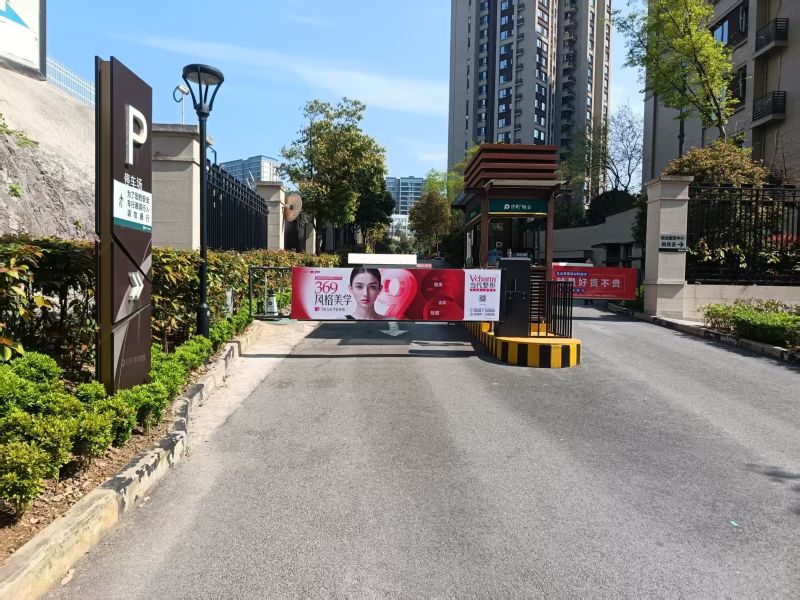
Beginner's Guide to Community Advertising: How Are Costs Calculated? Complete Guide to Placement
2025-12-04Tianci MediaViews:200
Highlights
The community is the 'last mile' scenario for household consumption, with 70% of daily consumption decisions closely related to community settings. As a core channel that directly reaches household customers, community advertising is becoming a new favorite for marketing among small and medium-sized brands. However, the most challenging issues for beginners are how community advertising fees are calculated and how to achieve good results with a limited budget. This article breaks down the process from cost structure to implementation, helping you get started quickly.
Communities are the 'last-mile' scenario for household consumption, with 70% of daily spending decisions closely related to community settings. As a key medium directly reaching household consumers, community advertising is becoming a new favorite marketing tool for small and medium-sized brands. However, the most perplexing problem for beginners is how to calculate community advertising costs and how to achieve good results with a limited budget. This article breaks down the entire process, from cost structure to implementation, to help you get started quickly.
1. First Understand: The Core Value of Community Advertising — Is the Money Well Spent?
Before calculating costs, it’s essential to clarify the unique value of community advertising to determine whether the investment matches expectations and to avoid blindly following trends.
1. Four Irreplaceable Advantages of Community Advertising
• Precise audience, concentrated spending power: Community ads directly reach households with homes and cars. This group spends over 150,000 yuan annually and has strong demand for fresh food, home goods, education, maternity, and childcare products, along with a high conversion intention;
• Close proximity, short conversion path: From seeing the ad to making an in-store purchase or online order, the distance is usually no more than 3 kilometers. Some community group-buy ads even allow 'scan to order,' making the conversion path extremely short;
• High frequency, lasting impression: Residents enter and exit the community 2-3 times daily, and repeated ad exposure quickly strengthens brand recall. Statistics show that community ads have a user recall rate of 72%, much higher than outdoor billboard ads at 45%;
• Flexible formats, suitable for all budgets: From elevator posters costing a few hundred yuan to community events at tens of thousands of yuan, community ads cover different budget levels, allowing beginners to start with a trial investment of around a thousand yuan.
2. Key Question: How Are Community Advertising Costs Calculated? Core Influencing Factors
Community advertising costs are not fixed and range from thousands to hundreds of thousands of yuan, with corresponding advertising plans. The main factors are 'ad format, community grade, campaign scale, and campaign duration.' Beginners need not worry about insufficient budget — understanding the cost calculation logic allows them to find a suitable advertising approach.

2. Core Logic: How to Calculate Community Advertising Costs? 2 Major Components, 3-Step Calculation
The calculation of community advertising costs follows the core logic of "basic costs + value-added costs." Beginners can calculate an accurate budget in three steps—"clarify needs → match resources → calculate total cost"—to avoid being misled by agencies.
1. Two Key Cost Components, Don’t Forget Value-Added Items
About 80% of community advertising costs come from basic costs, and 20% come from value-added costs. Beginners often overspend by overlooking value-added costs.
• Basic Costs (80%): The core formula is "ad format × number of placements × placement period." This is the main part of the cost calculation. Prices vary significantly between different formats.
• Value-Added Costs (20%): Include design and production fees (poster/video production, ranging from 200–1000 RMB), installation and maintenance fees (50–100 RMB per spot), approval fees (500–1000 RMB for certain high-end communities), and monitoring fees (third-party data statistics, 5%–8% of total cost). Before placing ads, confirm with the agency whether these items are included.
2. 3 Steps to Calculate an Accurate Budget, Beginners Can Apply the Formula Directly
Step 1: Clarify 3 Core Needs to Lock Cost Variables
The premise of cost calculation is a clear understanding of your own needs; otherwise, you will fall into a "the more you calculate, the messier it gets" situation. Focus on the following three points:
• Placement Goal: Is it for regional traffic (e.g., covering 3–5 communities) or brand exposure (e.g., covering more than 10 communities)? Different goals require different quantities of placements.
• Target Audience: Are you targeting young families (interested in maternity, childcare, education) or middle-aged and elderly groups (interested in health, fresh produce)? Different audiences require different ad formats and community choices.
• Placement Period: Short-term trial placements (1–2 weeks) have higher unit prices, while long-term placements (more than one month) may enjoy 20%–40% discounts. Beginners are advised to start with one month to test the effect.

Step 1: Choose the Right Community and Precisely Match Your Target Audience
Choosing the community is more important than the advertising format. The core principle is "audience match":
• Fresh Produce Supermarkets: Prioritize necessity-driven communities, focusing on "occupancy rate" (over 80% is ideal);
• Children’s English Programs: Choose improvement-oriented communities, pay attention to the proportion of children aged 3-12;
• High-end Home Furnishings: Target high-end communities, coordinate with property management to get precise data such as "house size" and "renovation needs."
Avoid new communities with an occupancy rate below 50%, as they have insufficient foot traffic and poor ad exposure, which is a pure waste of money.
Step 2: Design High-Conversion Community Advertisements
Residents have a higher acceptance of community ads but limited patience, so content must cater to "family scene needs" and follow the "catch attention in 3 seconds, be understood in 10 seconds" principle:
• Main Visuals: Highlight core product advantages or promotions, e.g., "Fresh delivery in 30 minutes" or "Experience English class, grab for 9.9 yuan";
• Text: Keep it within 2 lines, avoid complex parameters, use conversational language;
• Call-to-Action: Include community-exclusive perks like "Show this ad in-store for 20 yuan off" or "Scan to join the group and get a free tasting" to boost conversions.
Case Study: A community group-buy platform ran elevator ads in a necessity-driven community with the content: "Scan to join the group, vegetables 1 yuan/500g, delivered in 30 minutes." The scan conversion rate reached 4.2%, far above the industry average of 1.5%.
[Insert relevant images/charts: Comparison of good vs. bad community ad designs]
Step 3: Partner with Reliable Collaborators to Avoid Cost Traps
Community advertising resources are fragmented, and the choice of partners directly affects cost transparency and campaign effectiveness. Prioritize the following two types:
• Direct Sign with Community Property: Suitable for advertising in a single community, costs are transparent but negotiation is tough, qualifications documents must be prepared in advance;
• Regional Community Media Agencies: Broad coverage (can work with 10 communities at once), can secure bulk discounts, and provide services like approval processing and monitoring. Ideal for beginners.
When signing a contract, clearly define "what costs are included" and ensure the contract specifies whether design, installation, maintenance, and other value-added services are covered to avoid hidden fees later.
Step 4: Complete Approvals and Filings Before Launch
Community ads require approval from property management and local urban management authorities. This is usually handled by the agency, and 7-10 days in advance you should provide:
• Business license copy with company seal;
• High-resolution ad materials (meet community visual standards);
• Campaign plan (including community names, number of points, and duration).
Avoid delays due to incomplete documentation, which can result in "waiting in vain without exposure" and increase additional costs.
Step 5: Track and Optimize Data During Campaign
Advertising is not a one-time effort; proper data tracking allows for timely optimization and improves cost-effectiveness:
• Basic Data: Ask the agency to provide weekly photos of the ads in place and community foot traffic data to ensure ads are being properly displayed;
• Conversion Data: Set up community-specific QR codes and discount codes to track scans and redemption; for offline stores, use a "Community Ad Visit" log to distinguish conversion results for different communities;
• Optimization Actions: For communities with poor conversion (redemption rate below 1%), promptly change the ad content or adjust locations, and allocate budget toward high-conversion communities.
IV. Pitfalls for Beginners: 8 Common Misconceptions About Community Advertising Costs and Placement
Many beginners have poor results and overspend not because of insufficient budget, but because of misunderstandings that waste resources.
Misconception 1: Focusing only on low unit price while ignoring community match
To save costs, you choose low-priced placements (300 RMB per spot) in remote, just-needed communities but place high-end home decor ads; the audience demand doesn’t match, and even placing 100 spots will almost yield zero conversions. This is actually more wasteful than placing 50 spots in improvement-type communities.
Misconception 2: Forgetting to account for additional costs, causing major budget overruns
Only the base fees were discussed during the contract, and additional services were not confirmed. During the campaign, the agency added design, installation, and approval fees, resulting in total costs exceeding the budget by 40%, disrupting the marketing plan.
Misconception 3: Too short a campaign period to build memory
Running ads for only one week to control costs results in residents seeing the ads only 2-3 times on average, preventing brand recall. The high-frequency advantage of community ads is completely lost, essentially "paying for nothing."
Misconception 4: Content disconnected from community context, low appeal
Ads irrelevant to community life—for instance, placing esports gear ads in an elderly community or only discussing brand philosophy without tangible benefits—will be ignored by residents, making the campaign wasteful.
Misconception 5: Not setting dedicated tracking, making conversion attribution impossible
Using generic QR codes or no exclusive offers prevents determining which communities or spots led to conversions. Subsequent optimization is directionless, ad spend cannot be accurately allocated, and one falls into the dilemma of "campaigns are ineffective, but stopping isn’t an option."
Misconception 6: Trusting "all-inclusive price" blindly, risking hidden costs
Attracted by an agency's deal of "10 communities for 9,999 RMB all-inclusive," you later find it only covers basic placement; design, maintenance, and approval are extra fees, making the actual total higher than standard quotes.
Misconception 7: Using only a single ad format, leading to incomplete coverage
Spending all the budget on elevator ads while ignoring community gates or notice boards misses certain residents (like car-owning homeowners), wasting potential traffic.
Misconception 8: Ignoring the campaign post-launch, missing optimization opportunities
Not monitoring data or following up post-launch allows ads to be blocked or damaged unnoticed, reducing exposure while still paying the full cost, resulting in extremely low cost-effectiveness.