Outdoor advertising locations in shopping malls: comprehensive analysis and high-return deployment strategies
2026-02-05Tianci MediaViews:161
Highlights
The location of outdoor advertisements in shopping malls directly impacts brand exposure and conversion rates. This article delves into how to scientifically evaluate and select prime advertising spots both inside and outside shopping malls, avoiding common pitfalls in placement. It also introduces how to achieve efficient placement through a professional platform like Tianci Media. Read now to gain authoritative placement strategies!
In the era of information explosion, consumer attention has become the scarcest resource. For advertisers who hope to ignite brand awareness offline and directly reach their target audience, outdoor advertising locations in shopping malls are undoubtedly a battleground. A prime location means exposure of tens or even hundreds of thousands of high-quality people every day. However, not all locations are worth it, blindly choosing will only lead to budget waste.
This article will take on the role of your professional site selection consultant, systematically breaking down how to scientifically evaluate and select outdoor advertising locations in shopping malls, ensuring that every penny of your advertising budget is spent wisely.

Step 1: In depth analysis of mall types and pedestrian flow profiles
Before choosing a specific location, it is necessary to prescribe the right medicine. The value logic of outdoor advertising spaces in different types of shopping malls is completely different.
Firstly, the positioning of the commercial district determines the advertising tone. Outdoor advertising spaces in high-end luxury shopping malls, such as giant LED screens on the exterior facade and main entrance light boxes, should emphasize brand tone, artistic sense, and exclusivity, with the value of shaping brand image. The core goal of a family oriented shopping mall is to reach family customers, and advertising spaces located near children's playgrounds, large supermarket entrances and exits have extremely high value. Trendy and fashionable shopping malls have dense pedestrian flow and a majority of young people. Interactive large screens in the atrium and advertisements next to popular check-in points are key factors in attracting young people.
Secondly, it is necessary to deconstruct the flow of people and the 'flow funnel'. The flow of people in the mall is not evenly distributed, and understanding its direction is the foundation for successful advertising.
First level traffic entrance: refers to the main entrance, secondary entrance, and passage connecting to the subway of the shopping mall. This is the place with the highest exposure, suitable for brand promotion and competing for consumers' "first glance" attention when entering the mall.
Secondary traffic hub: including atrium, entrance to main stores (such as cinemas and supermarkets), as well as main escalators and vertical elevator entrances. The gathering, stopping, or decision-making of crowds here is the golden point for scenario based marketing and promotional information dissemination, with enormous potential for advertising conversion.
Third level traffic terminal: located at the entrance of specific stores, restroom passages, or customer rest areas. This type of location has relatively low exposure, but the audience intention is very clear, making it suitable for precise supplementary advertising or promotion of local service merchants.
Step 2: Scientifically evaluate the value of specific advertising locations
After locking in the approximate area, it is necessary to evaluate the detailed value of specific points with a professional perspective. A 'golden position' needs to withstand the test of the following five core indicators:
Visibility and dwell time: Is the advertisement within the natural line of sight of the crowd? Is the crowd passing by in a hurry or will there be brief stops (such as waiting for the elevator or queuing)? The duration of stay directly determines the depth at which advertising information is received.
Lighting and Environment: Whether it is a lightbox or an LED screen, is its brightness sufficient to maintain clear visibility during both day and night? Is the surrounding environment too cluttered, which interferes with the integrity and impact of the advertising image?
Interaction and Experience Potential: Does this location support new technology interactions, such as AR scanning or tactile interaction? Can it be combined with physical display or sample distribution? Experiential advertising that can trigger consumer participation has a much higher level of memory and favorability than static viewing.
Exclusivity and Interference: Are there any other competing advertisements or excessive billboards around the point causing a "visual fight"? A location with less monopoly or interference naturally has higher value.
Measurability of data: Can this location be supported by technology such as passenger flow cameras to provide approximate data feedback on foot traffic and duration of stops? This is crucial for evaluating the return on investment in the later stage.
Analysis of the positioning of mainstream advertising forms:
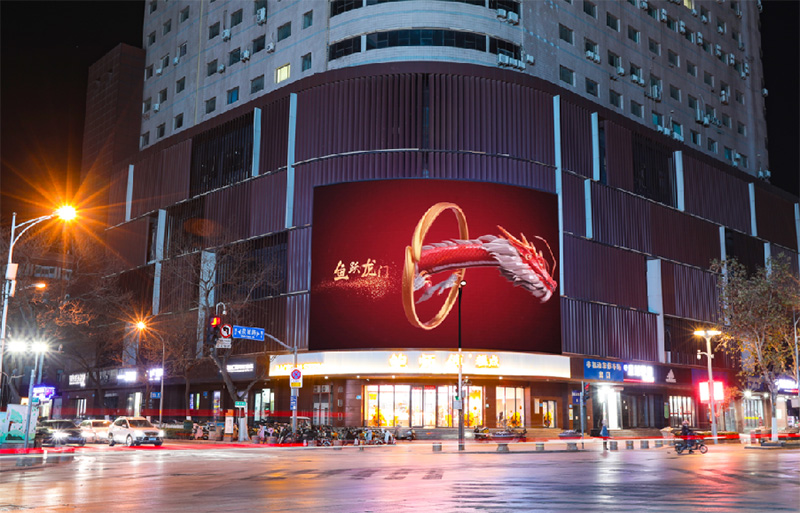
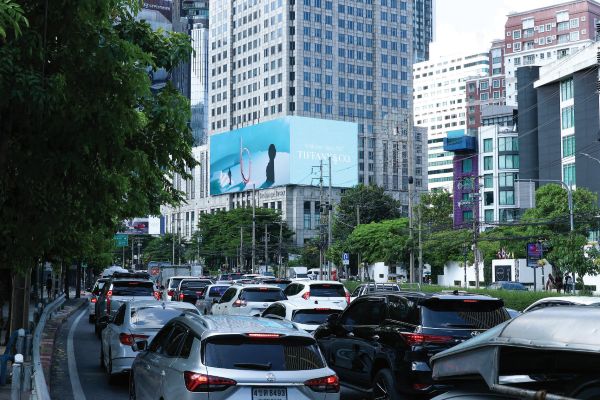
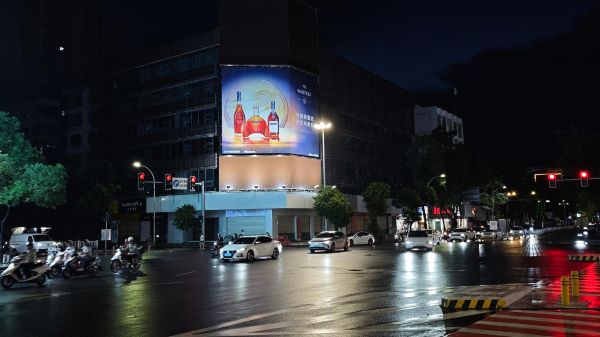
The giant LED screen on the exterior facade is usually located on the exterior wall of a building and faces the main urban road. It provides landmark level brand exposure and is suitable for large-scale brand events or high-end image promotion.
The entrance portal lightbox guards the throat of consumers entering the mall and has the characteristic of mandatory reading, making it an ideal choice for publishing mall event guides or promoting flagship store information.
The three-dimensional display point in the atrium, as the "living room" of the shopping mall, provides unlimited creative space, suitable for creating brand pop-up stores or immersive theme exhibitions, and is highly likely to trigger social communication.
Escalator stickers and elevator frame advertisements are powerful tools for high-frequency and mandatory reading in enclosed spaces, especially suitable for conveying real-time information such as promotions and movie previews.
Parking lot signage light boxes can accurately reach car owners, who usually have strong purchasing power and are high-quality points that cannot be ignored by brands such as automotive, finance, and high-end education.
Step 3: Avoid common misconceptions and protect your advertising budget
Even if a seemingly perfect position is found, some common cognitive traps may still greatly reduce the effectiveness of advertising.
Misconception 1: Price first, ignoring cost-effectiveness. The most expensive location may not necessarily be the most suitable for you. For example, an LED screen facing the external road may have a much lower cost-effectiveness for a food and beverage brand aimed at promoting immediate consumption within the mall compared to elevator frame advertisements located on the food floor. The key is to have advertisements appear at critical nodes in the consumer decision-making process.
Misconception 2: Creativity does not match location. In the main entrance passage where pedestrians are rushing, use complex texts that require a long time to read; In the courtyard suitable for immersive experience, only one static lightbox is placed. This mismatch will seriously weaken the effectiveness of advertising. It must be remembered that location determines form, and form serves creativity. Dynamic media is suitable for rapid information exchange and visual impact, while static media is suitable for conveying delicate images that require contemplation.
Misconception 3: Lack of testing and optimization thinking. Many advertisers consider a single placement as the endpoint. A wiser approach is to conduct small-scale A/B testing within budget constraints. For example, during the same period, different versions of advertisements for the same event are placed in two different types of locations within the mall (such as the atrium and elevator), and the effectiveness is tracked through unique discount codes or QR codes to accumulate real data basis for the next large-scale advertising campaign.

Step 4: Utilize professional expertise to achieve efficient and precise delivery
For brand owners who need to advertise nationwide or in multiple cities, connecting with hundreds or thousands of mall operators one by one is not only inefficient, but also lacks advantages in resource acquisition and price negotiation.
At this point, choosing a reliable partner is crucial. Tianci Media is a professional outdoor advertising platform, whose core value lies in integration and optimization. Through such a platform, advertisers can obtain one-stop cross regional and multi type outdoor advertising placement solutions for shopping malls, without the need for tedious multi head coordination. More importantly, professional platforms like Tianci Media can provide more scientific site selection strategy recommendations based on historical advertising data and market insights, helping brands avoid "data black boxes" and ensuring transparency and efficiency throughout the entire process from monitoring to effectiveness evaluation through standardized process management.
Conclusion
Choosing outdoor advertising locations in shopping malls is a comprehensive art that combines consumer psychology, crowd dynamics, and spatial marketing. It is not simply a matter of 'the one with the highest price wins', but requires advertisers to clearly define their goals - whether to pursue brand exposure or drive instant sales - and on this basis, deeply understand the mall ecology and crowd code, and use scientific indicators for calm evaluation.
Please always think about one question: "What is my target consumer in this specific location and what do I need to say to them in order to resonate with them?" Answer this question well and make good use of the capabilities and resources of professional platforms such as Tianci Media. Only then can your outdoor advertising truly transcend simple "display" and upgrade to effective "dialogue" with consumers, ultimately winning measurable and optimizable rich market returns.