Outdoor light advertising: The marketing evolution from traditional neon to digital light and shadow
2026-01-05Tianci MediaViews:198
Highlights
This article provides an in-depth analysis of the types, core values, and deployment strategies of outdoor light advertising, covering various forms such as LED screens, architectural projections, and neon lights. It guides businesses on how to utilize light and shadow to create brand impact at night and achieve efficient marketing. Read now to illuminate your brand's night.
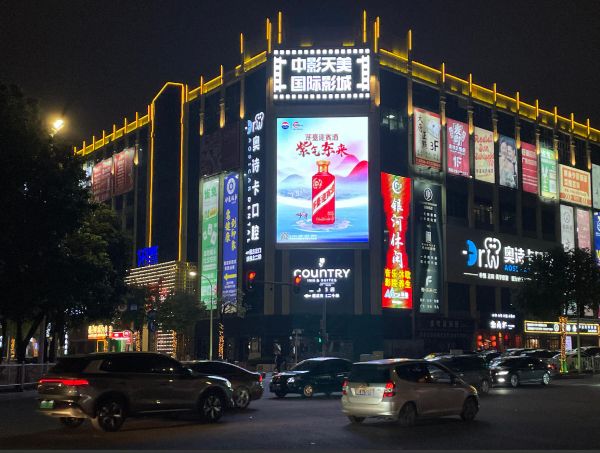
As night falls, the city does not fall asleep, but instead adopts a dazzling new appearance. Amidst the myriad lights, outdoor lighting advertisements endorsing various brands resemble gems embedded in the urban fabric, actively attracting the attention of the nocturnal crowds. From the century-old charm of neon signs to the visually stunning LED screens, and to the futuristic 3D architectural projections, lighting has evolved beyond its mere function of illumination, becoming a powerful language for brand communication.
For businesses, investing in outdoor lighting advertising signifies taking the initiative to capture the golden attention market during the other half of the day. It is not only an extension of visual perception, but also a concentrated display of brand vitality, technological prowess, and creative excellence. However, how to choose from among various lighting forms? How to ensure a favorable input-output ratio? This article will systematically guide you, allowing your brand to truly "shine" in the night.
一、Core value of outdoor lighting advertising: why is it irreplaceable?
Before exploring specific forms, it is essential to comprehend the distinctive advantages of light advertising compared to traditional outdoor advertising.
1. Absolute visual dominance in the nighttime environment
On dimly lit nights, self-luminous advertising media possess a natural allure. They actively draw visual attention, standing out in the intricate urban nightscape and achieving undisputed visual dominance.
2. Strong emotional contagion and atmosphere creation
Light serves as a catalyst for emotions. Warm lighting can convey a sense of intimacy and luxury, while cool lighting effects can evoke a sense of technology and the future. Dynamic and changing shadows and lights can tell stories. This ability to immerse in emotions is unmatched by static advertisements.
3. A direct embodiment of technological sophistication and brand modernity
Lighting advertisements utilizing cutting-edge technologies such as LEDs and laser projection serve as a direct testament to the brand's innovative spirit and robust capabilities, effectively enhancing the brand's modern and high-end image.
4. Extend the effective advertising duration to cover nighttime consumption scenarios
It breaks the limitation of "sunset and rest" for outdoor advertising, fully covering core consumption periods such as evening rush hour commuting, night shopping, dining and entertainment, and holiday night tours, reaching audiences that cannot be reached during the day.

二、 Detailed Explanation of Mainstream Forms: Choosing the Right Light for Your Brand
Outdoor lighting advertising is a large family, which can be mainly divided into the following categories, each with its own optimal application scenarios.
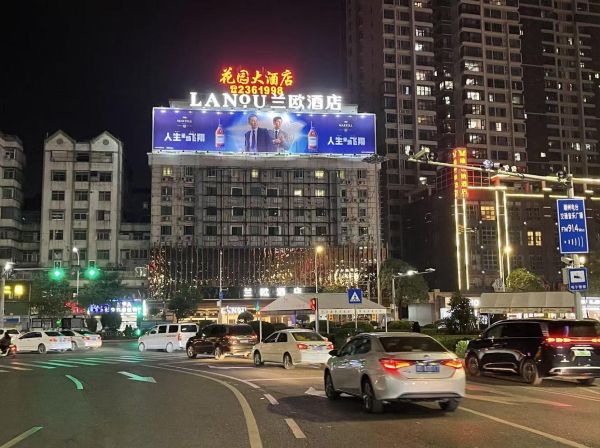
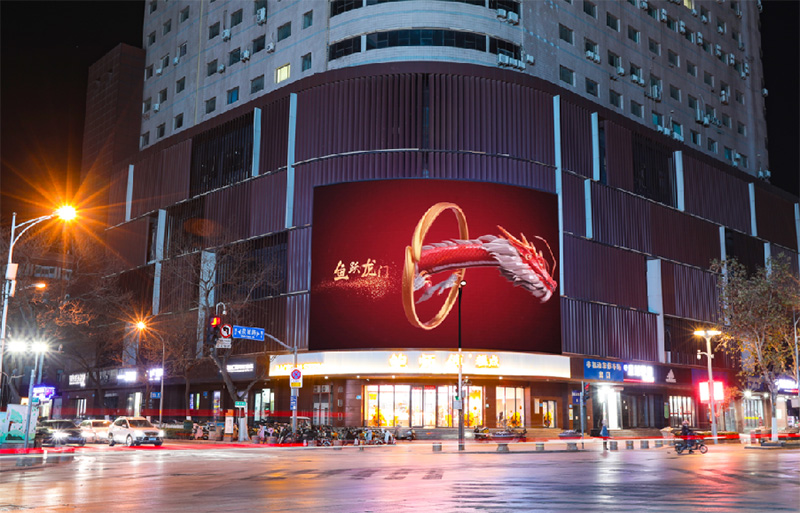
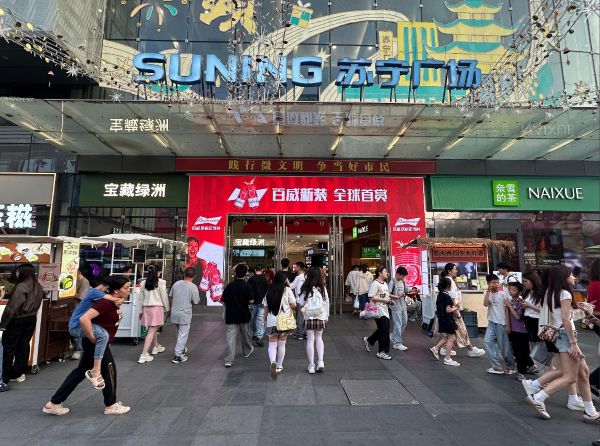
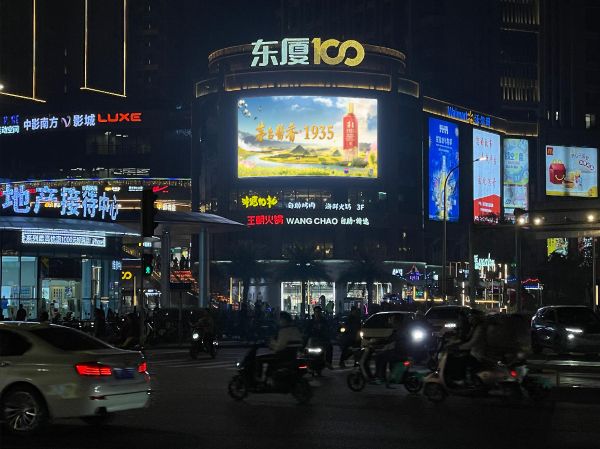
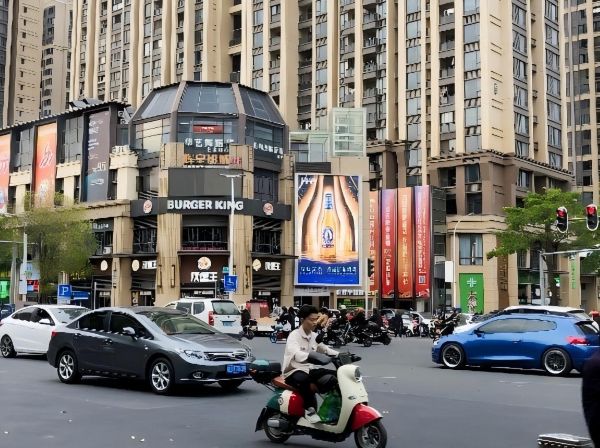
1. Large LED digital advertising screen
Description: Currently a mainstream product in the market, it is composed of high-density LED modules and can display dynamic videos and images.
Features and Value: Vibrant colors, high brightness, strong visual impact, and remote real-time content replacement. Ideal for city landmarks, core business districts, and transportation hubs, for brand image display and large event promotion.
Applicable scenarios: brand event ignition, global launch of new products, holiday-themed marketing.
2. Building media facade lighting (architectural light show)
Description: Using the entire exterior wall of a building as a canvas, dynamic and comprehensive lighting artworks are presented through LED point light sources or projection technology.
Features and value: Large-scale, highly immersive, and easy to generate city-level topic events. It is the top-tier brand lighting advertising format, capable of bringing unparalleled brand reputation enhancement.
Applicable scenarios: national celebrations, grand entry of international brands, and anniversary celebrations of super large enterprises.
3. Neon lights and creative light box advertisements
Description: A classic form of lighting advertising. Neon lights are made of curved glass tubes, featuring rich colors and a retro style; creative light boxes combine light sources with hollowing and three-dimensional shapes.
Features and Value: Neon lights possess a unique retro aesthetic value and artistic appeal, particularly favored by fashion, dining, and entertainment brands; creative light boxes convey ingenious ideas through light and shadow modeling.
Applicable scenarios: business district store signboards, characteristic commercial streets, brand flagship store exteriors, and marketing activities pursuing specific artistic tones.
4. Interactive light and shadow installation
Description: A lighting art installation that integrates sensors and program algorithms, capable of generating light and shadow changes based on interactions such as pedestrian passage, touch, and sound.
Features and Value: Transform advertisements into experiences that the public can participate in, featuring strong appeal and high sharing rates, effectively deepening brand memory and goodwill.
Applicable scenarios: shopping center atria, pop-up brand stores, art exhibitions, and revitalization of public spaces in street blocks.
三、 Four Steps to Create a Successful Outdoor Lighting Advertising Campaign
Step 1: Strategy positioning - Clarify objectives and themes
Firstly, we need to ask: What business problem is this lighting advertisement aiming to solve? Is it to enhance brand awareness, promote new products, or shape brand personality? The goal determines the form. For example, if the goal is to flood the internet, an architectural light show is preferred; if the goal is to deeply engage with the community, interactive installations are considered. At the same time, creativity needs to have a distinct core theme, and all light and shadow should revolve around this theme.
Step 2: Media Planning - Precise Location Selection and Format Matching
Location selection: Analyze the nighttime activity trajectories of the target audience. Is it a city square, a bar street, a bridge, or a highway intersection? The location determines the quality of the exposure audience.
Match: Form serves the place and environment. Historical buildings are more suitable for delicate projection mapping, while modern glass curtain wall buildings are a natural match for LED screens.
Step 3: Creative and Technical Design - Balancing Art and Engineering
This is the core link, requiring multi-party collaboration:
Creative concept: Conceive visually appealing stories and symbols that have a strong emotional impact.
Visual design: Create storyboard scripts and dynamic effect diagrams. Ensure that key information (such as brand logos) is clearly recognizable in the dynamics.
Technical implementation: Engineers need to evaluate the building structure, power supply, waterproofing, and heat dissipation, and select appropriate lighting fixtures, projection equipment, and control software to ensure safe and stable operation.
Content arrangement: Design the broadcast script, including the daily looped version and the event-specific version for specific time slots.
Step 4: Effect amplification and evaluation - from exposure to dissemination
Social preheating and live streaming: Conduct suspense preheating before project execution, and conduct multi-camera live streaming during execution to maximize online dissemination.
Offline event integration: Host a launch event at the lighting advertisement site, set up check-in points, and guide offline traffic.
Effectiveness measurement: The effectiveness is comprehensively evaluated by combining online buzz (social platform discussion volume, video playback volume), media coverage, offline foot traffic monitoring, and usage data of specific promotional codes.

四、 Key Considerations and Common Misconceptions
Light pollution and public disturbance: Strict control must be imposed on brightness, flickering frequency, and illumination angle to avoid causing disturbance or safety hazards to surrounding residents and traffic drivers. Compliance with local environmental protection and municipal management regulations is a prerequisite.
Energy consumption and sustainability: Prioritize the use of energy-efficient products such as LEDs, and consider implementing intelligent control systems that automatically dim or turn off after midnight when foot traffic is low, demonstrating the brand's social responsibility.
Misconception 1: Blindly pursuing "big" and "bright". A huge screen with empty content will only bring visual pollution; overly bright lighting makes people feel uncomfortable. "Clever thinking" is far more important than "brightness".
Misconception 2: Emphasizing installation over content. Lighting is merely a medium; it is high-quality content that consistently captivates audiences. A long-term content update mechanism must be established to prevent audience fatigue.
Misconception 3: Neglecting maintenance and operation: Outdoor lighting equipment is exposed to the sun and rain all year round, necessitating the establishment of a regular maintenance system to ensure the lighting rate and display effect. The content operation team also needs to respond promptly to social hotspots and update the broadcast content.
五、Conclusion
In summary, outdoor lighting advertising is the art and science of integrating brand DNA into the urban nightscape. It tests a brand's creative storytelling ability, technical integration capability, and long-term operational patience in physical space. Successful lighting advertising allows a brand to not only be "seen" at night, but also to be "remembered", "talked about", and even "loved".