What are outdoor advertisements? Complete classification and detailed explanation of form
2025-12-29Tianci MediaViews:150
Highlights
Do you want to have a comprehensive understanding of the types of outdoor advertising? This article systematically sorts out 10+categories and dozens of specific forms of traditional and digital outdoor advertising, from bus stop signs to immersive interactive devices, to help you quickly establish a cognitive framework. Read now and master the essential knowledge of outdoor marketing!
n today's information explosion, outdoor advertising (OOH), with its unavoidable physical presence and extensive reach, remains an important cornerstone for building brand awareness among the public. But for many friends who are new to outdoor marketing, the question of "what are the outdoor advertisements" often can only be associated with rooftop billboards and bus stop lightboxes. It's like only seeing the waves of the ocean, but ignoring the depth and vastness beneath it.
This article will simplify complexity and guide you through the vast world of outdoor advertising through a systematic classification approach. Whether you are a small business owner looking for promotional channels or a marketing newcomer looking to expand your media knowledge, this guide will provide you with a clear and comprehensive "outdoor advertising map".
一、Understanding Outdoor Advertising: Beyond 'Outdoor'
Before delving deeper into classification, we need to establish a core understanding: modern outdoor advertising has gone beyond simple flat displays and developed into an integrated medium that combines geographic location, scene experience, and digital technology. Its core value lies in communicating with specific audiences at specific times and spaces.
二、 What are the main types of outdoor advertising?
We can classify from two core dimensions: technological form and scene location. The following are the most mainstream and common types:
(1) Traditional static outdoor advertising
This type of advertisement is mainly in the form of long-term fixed printing or drawing images, and is the classic foundation of outdoor advertising.
Large billboard
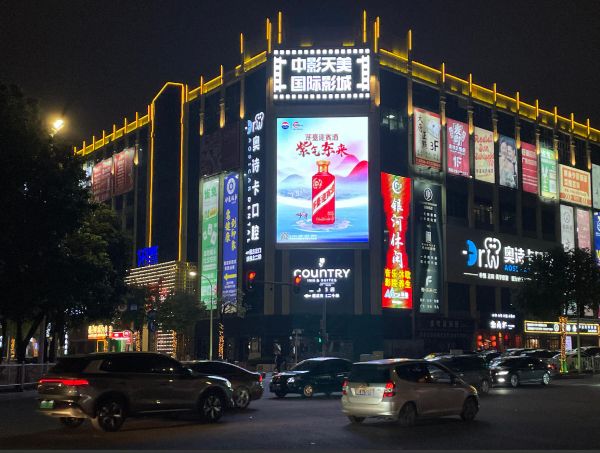
Roof/Wall Large Signage: Set up on the roof or side walls of a building, with a huge area and strong visual impact, often used for brand image display.
High column billboards (single column, double column): usually set up next to highways and urban main roads, targeting high-speed moving traffic and requiring extremely concise information.
Spotlight billboard: Equipped with lighting facilities inside the billboard, it can display clearly at night and increase nighttime exposure.
Street facility advertisements
Bus shelter advertisements: covering the urban bus network, close to the daily lives of citizens, and the waiting time makes them mandatory for reading.
Lamp pole flag hanging/road flag advertising: commonly used for event promotion, festival promotion, or brand building on specific road sections to create a strong atmosphere.
Newspaper kiosk advertising: integrated into the structure of street newspaper kiosks to attract the attention of pedestrians.
Transportation media advertising
Vehicle advertising (bus, subway): A complete mobile billboard that covers a long route and has a wide audience. Divided into full body packaging and side body posters.
Subway advertising: Rich in form, including posters inside the carriage, handle advertisements, corridor wall stickers, and large subway station hall light boxes.
Railway station/airport advertising: Targeting business travelers, the environment is relatively high-end, suitable for brand image and high-end product advertising.
(2) Digital Outdoor Advertising
Digital outdoor advertising is the core engine of industry growth, achieving dynamic, networked, and precise content.
Digital Screen Advertising
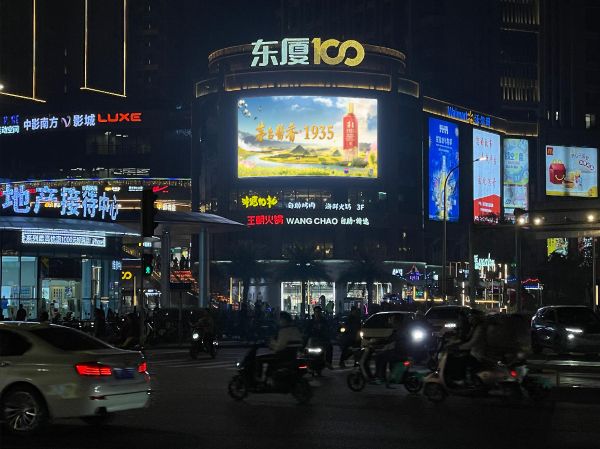
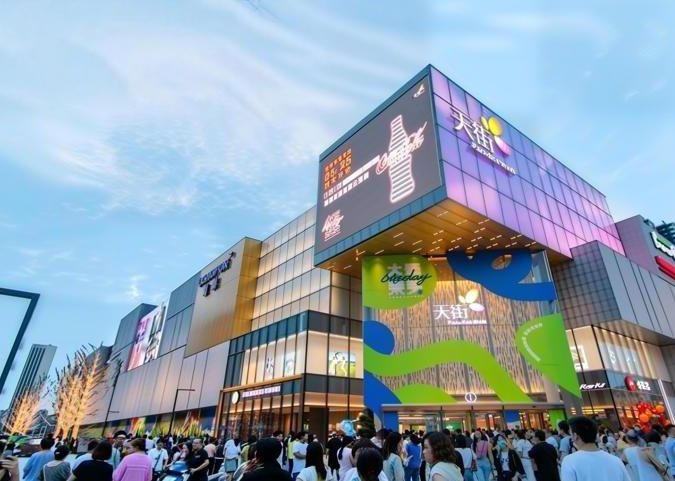
Commercial district LED large screen: a landmark medium in the city, with vibrant colors, capable of playing video content, and extremely attractive.
Building elevator digital screen: penetrate into communities and office buildings, targeting the middle class and white-collar population for high-frequency, enclosed space dissemination.
Retail store digital signage: appearing in consumer terminals such as shopping malls, supermarkets, and convenience stores, it affects consumers' final purchasing decisions.
Intelligent interactive outdoor advertising
Integrating sensors, QR codes, AR (Augmented Reality) and other technologies. For example, viewers can control the content on the large screen through gestures, scan codes to receive coupons, or take AR photos with advertisements. This greatly enhances the sense of participation and memory.
(3) Other distinctive outdoor advertisements
These forms are more innovative and scenario specific.
Ground advertising: such as airport luggage carousel stickers, mall floor stickers, etc., use visual blind spots to create surprises.
Aerial advertising: such as airship advertising, drone formation light shows, etc., creating sensational topics.
Charging station/shared bicycle advertisement: attached to emerging public service facilities, in line with the trend of green travel.

三、 3 common misconceptions when choosing outdoor advertising
After understanding the "what are there", it is important to avoid the following pitfalls when making a choice:
Misconception 1: Only pursuing location, ignoring the match between scene and audience
The price of prime locations is expensive, but if their passing customers are not your target customers, it is a huge waste. We should first analyze the demographic profile of the people around the advertising space (office workers, tourists, community residents?), and then determine whether it is compatible with the brand.
Misconception 2: Designing information that is too complex
Outdoor advertising is an art form that can be seen at a glance. The audience's stay time is extremely short (especially for traffic artery advertisements). We must adhere to the "3-second principle": the brand logo, core proposition (or product), and key contact information (such as website and QR code) must be clear at a glance. Small font size and long copy are major taboos.
Misconception 3: Equating digital outdoor with television advertising playback
Although digital screens can play videos, noisy and silent environments are the norm. Therefore, the content must prioritize visual appeal, relying on strong visuals and concise textual narratives that can be understood and generate attraction even in silence.
四、 Conclusion
In short, the world of outdoor advertising is far more colorful than you imagine. From static big brands that remain unchanged to ever-changing digital light and shadow, from the close companionship of public transportation systems to elite conversations on airport high-speed trains, every form plays a communication role in unique temporal and spatial scenes.