A Complete Guide to Aviation Media Advertising Placement: A New Scenario Marketing Option for Precisely Reaching High-End Audiences
2026-06-19Tianci MediaViews:48
Highlights
Against the backdrop that the dividend of digital advertising traffic has peaked and online customer acquisition costs keep rising, an increasing number of brands are turning their attention to offline scenario marketing. Among various options, air media advertising has become an indispensable part of brands' marketing strategies, thanks to its unique scenario value and precise audience reach capability.
I. Market Potential of Aviation Media Advertising
Air travel scenarios boast inherent commercial value. Statistics show that civil aviation airports nationwide handled 1.46 billion passenger throughput in 2024, representing a year-on-year increase of 15.9%. The massive passenger flow has laid a solid audience foundation for placing advertisements on aviation media. The operating revenue of airport advertising in China hit 9.572 billion yuan in 2024, and it is projected to rebound to 10.454 billion yuan in 2025.
Globally, the in-flight advertising service market also registers robust growth. The global market size of in-flight advertising services stood at 621 million US dollars in 2025, and it is expected to grow to 1.736 billion US dollars by 2034, with a compound annual growth rate of 12.10%. Aviation media advertising is embracing unprecedented development opportunities.
II. Core Advantages of Aviation Media: Why Brands Are Vying to Make Layouts Here
1. Precisely reach high-net-worth individuals
Airports gather high-quality customer groups with high net worth and strong decision-making power. Taking China's top ten airports including Beijing Capital International Airport, Shanghai Pudong International Airport and Chengdu Shuangliu International Airport as examples, these airports handle 80% of the country's air passenger flow, among which business people account for as much as 70%. For brands that need to reach corporate decision-makers and high-consumption crowds, advertising placement in aviation media is an efficient way to achieve precise marketing.
2. High concentration in enclosed environments
An aircraft cabin is an inherently enclosed space, where passengers have to stay for extended periods during flights. Advertisements here feature extremely high "compulsory exposure"—they remain within passengers' line of sight for a long time and cannot be easily overlooked. The "idle time" spent waiting for flights or transferring also significantly raises travelers' attention to environmental information around them, including advertisements. This immersive communication environment is unmatched by other forms of media.
3. Brand Empowerment and Image Building
Airport advertising boasts three core strengths: scarce exclusive scenarios, precisely targeted audiences, and powerful brand empowerment. It serves not only as a showcase for a city’s image but also as a vital channel for brands to cultivate premium brand perception and capture audience mindshare. For enterprises aiming to build brand recognition in high-end markets, advertising placement in aviation media is more than just a communication tool—it stands as a symbol of brand strength.
III. Main Placement Forms of Aviation Media Advertising
Aviation media advertising placement is mainly divided into two categories: airport advertising and in-flight advertising.
(1) Airport Advertising: Full Coverage of the Entire Passenger Journey
Airport advertisements cover every touchpoint of passengers from their arrival at the airport to boarding:
Outdoor and building exterior advertising: large roadside billboards along airport expressways, toll station canopy billboards, and huge wall-mounted billboards on terminal facades deliver an immediate striking brand impression the moment visitors arrive at the airport.
Core media in departure/arrival halls: LED/LCD digital screens are commonly installed at check-in zones, above security checkpoints, and in baggage claim areas, boasting strong visual appeal through dynamic video content. Lightbox advertisements are placed throughout departure halls and arrival corridors with static visuals, ideal for long-term premium brand image display.
Key touchpoints along passenger circulation routes: boarding gate digital displays, jet bridge advertisements, baggage cart ads, and baggage carousel ads cover high-frequency mandatory passing areas for all travelers.
VIP lounge media: exclusive booths, digital screens and magazine racks inside lounges enable precise outreach to high-net-worth business travelers with minimal distractions and high conversion intent.
(II) In-flight Advertisements: Brand Exposure at High Altitude
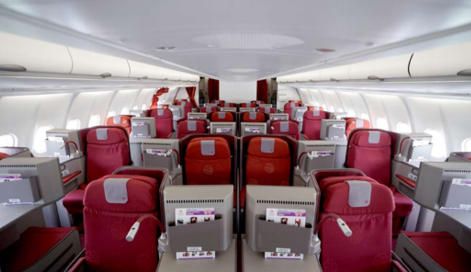
In-flight cabin media:Headrest covers, tray tables, overhead compartments, in-flight entertainment systems, airline magazines, in-flight Wi-Fi and other facilities enable long-duration and mandatory exposure within an enclosed space.
Fuselage Advertising: Aircraft fuselage painting or wrapping serves as a mobile giant billboard. As the aircraft operates routes across the country and even around the world, it achieves an extremely wide exposure reach.
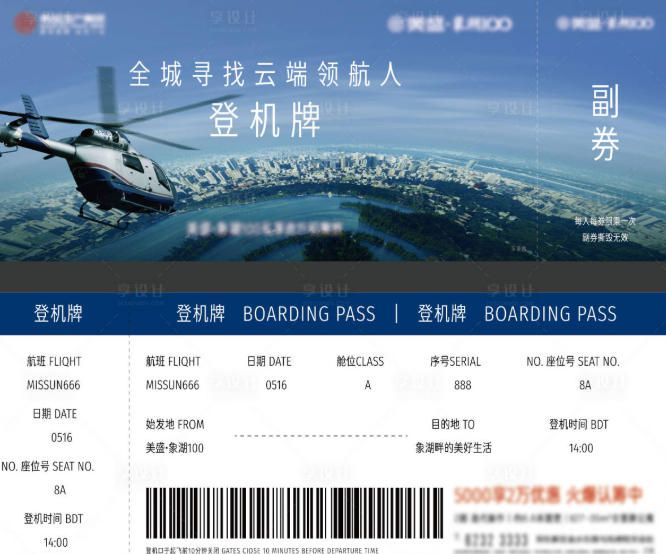
Boarding Pass Advertisement: Achieve 100% reach of every airline passenger, accompanying the entire process of security check, waiting and boarding.
IV. Key Strategies for Aviation Media Advertising Placement
1. Select high-quality locations to seize core traffic
In airport advertising, the most valuable spots are areas that every passenger must pass through and see, such as near security check entrances, security checkpoints, exits of arrival halls, jet bridges, and above baggage carousels. Compared with departure halls, arrival zones serve as better placement locations. Passengers are usually in a hurry when departing, while they feel more relaxed upon arrival, leading to a stronger memory retention of advertisements.
2. Improve delivery efficiency in light of digital trends
The advertising industry is currently undergoing an in-depth transformation toward standardization, technological advancement and value orientation. Airport advertising is actively embracing new technologies such as AI, AR and NFC to diversify advertising presentation formats and build a full-link system covering "scenario experience, interactive participation and value conversion". The digitalization rate of advertising media at Shanghai Airports has reached 35.6%, with revenue from digital media accounting for 45% of total advertising revenue. Advertisers should fully consider the combined application of digital media when formulating aviation media advertising placement plans.
3. Focus on creative content to evoke emotional resonance
Aviation media advertising should not merely focus on "product display", but center on "shared experiences" and "emotional resonance" with passengers. When advertising content connects with travelers' travel scenarios and emotional needs, communication effectiveness will be greatly improved.
4. Data-driven and Precise Optimization
With technological tools such as the Internet of Things and big data, aviation media is undergoing a transformation from experience-driven operation to data-driven operation. By collecting passenger behavioral characteristics and advertising exposure data, the advertising effectiveness can be analyzed to provide a basis for optimizing placement strategies. Advertisers should cooperate with professional aviation media service providers to formulate data-driven advertising placement plans.
V. Industry Trends and Outlook
The AI boom has unlocked new demand for airport advertising. Driven by the explosive growth of large AI models and the cloud computing industry, IT and internet advertising has emerged as a new growth engine for airport media. A growing number of tech enterprises regard airport advertising as a key brand battlefield, further boosting the commercial value of aviation media.
Intelligence and the Internet of Everything. Airport advertising is shifting away from traditional models toward the "Internet of Everything". IoT management platforms enable centralized control and intelligent operation and maintenance of digital advertising media, offering advertisers more flexible and efficient placement options.
Matrix-based media and omni-channel linkage. Future aviation media advertising campaigns will no longer be confined to single media formats. Instead, they will integrate online and offline resources to create a secondary communication ecosystem of integrated media. Integrated marketing featuring omni-channel linkage—spanning airport premises to aircraft cabins and offline touchpoints to online platforms—will become the mainstream approach.
Conclusion
Air media advertising, boasting unique strengths including precise reach of high-end audiences, high audience engagement within enclosed spaces, and in-depth empowerment of brand value, has become a vital pillar of brand marketing strategies. Whether brands aim to elevate their premium image or accurately connect with high-net-worth business travelers, air media delivers irreplaceable communication value. Driven by the wave of digitalization and intelligence, air media advertising is embracing broader development prospects — partnering with professional air media service providers and formulating scientific advertising placement strategies will be the key for brands to seize this prime advertising scenario.